
Catalogue Search | MBRL


Are you sure you want to remove the book from the shelf?

{{itemTitle}}
813
result(s) for
"boundary maintenance"
Sort by:

Gender and the Science of Difference
How does contemporary science contribute to our understanding about what it means to be women or men? What are the social implications of scientific claims about differences between \"male\" and \"female\" brains, hormones, and genes? How does culture influence scientific and medical research and its findings about human sexuality, especially so-called normal and deviant desires and behaviors? Gender and the Science of Difference examines how contemporary science shapes and is shaped by gender ideals and images.
Prior scholarship has illustrated how past cultures of science were infused with patriarchal norms and values that influenced the kinds of research that was conducted and the interpretation of findings about differences between men and women. This interdisciplinary volume presents empirical inquiries into today's science, including examples of gendered scientific inquiry and medical interventions and research. It analyzes how scientific and medical knowledge produces gender norms through an emphasis on sex differences, and includes both U.S. and non-U.S. cases and examples.
eBook

Ethnicity, Commodity, In/Corporation
Ethnic groups increasingly seek empowerment by formally incorporating themselves, by deploying their sovereign status for material ends, and by copyrighting their cultural practices as intellectual property. Building on ethnographic case studies from Kenya, Nepal, Peru, Russia, and many other countries, this collection poses the question: Does the turn to the incorporation and commodification of ethnicity really herald a new historical moment in the global politics of identity?.
eBook

The Culture of AIDS in Africa
This book enters into the many worlds of expression brought forth across Africa by the ravaging presence of HIV/AIDS. Africans and non-Africans, physicians and social scientists, journalists and documentarians share here a common and essential interest in understanding creative expression in crushing and uncertain times. Chapters investigate and engage the social networks, power relationships, and cultural structures that enable the arts to convey messages of hope and healing, and of knowledge and good counsel to the wider community. And from Africa to the wider world, the text here brings intimate, inspiring portraits of the performers, artists, communities, and organizations that have shared here their insights and the sense they have made of their lives and actions from deep within this devastating epidemic. Covering the wide expanse of the African continent, the chapters include explorations of, for example, the use of music to cope with AIDS; the relationship between music, HIV/AIDS, and social change; visual approaches to HIV literacy; radio and television as tools for “edutainment”; several individual artists’ confrontations with HIV/AIDS; various performance groups’ response to the epidemic; combating HIV/AIDS with local cultural performance; and more. Source material, such as song lyrics and interviews, weaves throughout the collection, which is a nuanced and profoundly affective portrayal of the intricate relationship between HIV/AIDS and the arts in Africa.
eBook

The Bioarchaeology of Classical Kamarina
A true, balanced bioarchaeological work of scholarship elucidating the way of life and death for the people of Passo Marinaro.--Sherry C. Fox, coeditor of New Directions in the Skeletal Biology of Greece
This excellent study--comprehensive in its research, sophisticated in its theory, meticulous in its analysis, lucid in its presentation--sets a new standard in the young, exciting field of the bioarchaeology of the early Greek world.--Joseph L. Rife, author of Isthmia IX: The Roman and Byzantine Graves and Human Remains
Sulosky Weaver eloquently weaves Greek myth and historical accounts of Greek life into her scientific analysis of the bioarchaeological evidence, providing a synthetic account of life at the Greek colony of Kamarina.--Britney Kyle McIlvaine, University of Northern Colorado
Sicily was among one of the first areas settled during the Greek colonization movement, making its cemeteries a popular area of study for scholars of the classical world. Yet these studies have often considered human remains and burial customs separately. In this seminal work, Carrie Sulosky Weaver synthesizes skeletal, material, and ritual data to reconstruct the burial customs, demographic trends, state of health, and ancestry of Kamarina, a city-state in Sicily.
Using evidence from 258 recovered graves from the Passo Marinaro necropolis, Sulosky Weaver suggests that Kamarineans--whose cultural practices were an amalgamation of both Greek and indigenous customs--were closely linked to their counterparts in neighboring Greek cities. The orientations of the graves, positions of the bodies, and the types of items buried with the dead--including Greek pottery--demonstrate that Kamarineans were full participants in the mortuary traditions of Sicilian Greeks. Likewise, cranial traits resemble those found among other Sicilian Greeks. Interestingly, evidence of cranial surgery, magic, and necrophobic activities also appeared in Passo Marinaro graves--another example of how Greek culture influenced the city.
An overabundance of young adult skeletal remains, combined with the presence of cranial trauma and a variety of pathological conditions, indicates the Kamarineans may have been exposed to one or more disruptive events, such as prolonged wars and epidemic outbreaks. Despite the tumultuous nature of the times, the resulting portrait reveals that Kamarina was a place where individuals of diverse ethnicities and ancestries were united in life and death by shared culture and funerary practices.
Carrie L. Sulosky Weaver is a Kenneth P. Dietrich School of Arts and Sciences Postdoctoral Fellow at the University of Pittsburgh in the Department of History of Art and Architecture.
eBook

Berlin psychoanalytic
One hundred years after the Berlin Psychoanalytic Institute was established, this book recovers the cultural and intellectual history connected to this vibrant organization and places it alongside the London Bloomsbury group, the Paris Surrealist circle, and the Viennese fin-de-siècle as a crucial chapter in the history of modernism. Taking us from World War I Berlin to the Third Reich and beyond to 1940s Palestine and 1950s New York—and to the influential work of the Frankfurt School—Veronika Fuechtner traces the network of artists and psychoanalysts that began in Germany and continued in exile. Connecting movements, forms, and themes such as Dada, multi-perspectivity, and the urban experience with the theory and practice of psychoanalysis, she illuminates themes distinctive to the Berlin psychoanalytic context such as war trauma, masculinity and femininity, race and anti-Semitism, and the cultural avant-garde. In particular, she explores the lives and works of Alfred Döblin, Max Eitingon, Georg Groddeck, Karen Horney, Richard Huelsenbeck, Count Hermann von Keyserling, Ernst Simmel, and Arnold Zweig.
eBook
Pacific Identities and Well-Being
Filling a significant gap in the cross-cultural and cross-disciplinary literature within the field of Pasifika (Polynesian) and Maori identities and mental health, this volume focuses on bridging mental health related research and practice within the indigenous communities of the South Pacific. Much of the content reflects both differences from and relationships with the dominant Western theories and practices so often unsuccessfully applied with these groups. The contributors represent both experienced researchers and practitioners and address topics such as research examining traditional and emerging Pasifika identities; contemporary research and practice in working with Pasifika youth and adolescents; culturally-appropriate approaches for working with Pasifika adults; and practices in supervision that have been developed by Maori and Pasifika practitioners. Chapters include practice scenarios, research reports, analyses of topical issues, and discussions about the appropriateness of applying Western theory in other cultural contexts. As Pasifika cultures are still primarily oral cultures, the works of several leading Maori and Pasifika poets that give voice to the changing identities and contemporary challenges within Pacific communities are also included.
eBook
Counseling hispanics through loss, grief, and bereavement
Hispanics, the fastest growing minority population in the United States, are increasingly willing to seek mental health counseling, creating a critical need for counselors to understand the values and traditions of Hispanic culture. This book examines these values and traditions and their impact on the ways in which this population copes with loss, grief, and bereavement across the life span. The book addresses the unique losses that may be faced by Hispanics, particularly newcomers who must adapt to a different language and unfamiliar customs. It focuses on such important cultural considerations as styles of verbal and nonverbal communication, personal space, social organization, environmental control factors, and the significance of gender. Competency-based models and Latino-specific counseling frameworks are integrated into the text, along with the historical and political context from which they arise. Numerous practical recommendations for improving quality of care are provided, with specific attention given to the great diversity of cultures within the Hispanic population, and the need for counselors to take these variations into consideration.
eBook
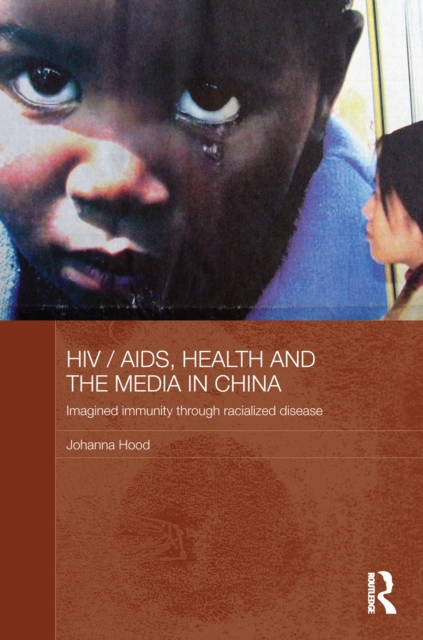
HIV/AIDS, Health and the Media in China
HIV/AIDS is an increasingly serious problem in China, with an increasing number of new cases every year. As a result, HIV organizations have boomed, with both state and non-governmental organisations responding to the threat with campaigns to increase public awareness of the disease, utilising the media as the primary tool to reshape citizens' understandings and views of HIV/AIDS. This book explores how HIV/AIDS is portrayed in China's media. It argues that, despite increasing education campaigns, media coverage and social and academic openness towards HIV/AIDS, many Chinese of the majority Han ethnic group regard infection as a distant possibility, believing themselves to be immune and infection a problem only for certain non-Han ethnic groups with perceived lower moral standards, in particular black Africans. The book explores how HIV/AIDS is reported, analysing the language used in constructing and encoding the health narrative, its subjects, and ideas about the disease. It demonstrates how China's media frequently employs negative events to present the most extreme possibilities of poverty, danger, disasters and disease, with black Africa portrayed as an antiquated, distant and socioculturally and politically backward place, uniquely unsuitable for the containment of disease, in contrast with the progressive, scientifically sophisticated and morally upstanding Chinese. It argues that this discourse has had the effect of distancing many Chinese from the perceived possibility of infection, thus compromising the effectiveness of public health campaigns on HIV/AIDs. It suggests that the key to combating the spread of the disease lies in challenging the racialised narratives through which the disease is portrayed in China's media, rather than simply by aiming to educate greater numbers of people.
eBook
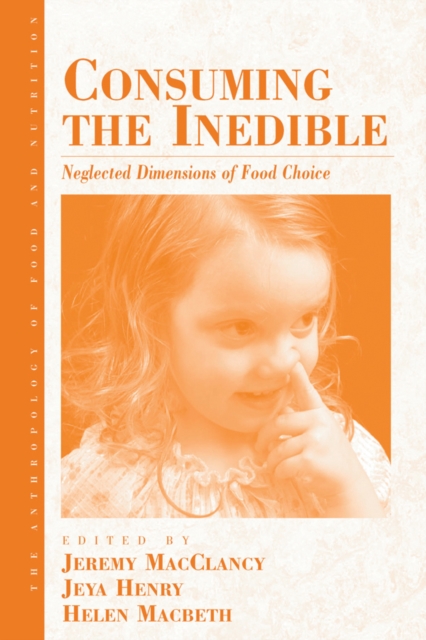
Consuming the inedible : neglected dimensions of food choice
Everyday, millions of people eat earth, clay, nasal mucus, and similar substances. Yet food practices like these are strikingly understudied in a sustained, interdisciplinary manner. This book aims to correct this neglect. Contributors, utilizing anthropological, nutritional, biochemical, psychological and health-related perspectives, examine in a rigorously comparative manner the consumption of foods conventionally regarded as inedible by most Westerners. This book is both timely and significant because nutritionists and health care professionals are seldom aware of anthropological information on these food practices, and vice versa. Ranging across diversity of disciplines Consuming the Inedible surveys scientific and local views about the consequences - biological, mineral, social or spiritual - of these food practices, and probes to what extent we can generalize about them.
eBook

Deep China
Deep China investigates the emotional and moral lives of the Chinese people as they adjust to the challenges of modernity. Sharing a medical anthropology and cultural psychiatry perspective, Arthur Kleinman, Yunxiang Yan, Jing Jun, Sing Lee, Everett Zhang, Pan Tianshu, Wu Fei, and Guo Jinhua delve into intimate and sometimes hidden areas of personal life and social practice to observe and narrate the drama of Chinese individualization. The essays explore the remaking of the moral person during China's profound social and economic transformation, unraveling the shifting practices and struggles of contemporary life.
eBook