
Catalogue Search | MBRL


Are you sure you want to remove the book from the shelf?

{{itemTitle}}
33,303
result(s) for
"buffalo"
Sort by:

Cape buffalo
\"Developed by literacy experts for students in kindergarten through grade three, this book introduces cape buffalo to young readers through leveled text and related photos\"-- Provided by publisher.
Book

Imagining Head Smashed In: Aboriginal Buffalo Hunting on the Northern Plains
At the place known as Head-Smashed-In in southwestern Alberta, Aboriginal people practiced a form of group hunting for nearly 6,000 years before European contact. The large communal bison traps of the Plains were the single greatest food-getting method ever developed in human history. Hunters, working with their knowledge of the land and of buffalo behaviour, drove their quarry over a cliff and into wooden corrals. The rest of the group butchered the kill in the camp below. Author Jack Brink, who devoted 25 years of his career to “The Jump,” has chronicled the cunning, danger, and triumph in the mass buffalo hunts and the culture they supported. He also recounts the excavation of the site and the development of the Head-Smashed-In Buffalo Jump Interpretive Centre, which has hosted 2 million visitors since it opened in 1987. Brink’s masterful blend of scholarship and public appeal is rare in any discipline, but especially in North American pre-contact archaeology. Brink attests, “I love the story that lies behind the jump—the events and planning that went into making the whole event work. I continue to learn more about the complex interaction between people, bison and the environment, and I continue to be impressed with how the ancient hunters pulled off these astonishing kills.”
eBook

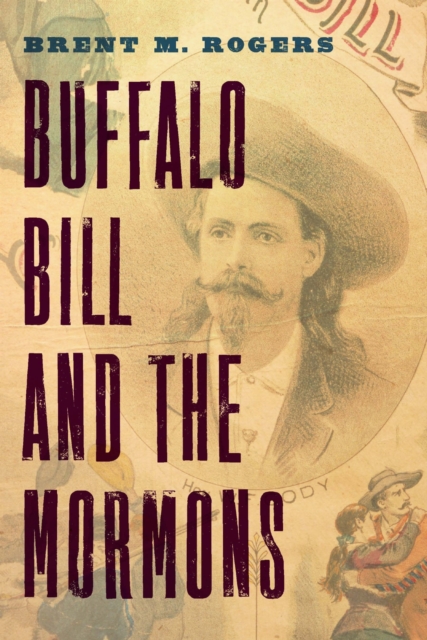
Buffalo Bill and the Mormons
In this never-before-told history of Buffalo Bill and the Mormons,
Brent M. Rogers presents the intersections in the epic histories of
William F. \"Buffalo Bill\" Cody and the Latter-day Saints from 1846
through 1917. In Cody's autobiography he claimed to have been a
member of the U.S. Army wagon train that was burned by the Saints
during the Utah War of 1857-58. Less than twenty years later he
began his stage career and gained notoriety by performing
anti-Mormon dramas. By early 1900 he actively recruited Latter-day
Saints to help build infrastructure and encourage growth in the
region surrounding his town of Cody, Wyoming. In Buffalo Bill
and the Mormons Rogers unravels this history and the
fascinating trajectory that took America's most famous celebrity
from foe to friend of the Latter-day Saints. In doing so, the book
demonstrates how the evolving relationship between Cody and the
Latter-day Saints can help readers better understand the political
and cultural perceptions of Mormons and the American West.
eBook


Bubalus bubalis: A Short Story
The domestic buffalo ( Bubalus bubalis ), also known as water buffalo or Asian buffalo to prevent confusion with the American bison ( Bison bison ), wrongly named buffalo in North America, comprises two subspecies: the river buffalo ( B. bubalis bubalis ) and the swamp buffalo ( B. bubalis kerebau ). The swamp buffalo has a consistent phenotype and is considered as one type, even if many breeds are recognized within it; conversely, the river buffalo subspecies has many breeds. We found limited information available regarding the worldwide distribution of buffaloes. The best estimate is that 208,098,759 buffalo head are distributed in 77 countries in five continents. In this review, we presented the basic aspects of the water buffalo and unraveled the buffalo path followed from the origin of the species to its current global distribution. We reviewed several data sources to provide a better estimate of the world buffalo count and distribution.
Journal Article

The best Polish restaurant in Buffalo : a novel
\"In 1908, 16-year-old Aniela leaves her native Poland for Buffalo, New York. Over the next century, her descendants take root, struggle, and thrive, with the family restaurant at the center of it all, doing their part to weave their threads into the rich tapestry that is the history of immigration in America.\"--Back cover.
Book

Buffalo at the Crossroads
Buffalo at the Crossroads is a diverse set of
cutting-edge essays. Twelve authors highlight the outsized
importance of Buffalo, New York, within the story of American
urbanism. Across the collection, they consider the history of
Buffalo's built environment in light of contemporary developments
and in relationship to the evolving interplay between nature,
industry, and architecture.
The essays examine Buffalo's architectural heritage in rich
context: the Second Industrial Revolution; the City Beautiful
movement; world's fairs; grain, railroad, and shipping industries;
urban renewal and so-called white flight; and the larger networks
of labor and production that set the city's economic fate. The
contributors pay attention to currents that connect contemporary
architectural work in Buffalo to the legacies established by its
esteemed architectural founders: Richardson, Olmsted, Adler,
Sullivan, Bethune, Wright, Saarinen, and others.
Buffalo at the Crossroads is a compelling introduction
to Buffalo's architecture and developed landscape that will frame
discussion about the city for years to come.
Contributors: Marta Cieslak, University of Arkansas - Little
Rock; Francis R. Kowsky; Erkin Özay, University at Buffalo; Jack
Quinan, University at Buffalo; A. Joan Saab, University of
Rochester; Annie Schentag, KTA Preservation Specialists; Hadas
Steiner, University at Buffalo; Julia Tulke, University of
Rochester; Stewart Weaver, University of Rochester; Mary N. Woods,
Cornell University; Claire Zimmerman, University of Michigan
eBook


Core microbiome and bacterial diversity of the Italian Mediterranean river buffalo milk
Milk is one of the most nutritionally complete foods and plays an important role in the human diet. Buffalo milk represents 15% of worldwide milk production and is an important source of bioactive compounds. Buffalo milk has a great market in the Mediterranean area, and dairy products, such as Mozzarella and Ricotta di Bufala Campana, obtained with the Italian Mediterranean buffalo milk, are acknowledged with the Protected Designation of Origin (PDO). This study aimed to characterize, using high-throughput sequencing of the 16S rRNA gene, the milk core microbiome of water buffalo rises in the Amaseno Valley included in the Mozzarella PDO region. The principal features of the core and the auxiliary buffalo milk microbiome are the predominance of Firmicutes and Lactococcus, one of the most important lactic acid bacteria (LAB) taxa in the dairy industry. The comparative analysis of the core microbiomes indicated that the milk of the Italian Mediterranean Buffalo and other mammals share the presence of Streptococcus-affiliated OTUs (operational taxonomic units). Our data also demonstrated that the core microbiome of milk samples collected from PDO and non-PDO regions differ in the number and type of taxa.Key points• Buffalo milk and their derivate products are becoming more popular worldwide.• Dairy locations and practice management affect the structure of the milk microbiota.• Next-generation sequencing (NGS) analysis allows to identify the features of the Italian Buffalo milk microbiome.
Journal Article