
Catalogue Search | MBRL


Are you sure you want to remove the book from the shelf?

{{itemTitle}}
435
result(s) for
"byzantine orthodoxy"
Sort by:

Byzantine Roots of Muslim Jihad
The article explores some of the Byzantine roots of Muslim jihad. Particularly, it examines the phrase “to kill and be killed” in Sura 9:111 of the Qur’an, tracing its Christian predecessors, especially 6th-century Byzantine texts that depict religious zeal leading to violence. The study highlights how Byzantine religious and political contexts, such as the violent enforcement of Chalcedonian orthodoxy, may have shaped early Islamic militancy. It suggests that early Islamic notions of jihad were in”uenced by pre-existing Byzantine ideas, demonstrating a complex interreligious exchange.
Journal Article

Los sacramentales en las Iglesias ortodoxas de tradición bizantina
La vida litúrgica de las Iglesias ortodoxas de tradición bizantina es muy amplia y rica, por la variedad de acciones sagradas que practican habitualmente. Entre los diversos actos sagrados nos ocupamos de los sacramentales; unos forman parte del desarrollo de los sacramentos y de la divina liturgia, y otros, de elementos de la vida cotidiana de los creyentes.En este estudio abordaremos a grandes rasgos las nociones, la evolución histórica y las fluctuaciones en torno a la concepción y el número de los ritos sagrados practicados desde tiempos antiguos hasta nuestros días, la perspectiva ortodoxa de la sacralidad de la vida cristiana y el poder santificador de la Iglesia, las características generales (en las que entran en juego las diferencias existentes con los sacramentos), los elementos constitutivos (las similitudes que tienen con los sacramentos) y la división de los “sacramentales” ortodoxos, atendiendo a varios criterios, según sean el tipo de consagraciones y de bendiciones destinadas o bien a glorificar el nombre de Dios o bien a santificar la vida de los cristianos.Tales “sacramentales” son concebidos por los teólogos ortodoxos como instrumentos capaces de comunicar la gracia celestial, de modo análogo a los sacramentos, dado que están provistos de elementos de naturaleza sacramental. En todo este desarrollo y configuración de los “sacramentales” en las Iglesias bizantinas ha tenido mucho que ver el influjo ejercido por la teología católica latina en el Oriente ortodoxo. Pese a toda la reflexión teológica ortodoxa madurada y la influencia recibida del Occidente latino, parece difícil encontrar en la teología ortodoxa oficial y entre los autores bizantinos una delimitación clara y unívoca entre sacramentos y “sacramentales”. Todo ello nos ayudará a adquirir una visión más clara y completa sobre la sacramentalidad de la vida litúrgica de la Iglesia ortodoxa y de la vida en general.
Journal Article
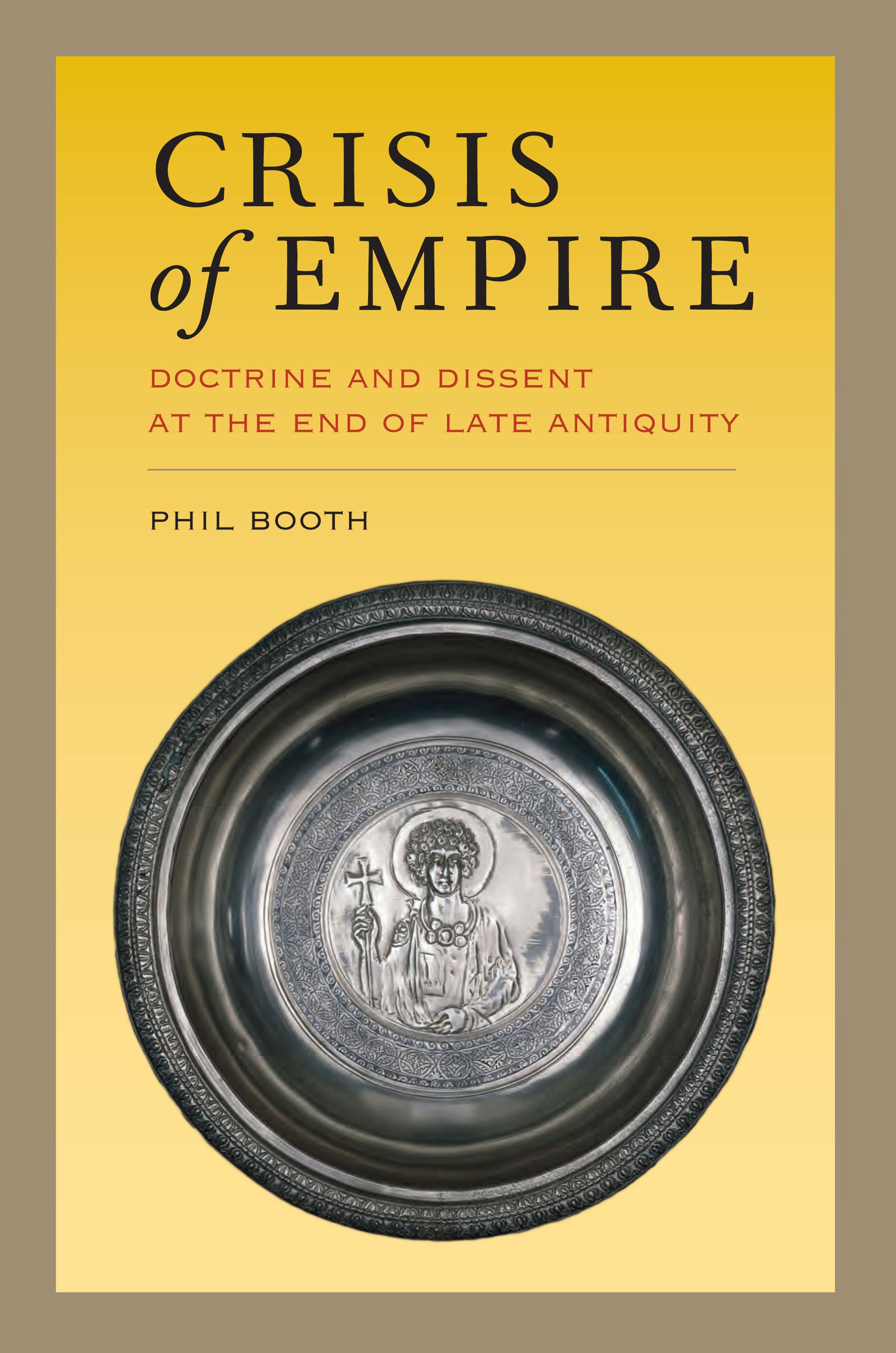
Crisis of empire
This book focuses on the attempts of three ascetics—John Moschus, Sophronius of Jerusalem, and Maximus Confessor—to determine the Church’s power and place during a period of profound crisis, as the eastern Roman empire suffered serious reversals in the face of Persian and then Islamic expansion. By asserting visions which reconciled long-standing intellectual tensions between asceticism and Church, these authors established the framework for their subsequent emergence as Constantinople's most vociferous religious critics, their alliance with the Roman popes, and their radical rejection of imperial interference in matters of the faith. Situated within the broader religious currents of the fourth to seventh centuries, this book throws new light on the nature not only of the holy man in late antiquity, but also of the Byzantine Orthodoxy that would emerge in the Middle Ages, and which is still central to the churches of Greece and Eastern Europe.
eBook

Orthodoxy and Northern Peoples: Goods, Gods and Guidelines
This chapter contains sections titled:
Further Reading
Book Chapter

Tradition Against Scripture? Anti-Jewish Animus Shaping Three Pericopes in the Byzantine Lectionary
This paper examines the role of anti-Jewish sentiment in shaping the Byzantine Lectionary (BL) and its impact on the liturgical reception of Scripture. While previous scholarship has largely focused on positive interpretations within Byzantine hymnography and liturgy, this study argues that the BL not only interpreted the Bible selectively but also obscured or even subverted key biblical messages, particularly regarding Israel and Judaism. Through close analysis of pericopes from the Evangeliarion and the Apostolos, this paper identifies two primary mechanisms of textual manipulation: the omission of certain passages and the relegation of positive statements about Jews to weekday readings, effectively minimizing their reception. Hagiographical and hymnographical texts further illustrate how poetic language and theological motifs reinforced anti-Jewish interpretations. By situating these findings within the broader context of the crystallization of the BL, this study demonstrates on the basis of three pericopes that anti-Judaism permeated both the content and structure of Byzantine liturgical Scripture. This analysis underscores the need for critical engagement with the historical liturgy, revealing how ecclesiastical tradition at times conflicted with the biblical message and calling contemporary scholarship to confront the enduring theological implications of these liturgical practices.
Journal Article

Byzantine Religious Policy on the Integration of the Armenian Church, 860s–880s
In the second half of the ninth century, a new period of confrontation between the Armenian and Byzantine Churches began. The goal of Byzantine religious policy was the abolition of the independence of the Armenian Church and its unification with the imperial Church. In his letters addressed to the ecclesiastical and political leaders of Armenia, the patriarch Photios proposed that they abandon Monophysitism and accept Chalcedonianism. Under this religious veil were disguised the empire's real political, cultural and socio-economic goals. Although Photios could not achieve the final unification of the two Churches, his mission did bring about a temporary religious rapprochement between the Armenians and the Greeks.
Journal Article

A Comparison of Byzantine and Armenian Church Music in Terms of Musical Parameters
In this study, we compare Byzantine and Armenian church music, focusing on musical parameters such as notation systems, modal structure, rhythmic concepts, and liturgical practice. Both traditions, which took shape within the shared cultural heritage of Anatolia, share fundamental common characteristics such as the eight-mode (Octoechos/oot tzayn) system, a monophonic vocal-based structure, and a text-based rhythmic approach; however, they have developed distinct characteristics under the influence of historical, political, and cultural dynamics. Conducted using comparative historical research methods, this study involved a literature review based on primary and secondary sources. The findings reveal the following: while the Byzantine tradition followed an evolution from Ecphonetic to Neume to modern notation, the Armenian tradition developed the Khaz–Hampartsum notation system; the distinction between authentic and plagal modes exists in both traditions, yet the correspondences established with the Turkish makam system at the theoretical and microtonal (cent) levels are approximate; and regarding rhythmic structure, both traditions share a text-driven, free-flowing organization in which liturgical prosody takes precedence over fixed meter, with such variation as exists operating at the level of ornamentation and performance practice rather than underlying rhythmic principle. During the Ottoman period, both traditions experienced deep interaction with Turkish makam theory; the Chrysanthos reform in Byzantium and the Hampartsum notation in Armenian music is concrete evidence of this interaction.
Journal Article

Seeing Byzantium through Edwin Freshfield's eyes: Arts and Crafts, antiquarianism, and learned societies at the end of the nineteenth century
This article focuses on three Byzantine capitals acquired by Edwin Freshfield and later donated to the church of the Wisdom of God in Lower Kingswood, which provide us with two ways to see through Byzantium. The first looks at their original Constantinopolitan context lost at the time of their acquisition. The second reflects on how Byzantine materials attracted wealthy Western European collectors, who combined antiquarian curiosity with the quest for the authentic Christian faith. Their privileged status allowed them both to possess these witnesses of the sacred past and even to project their own image to posterity as being analogous to that of Byzantine patrons.
Journal Article

Anatolian genetic ancestry in North Lebanese populations
Lebanon’s rich history as a cultural crossroad spanning millennia has significantly impacted the genetic composition of its population through successive waves of migration and conquests from surrounding regions. Within modern-day Lebanon, the Koura district stands out with its unique cultural foundations, primarily characterized by a notably high concentration of Greek Orthodox Christians compared to the rest of the country. This study investigates whether the prevalence of Greek Orthodoxy in Koura can be attributed to modern Greek heritage or continuous blending resulting from the ongoing influx of refugees and trade interactions with Greece and Anatolia. We analyzed both ancient and modern DNA data from various populations in the region which could have played a role in shaping the current population of Koura using our own and published data. Our findings indicate that the genetic influence stemming directly from modern Greek immigration into the area appears to be limited. While the historical presence of Greek colonies has left its mark on the region’s past, the distinctive character of Koura seems to have been primarily shaped by cultural and political factors, displaying a stronger genetic connection mostly with Anatolia, with affinity to ancient but not modern Greeks.
Journal Article

PROGRESS TOWARDS A BYZANTINE-MEDIEVAL HISTORIC BUILDINGS TREE-RING CHRONOLOGY FROM CYPRUS USING DENDROCHRONOLOGY AND RADIOCARBON
The rich architectural heritage of Cyprus from the period of Byzantine and Latin rule includes 10 churches inscribed in the UNESCO World Heritage list. Most of these monuments preserve wooden elements: whether structural, decorative or furnishings. Many preserve wall paintings that are considered among the best examples of Byzantine and Medieval art in the Eastern Mediterranean. The dating of these paintings as well as the church buildings themselves, has been based mainly on style, with occasional dedicatory inscriptions and related historical interpretation. We report early results from a project investigating the wooden cultural heritage of Cyprus and in particular the combined use of dendrochronology with radiocarbon via tree-ring sequenced 14C wiggle-matching to help place initial tree-ring sequences. This includes a floating 264-year Pinus brutia chronology from several monuments, which, with a ca. 5-year gap, suggests prospects for >700-years of P. brutia chronology for Cyprus, and, with one gap of several decades to fill, ca. 1100 years of Pinus nigra chronology for Cyprus. Several currently floating elements from the multi-phase UNESCO-listed Timios Stravros church at Pelendri, including a terminus post quem for the celebrated liturgical wooden cross, are approximately dated across the 11th to 16th centuries AD.
Journal Article