
Catalogue Search | MBRL


Are you sure you want to remove the book from the shelf?

{{itemTitle}}
4
result(s) for
"challenging professions"
Sort by:
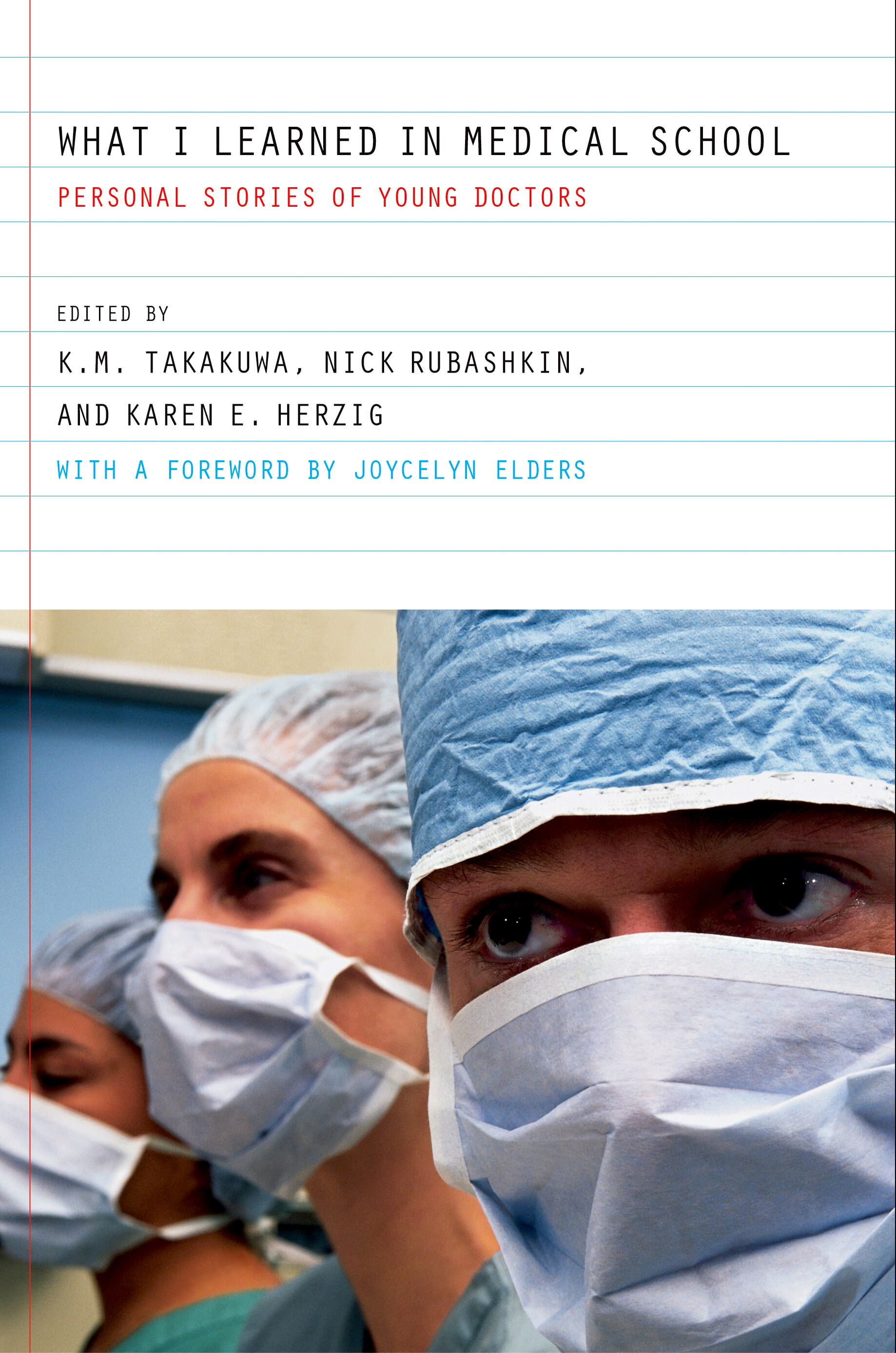
What I Learned in Medical School
Like many an exclusive club, the medical profession subjects its prospective members to rigorous indoctrination: medical students are overloaded with work, deprived of sleep and normal human contact, drilled and tested and scheduled down to the last minute. Difficult as the regimen may be, for those who don't fit the traditional mold—white, male, middle-to-upper class, and heterosexual—medical school can be that much more harrowing. This riveting book tells the tales of a new generation of medical students—students whose varied backgrounds are far from traditional. Their stories will forever alter the way we see tomorrow's doctors. In these pages, a black teenage mother overcomes seemingly insurmountable odds, an observant Muslim dons the hijab during training, an alcoholic hides her addiction. We hear the stories of an Asian refugee, a Mexican immigrant, a closeted Christian, an oversized woman—these once unlikely students are among those who describe their medical school experiences with uncommon candor, giving a close-up look at the inflexible curriculum, the pervasive competitive culture, and the daunting obstacles that come with being \"different\" in medical school. Their tales of courage are by turns poignant, amusing, eye-opening—and altogether unforgettable.
eBook

Teaching Ethics in the Health Professions
This chapter contains sections titled:
Trends in Ethics Teaching in the Health Professions
Theoretical Questions Underlying Curriculum Content
Ethical Knowledge or Ethical Behavior?
The Hidden Curriculum
Conclusion
References
Book Chapter

Insights Gained From a Re-analysis of Five Improvement Cases in Healthcare Integrating System Dynamics Into Action Research
Background Healthcare is complex with multi-professional staff and a variety of patient care pathways. Time pressure and minimal margins for errors, as well as tension between hierarchical power and the power of the professions, make it challenging to implement new policies or procedures. This paper explores five improvement cases in healthcare integrating system dynamics (SD) into action research (AR), aiming to identify methodological aspects of how this integration supported multi-professional groups to discover workable solutions to work-related challenges. Methods This re-analysis was conducted by a multi-disciplinary research group using an iterative abductive approach applying qualitative analysis to structure and understand the empirical material. Frameworks for consultancy assignments/client projects were used to identify case project stages (workflow steps) and socio-analytical questions were used to bridge between the AR and SD perspectives. Results All studied cases began with an extensive AR-inspired inventory of problems/objectives and ended with an SDfacilitated experimental phase where mutually agreed solutions were tested in silico. Time was primarily divided between facilitated group discussions during meetings and modelling work between meetings. Work principles ensured that the voice of each participant was heard, inspired engagement, interaction, and exploratory mutual learning activities. There was an overall pattern of two major divergent and convergent phases, as each group moved towards a mutually developed point of reference for their problem/objective and solution, a case-specific multi-professional knowledge repository. Conclusion By integrating SD into AR, more favourable outcomes for the client organization may be achieved than when applying either approach in isolation. We found that SD provided a platform that facilitated experiential learning in the AR process. The identified results were calibrated to local needs and circumstances, and compared to traditional top-down implementation for change processes, improved the likelihood of sustained actualisation.
Journal Article

It's a journey ... Emerging adult women's experiences of spiritual identity development during postgraduate psychology studies in South Africa
The spiritual identity development of six South African, emerging adult, female, postgraduate psychology students (21 to 22 years old) was explored using reflective writing exercises and individual interviews. Interpretative phenomenological analysis revealed that spiritual identity exploration occurs continuously across the lifespan, with optimal opportunities for deepened development during emerging adulthood. Development happens in context and is enhanced by the postgraduate psychology training experience, as well as exposure to spiritual and religious diversity. Reflections on challenging events result in sophisticated meaning-making processes regarding purpose in life, as well as the authoring of a spiritual life story. There is an intricate and reciprocal relationship between the development of a spiritual identity and the psychology profession - spirituality, values and worldviews can be regarded as important aspects of the therapeutic process for many individuals.
Journal Article