
Catalogue Search | MBRL


Are you sure you want to remove the book from the shelf?

{{itemTitle}}
1,866
result(s) for
"chanson"
Sort by:

Constructions of Childhood and Youth in Old French Narrative
What do we know of medieval childhood? Were boundaries always clear between childhood and young adulthood? Was medieval childhood gendered? Scholars have been debating such questions over half a century. Can evidence from imaginative literature test the conclusions of historians? Phyllis Gaffney's innovative book reveals contrast and change in the portrayal of childhood and youth by looking at vernacular French narratives composed between 1100 and 1220. Covering over sixty poems from two major genres - epic and romance - she traces a significant evolution. While early epics contain only a few stereotypical images of the child, later verse narratives display a range of arguably timeless motifs, as well as a growing awareness of the special characteristics of youth. Whereas juvenile epic heroes contribute to the adult agenda by displaying precocious strength and wisdom, romance children are on the receiving end, requiring guidance and education. Gaffney also profiles the intriguing phenomenon of enfances poems, singing the youthful deeds of established heroes: these 'prequels' combine epic and romance features in distinctive ways. Approaching the history of childhood and youth through the lens of literary genre, this study shows how imaginative texts can both shape and reflect the historical development and cultural construction of emotional values.
eBook
Valéry Arzoumanov
Valéry Arzoumanov, compositeur né en URSS en 1944 et vivant en France depuis 1974, est à la tête d'un catalogue de près de 290 numéros d'opus, dont une large part reste à découvrir. Son oeuvre de jeunesse s'inscrit dans l'héritage de Berg et de Chostakovitch, mais la découverte et la pratique de la musique traditionnelle de l'Inde, la rencontre avec Olivier Messiaen, l'éloignement de sa Russie natale et plusieurs années de solitude favorables à une démarche introspective vont jouer un rôle important dans la transformation de son langage. Après 1980, son écriture originale, imaginative et poétique, nourrie de souvenirs d'enfance et de réminiscences, évoluera vers plus d'intensité et d'envergure dramatique.
eBook

Robert de Reims
Robert de Reims, also known as \"La Chievre de Rains,\" was among
the earliest trouvères-poet-composers who were contemporaries of
the troubadours but who wrote in the dialects of northern France.
This critical edition provides new translations into English and
modern French of all the songs and motets ascribed to him, along
with the original texts, the extant music, and a substantive
introduction.
Active sometime between 1190 and 1220, Robert was an influential
figure in the literary circles of Arras. Thirteen compositions set
to music are here attributed to him, including nine chansons and
four polyphonic motets that were broadly disseminated in the
thirteenth century and beyond. Robert's work is exceptional on a
number of fronts. He lavished particular care on the phonic harmony
of his words. Acoustic luxuriance and expertise in rhyming,
grounded in the play of echoes and variation (often extending into
the music), constitute the hallmark of his poetry. Moreover, he is
the earliest trouvère known to have composed a parodic sotte
chanson contre Amours (silly song against Love).
Located clearly at the nexus of monophonic song and polyphony,
Robert's corpus also poses the intriguing question of trouvère
participation in the development of the polyphonic repertory. The
case of Robert de Reims jostles and tempers the standard history of
the chanson and motet.
Accessible and instructive, this trilingual critical edition of
his complete works makes the oeuvre of this innovative and
consequential trouvère available in one volume for the first
time.
eBook

Coherence-Making Strategies in the Renaut de Montauban Tradition
In the transition from the late Middle Ages to the early modern period, the vernacular prose romance became popular throughout Europe. This new genre brought about the functional expansion of vernacular languages into the realm of prose, which had previously been primarily the preserve of Latin. This paper discusses coherence-making strategies in prose romances from a diachronic perspective. In a case study of the Renaut de Montauban, also called The Four Sons of Aymon, we explore a number of linguistic devices used to convey narrative coherence in the chanson de geste tradition and what happens to these patterns when the matter is transposed from verse into prose and across languages, from French into English. We focus on copula constructions with initial intensifiers, the discourse markers lors, adonc, or and si (and their English counterparts), as well as the narrative formula commonly referred to as entrelacement or interlacement. By combining linguistic observations with a narratological framework borrowed from literary analysis, we aim to shed light on further research possibilities into the realm of comparative medieval literature which considers new generic (prose), material (print), and linguistic (French-English) contexts. Our results show that the change in form from verse to prose causes word order patterns with sentence-initial intensifiers to decline in favour of a general preference for discourse markers. These became the preferred way of establishing coherence in long prose texts. Their varied use in French and the English translation of the Renaut show a definite awareness of the significance of this resource for plot progression and the management of shifts between narrative levels. Furthermore, the combination of discourse markers with other narrative formulae, like interlacement, and typographical features underscore the deliberate use of these linguistic features as coherence-making elements in the prose Renaut tradition.
Journal Article
The Châteauroux Version of the \Chanson de Roland\
The book series Beihefte zur Zeitschrift für romanische Philologie is among the most renowned publications in Romance Studies. It covers the entire field of Romance linguistics, including the national languages as well as the lesser studied Romance languages. The series publishes high-quality monographs and collected volumes on all areas of linguistic research, on medieval literature and on textual criticism.
eBook
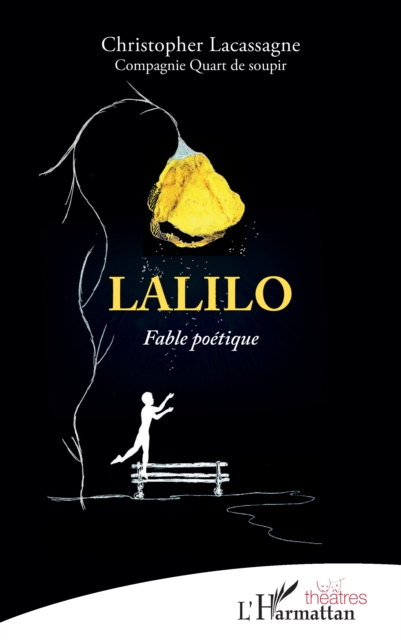
Lalilo - Fable poétique
Il y a le monde du rêve, le monde de la réalité et l'autre. Un monde qui révèle la vraie nature des hommes et qui interroge sur notre destinée. Une avenue engorgée de silhouettes... Un couloir de nuages... Et Lalilo sous un vieil arbre à l'ombre bienfaisante. Arbre majestueux, aux mille fleurs bleu cobalt. L'une d'entre elles était différente par son jaune éclatant et battant comme un coeur. Elle était magique et laissait s'échapper dans l'air des paillettes dorées à chaque battement de lumière. Étaient-ce des étoiles flottant dans la brise légère du matin ? Lalilo les recueillit une à une, ses poches en étaient pleines... Prémisse de sa propre métamorphose. La raison pour laquelle il s'est retrouvé face à cet arbre séculaire est une longue histoire... Cette rencontre préside son destin qui va le conduire à se débarrasser de son déguisement et embrasser le monde en cultivant sa différence.
eBook
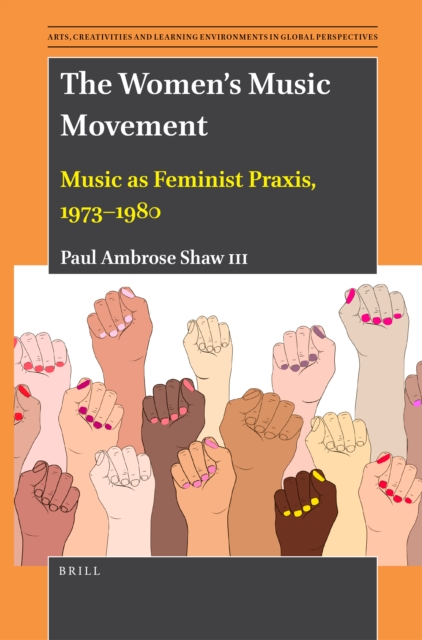
The Women's Music Movement
The Women's Music Movement: Music as Feminist Praxis, 1973-1980 explores second wave feminist movement through the lens of the women's music movement. Featured are content analyses of five songs and an exploration of music as feminist activism.
eBook

Medieval Sex Lives
Medieval Sex Lives examines
courtly song as a complex cultural product and social force in the
early fourteenth century, exploring how it illuminates the
relationship between artistic production and the everyday lives of
the elites for whom this music and poetry was composed and
performed. In a focused analysis of the Oxford Bodelian
Library's Douce 308 manuscript-a fourteenth-century compilation
that includes over five hundred Old French lyrics composed over two
centuries alongside a narrative account of elaborate courtly
festivities centered on a week-long tournament-Elizabeth Eva Leach
explores two distinct but related lines of inquiry: first, why the
lyric tradition of \"courtly love\" had such a long and successful
history in Western European culture; and, second, why the songs in
the Bodleian manuscript would have been so important to the book's
compilers, owners, and readers.
The manuscript's lack of musical notation and authorial
attributions make it unusual among Old French songbooks; its
arrangement of the lyrics by genre invites inquiry into the
relationship between this long musical tradition and the emotional
and sexual lives of its readers. Combining an original account of
the manuscript's contents and their likely social milieu with
in-depth musical and poetic analyses, Leach proposes that lyrics,
whether read or heard aloud, provided a fertile means of
propagating and enabling various sexual scripts in the Middle Ages.
Drawing on musicology, literary history, and the sociology and
psychology of sexuality, Medieval Sex Lives presents a
provocative hypothesis about the power of courtly songs to model,
inspire, and support sexual behaviors and fantasies.
eBook
Coherence-Making Strategies in the Renaut de Montauban Tradition
In the transition from the late Middle Ages to the early modern period, the vernacular prose romance became popular throughout Europe. This new genre brought about the functional expansion of vernacular languages into the realm of prose, which had previously been primarily the preserve of Latin. This paper discusses coherence-making strategies in prose romances from a diachronic perspective. In a case study of the Renaut de Montauban, also called The Four Sons of Aymon, we explore a number of linguistic devices used to convey narrative coherence in the chanson de geste tradition and what happens to these patterns when the matter is transposed from verse into prose and across languages, from French into English. We focus on copula constructions with initial intensifiers, the discourse markers lors, adonc, or and si (and their English counterparts), as well as the narrative formula commonly referred to as entrelacement or interlacement. By combining linguistic observations with a narratological framework borrowed from literary analysis, we aim to shed light on further research possibilities into the realm of comparative medieval literature which considers new generic (prose), material (print), and linguistic (French-English) contexts. Our results show that the change in form from verse to prose causes word order patterns with sentence-initial intensifiers to decline in favour of a general preference for discourse markers. These became the preferred way of establishing coherence in long prose texts. Their varied use in French and the English translation of the Renaut show a definite awareness of the significance of this resource for plot progression and the management of shifts between narrative levels. Furthermore, the combination of discourse markers with other narrative formulae, like interlacement, and typographical features underscore the deliberate use of these linguistic features as coherence-making elements in the prose Renaut tradition. Na prehodu iz srednjega v zgodnji novi vek so prozne romance v vernakularnih jezikih postale priljubljene po vsej Evropi. Novi žanr je privedel do funkcijske širitve teh jezikov na prozna besedila, ki so bila pred tem pretežno v domeni latinščine. Prispevek se ukvarja s strategijami vzpostavljanja koherence v proznih romancah z diahrone perspective. Ob besedilu o Renautu de Montaubanu, imenovanem tudi The Four Sons of Aymon, proučujemo razne jezikovne mehanizme, ki se v tradiciji chanson de geste uporabljajo za doseganje pripovedne koherence, in opazujemo, kaj se zgodi s temi vzorci, kadar se vsebina prestavi iz verzov v prozo in iz francoskega v angleški jezik. Osredotočamo se na zgradbe s kopulo, ki se pojavljajo skupaj z začetnimi intenzifikatorji, na diskurzne označevalce lors, adonc, or in si (skupaj z njihovimi angleškimi ustreznicami) ter na pripovedno formula, znano kot entrelacement oz. preplet. S kombiniranjem jezikoslovnih opažanj in naratološkega modela, izposojenega iz literarne vede, skušamo nakazati nadaljnje raziskovalne možnosti za primerjalno proučevanje srednjeveške književnosti, ki upošteva nov žanrski (proza), materialni (tisk) in jezikovni (francosko-angleškega) kontekst. Dobljeni rezultati kažejo, da je sprememba iz verzne v prozno obliko povzročila upad rabe besednorednih vzorcev z intenzifikatorji na začetku povedi in nasploh prevlado diskurznih označevalcev, ki so postali najpogostejše sredstvo vzpostavljanja coherence v dolgih proznih besedilih. Raznolika raba diskurznih označevalcev v francoščini in v Renautovem angleškem prevodu nedvomno kaže na zavedanje o pomenu tega sredstva pri zgodbenem razvoju in pri obvladovanju prehodov med pripovednimi ravnmi. Poleg tega kombiniranje diskurznih označevalcev z drugimi pripovednimi sredstvi, kot so zgodbeno prepletanje in tipografske značilnosti, priča o zavestni rabi teh jezikovnih značilnosti kot elementov, ki vzpostavljajo koherenco v proznih besedilih Renautove tradicije.
Journal Article

Serge Gainsbourg
Jusqu'à l'âge de 37 ans, Serge Gainsbourg a évolué dans le milieu de la rive gauche et du cabaret, d'abord comme musicien accompagnateur chez Milord l'Arsouille, puis comme auteur-compositeur-interprète. Ainsi, on le vit notamment aux Trois Baudets, à Bobino, au Port du Salut, au Théâtre de l'Étoile, au College Inn, de même que dans de nombreux galas donnés à Paris comme en province, sans oublier à la radio et à la télévision. Grâce aux documents d'époque et à des témoignages rares ou inédits de confrères, de collaborateurs et de proches qui ont évolué dans le même monde, cet ouvrage tâche de retracer de façon aussi complète et précise que possible son parcoursdurant ces années qui furent cruciales pour sa carrière.
eBook