
Catalogue Search | MBRL


Are you sure you want to remove the book from the shelf?

{{itemTitle}}
5,529
result(s) for
"charles v"
Sort by:


The dermal deposits in the finger of the Holy Roman Emperor Charles I of Spain and V of Germany
Charles I of Spain and V of Germany was one of the most prominent figures in Christendom. The vast empire ruled by the monarch extended across multiple continents. However, the final years of his life were overshadowed by depression and incapacitating joint degeneration, leading him to retire to the Monastery of Yuste in Cáceres, Spain. It was there that he contracted malaria, a disease that ultimately claimed his life. In this article, we evaluate the studies conducted on one of his mummified fingers to confirm the presence of malaria and investigate the cause of his joint degeneration, which was attributed to intense deposits of uric acid.
Journal Article
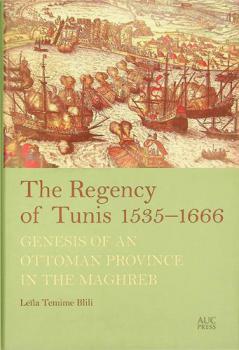
The regency of Tunis, 1535-1666 : genesis of an Ottoman province in the Maghreb
The first Ottoman conquest of Tunis took place in 1534 under the command of Kheireddine Barbarossa. However, it was not until 1574 that the Ottomans finally wrested control of the former Hafsid Ifriqiya (modern-day Tunisia), retaining it until the French occupation of Tunisia in 1881. The Regency of Tunis was thus born as an imperial province, and individuals originating from throughout the vast territory of the Ottoman Empire settled there, rapidly creating a new elite via marriage with women from local notable families. This book studies the former Hafsid territory's position within the Ottoman world and the social developments that accompanied the genesis of the united Regency of Tunis until the death of Hamouda Pasha. On the social plane, who were these Turko-Ottomans who were able to drive the Hafsid kings from their throne? Were they noble officers, as is so often remembered? The sources paint a different picture: one of rogues from distant Anatolia, and captives of corsairs from across the Mediterranean. These men expanded privateering for their own profit, seizing the country's riches for themselves and monopolizing exports to Europe. Leïla Blili revisits the conventional historiography of Ottoman Tunisia, widely considered by historians to be an autonomous province ruled by a dominant class of Turko-Ottomans cut off from local society. She shows that the Regency of Tunis was much less autonomous than secondary scholarship has alleged and, through her analysis of the marriages of these Turko-Ottomans, that they were in fact well-integrated into the local population. In doing so, she also illuminates the place of kinship ties in the establishing of inheritances, access to spheres of power, and the very acquisition of titles of nobility. -- Provided by publisher.
BOOK


The warrior king and the invasion of France
Offers a critical look at the life of Henry V of England, portraying him as brilliant military strategist as well as a megalomaniacal warmonger whose military efforts in France made him popular at home, but led to disastrous consequences after his death.
Book
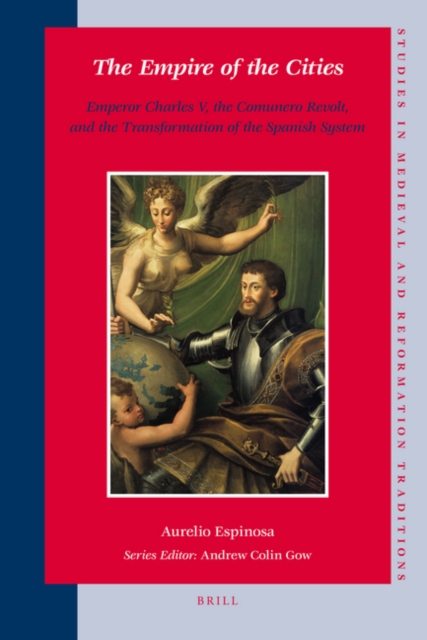
The Empire of the Cities: Emperor Charles V, the Comunero Revolt, and the Transformation of the Spanish System
This study of the Spanish monarchy, bureaucracy and representative government under Charles V before and after the comunero revolt (1520-1521) demonstrates how the emperor and Castilian republics institutionalized management procedures that promoted accountability, advanced a meritocracy, and facilitated expansionism and domestic stability.
eBook

The golden empire : Spain, Charles V, and the creation of America
A narrative chronicle of Spain's dominant years traces Latin America's exploration, conquest, and economic development between 1522 and 1556, offering insight into how period accomplishments remain influential in today's world.
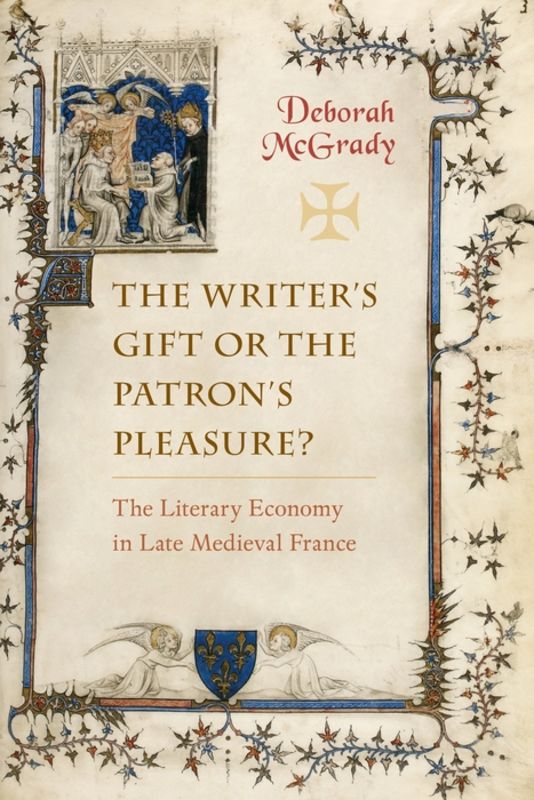
The Writer's Gift or the Patron's Pleasure?
The Writer's Gift or the Patron's Pleasure? argues that the French King Charles V's unprecedented enthusiasm for the literary commission triggered a crucial, multi-generational debate within the book community about how a work's status as solicited or unsolicited affected its value and purpose.
eBook


Charles V's universal empire in the Compendio of Antonio Doria
Habsburg intellectuals claimed that Charles V (1500–1558) was chosen by God to coordinate the defence of Christendom against the Ottoman Empire and to take care of the spiritual wellbeing of all Christians by fighting heresy. The Genoese captain Antonio Doria (c.1495–1577) was among the writers describing Charles as a pious and benevolent universal monarch and endorsing his military and political project. In the work entitled ‘Compendio’ (1571), Doria gives an account of the events taking place in the world during Charles's reign. This document is significant not only because Doria (with his more famous cousin Andrea) took part in several of the military episodes here recounted, but also because Genoa had joined the empire without losing its independence. Therefore, Antonio Doria's ‘Compendio’ represents an important source if we want to understand the reception of (and contribution to) sixteenth‐century imperial propaganda in the Italian context. After briefly presenting Doria's career and Genoa's republican culture, this article shows the global perspective of the text and argues that we can find in it an endorsement of Habsburg governance and an attempt to (re)order recent events within a universal, supranational framework. The final section briefly compares the ‘Compendio’ with two contemporary histories.
Journal Article