
Catalogue Search | MBRL


Are you sure you want to remove the book from the shelf?

{{itemTitle}}
55
result(s) for
"chicano family"
Sort by:
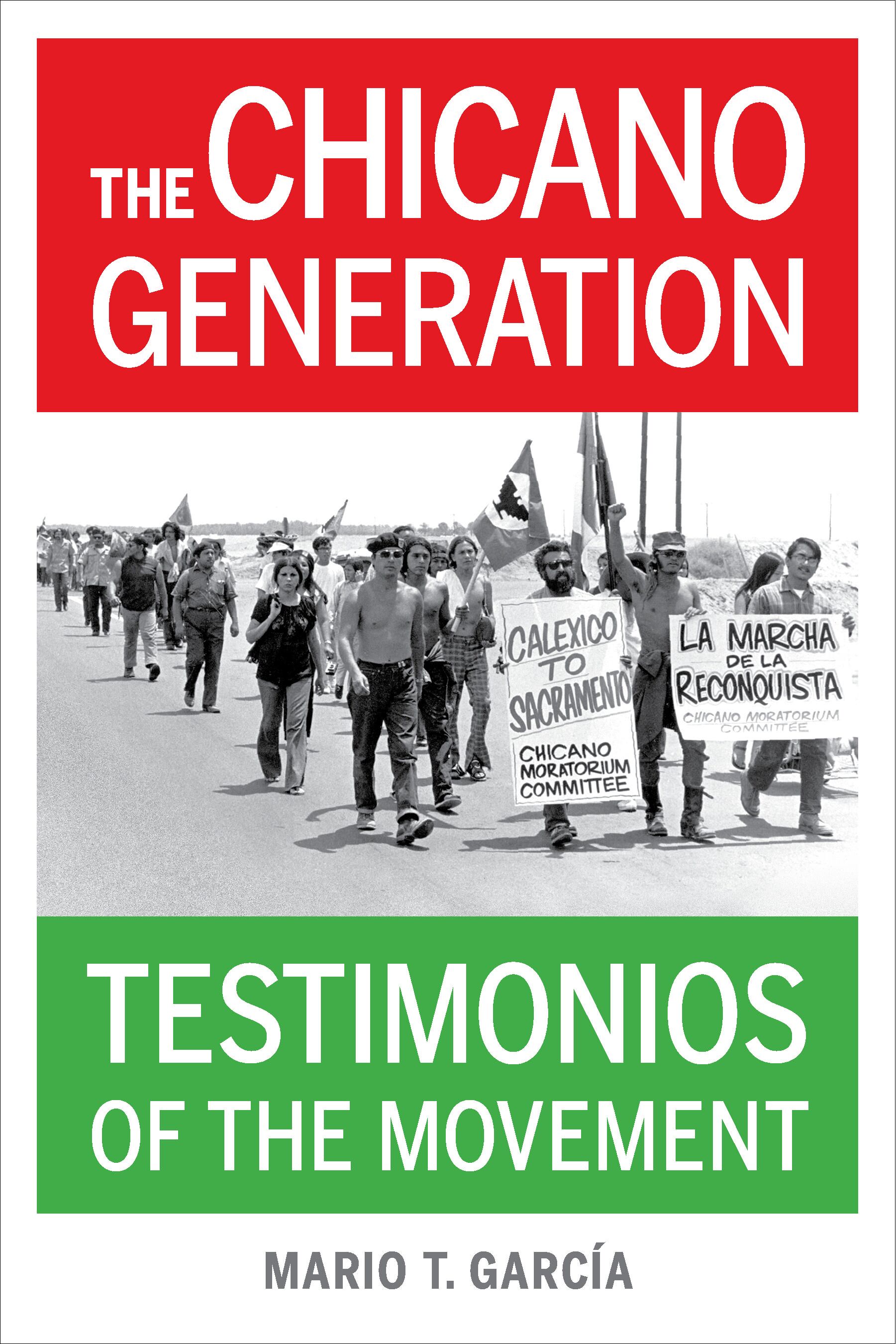
The Chicano generation
In The Chicano Generation, veteran Chicano civil rights scholar Mario T. García provides a rare look inside the struggles of the 1960s and 1970s as they unfolded in Los Angeles. Based on in-depth interviews conducted with three key activists, this book illuminates the lives of Raul Ruiz, Gloria Arellanes, and Rosalio Muñoz—their family histories and widely divergent backgrounds; the events surrounding their growing consciousness as Chicanos; the sexism encountered by Arellanes; and the aftermath of their political histories. In his substantial introduction, García situates the Chicano movement in Los Angeles and contextualizes activism within the largest civil rights and empowerment struggle by Mexican Americans in US history—a struggle that featured César Chávez and the farm workers, the student movement highlighted by the 1968 LA school blowouts, the Chicano antiwar movement, the organization of La Raza Unida Party, the Chicana feminist movement, the organizing of undocumented workers, and the Chicano Renaissance. Weaving this revolution against a backdrop of historic Mexican American activism from the 1930s to the 1960s and the contemporary black power and black civil rights movements, García gives readers the best representations of the Chicano generation in Los Angeles.
eBook


A Courtship after Marriage
From about seven children per woman in 1960, the fertility rate in Mexico has dropped to about 2.6. Such changes are part of a larger transformation explored in this book, a richly detailed ethnographic study of generational and migration-related redefinitions of gender, marriage, and sexuality in rural Mexico and among Mexicans in Atlanta.
eBook

Fertile Matters
The fertility of women of Mexican origin: a social constructionist approach -- The twin problems of overpopulation and immigration in 1970s California -- \"They breed like rabbits\": the forced sterilization of Mexican-origin women -- \"More than a hint of extraordinary fertility...\": social science perspectives on Mexican-origin women's reproductive behavior (1912-1980) -- Controlling borders and babies: John Tanton, ZPG, and racial anxiety over Mexican-origin women's fertility -- The right to have children: Chicanas organizing against sterilization abuse -- \"Baby-makers and welfare takers\": the (not-so) new politics of Mexican-origin women's reproduction -- Epilogue -- Notes -- References -- Index
eBook

La pérdida de una lengua y la intraducibilidad en Hunger of Memory de Richard Rodriguez
Richard Rodriguez's Hunger of Memory (1982) is often seen as a story of profes-sional success and assimilation into American life, but the author was criticized for opposing so-called \"affirmative action\" and bilingual education, highly controversial issues defended by Chicano activists in the eighties. Conversely, 21st-century readers began to read this work in a more nuanced way. Rodriguez was born in California into a Mexican immigrant family, and at age six, his parents decided to switch to English at home. The loss of Spanish caused feelings of anguish and guilt. The silence in the family reveals the paradox that speaking about trauma is perceived as impossible, while language is exactly the tool to heal the trau-matized. The aim of this article is to analyze the complex relationship between trauma and translation in three central themes: family, religion and race.
Journal Article

Gloria Anzaldúa’s Mexican Genealogy: From Pelados and Pachucos to New Mestizas
This essay examines Gloria Anzaldúa’s critical appropriation of two Mexican philosophers in the writing of Borderlands/La Frontera: Samuel Ramos and Octavio Paz. We argue that although neither of these authors is cited in her seminal work, Anzaldúa had them both in mind through the writing process and that their ideas are present in the text itself. Through a genealogical reading of Borderlands/La Frontera, and aided by archival research, we demonstrate how Anzaldúa’s philosophical vision of the “new mestiza” is a critical continuation of the broader tradition known as la filosofía de lo mexicano, which flourished during a golden age of Mexican philosophy (1910–1960). Our aim is to open new directions in Latinx and Latin American philosophy by presenting Anzaldúa’s Borderlands/La Frontera as a profound scholarly encounter with two classic works of Mexican philosophy, Ramos’ Profile of Man and Culture in Mexico and Paz’s The Labyrinth of Solitude.
Journal Article

Intimate Migrations
In her research with transnational Mexicans, Deborah A. Boehm has often asked individuals: if there were no barriers to your movement between Mexico and the United States, where would you choose to live? Almost always, they desire the freedom to come and go. Yet the barriers preventing such movement are many. Because of the United States' rigid immigration policies, Mexican immigrants often find themselves living long distances from family members and unable to easily cross the U.S.-Mexico border. Transnational Mexicans experience what Boehm calls intimate migrations, flows that both shape and are structured by gendered and familial actions and interactions, but are always defined by the presence of the U.S. state. Intimate Migrations is based on over a decade of ethnographic research, focusing on Mexican immigrants with ties to a small, rural community in the Mexican state of San Luis Potosi and several states in the U.S. West. By showing how intimate relations direct migration, and by looking at kin and gender relationships through the lens of illegality, Boehm sheds new light on the study of gender and kinship, as well as understandings of the state and transnational migration.
eBook

Intercambio: A Visual History of Nuevo Teatro from the Ana Olivarez-Levinson Photography Collection
The instructor agreed to give me a well-deserved credit in the next semester once I registered in her Chicano literature class. Since I was directing, I was able to take photos as the action was unfolding. The primary goal was not only to return to the Houston group to share this rich historical experience reflected by the multiple pictures and written material but also to strengthen the commitment to reproduce similar plays with political and social commentary to the Houston community of East End (at the time). The photo collection and materials were featured in a documentary paying tribute to him.2 In essence, from documenting La Gran Carpa de los Rasquachis in 1973 to the importance of documenting and sharing other past histories of the Chicano culture that my peers in Houston would not have known about, I have contributed to raising consciousness about and awareness of the efforts made by the Chicano civil rights movement for a better community and for a better outcome for our people. A Mobile Archive: Collaborating with Ana Olivarez-Levinson Eric Mayer-García The selected photography from the personal collection of Ana Olivarez-Levinson3 centers around the role of intercambio (exchange) in the history of Nuevo Teatro, a hemispheric-wide movement in theatre for social change spanning from the 1970s to the 1980s.4 Olivarez-Levinson and I have organized the photographs, reproduced here in black and white, into four sections.
Journal Article

The Road to Healing
Current research on pilgrimage shows that travel in search for clarification or quest is drawn from either traditional practices within established religions or from rituals that can be melded with new contemporary forms of spirituality. Studies show that pilgrimage is therapeutic in biological, psychological, social, and spiritual ways. When one thinks of pilgrimage, religion generally comes to mind, however, secular pilgrimages have emerged as a viable means of connecting deeply in an existential manner. Upon completion of the journey, pilgrims generally experience life as significantly more meaningful and their psychological or spiritual woe is overcome. In the novel, Let Their Spirits Dance (2003) by Chicana author Stella Pope Duarte, the Ramírez family has lost a loved one in the Vietnam War. They have never healed from this tragedy and some 27 years later, Alicia, the matriarch of the family, claims to hear voices in the night that she believes to be of Jesse, her dead son. This study draws on current anthropological scholarship on pilgrimage to analyze the theme of pilgrimage and its' therapeutic capabilities in the Ramírez family.
Journal Article

Backlash against Welfare Mothers
Backlash against Welfare Mothers is a forceful examination of how and why a state-level revolt against welfare, begun in the late 1940s, was transformed into a national-level assault that destroyed a critical part of the nation's safety net, with tragic consequences for American society. With a wealth of original research, Ellen Reese puts recent debates about the contemporary welfare backlash into historical perspective. She provides a closer look at these early antiwelfare campaigns, showing why they were more successful in some states than others and how opponents of welfare sometimes targeted Puerto Ricans and Chicanos as well as blacks for cutbacks. Her research reveals both the continuities and changes in American welfare opposition from the late 1940s to the present. Reese brings new evidence to light that reveals how large farmers and racist politicians, concerned about the supply of cheap labor, appealed to white voters' racial resentments and stereotypes about unwed mothers, blacks, and immigrants in the 1950s. She then examines congressional failure to replace the current welfare system with a more popular alternative in the 1960s and 1970s, which paved the way for national assaults on welfare. Taking a fresh look at recent debates on welfare reform, she explores how and why politicians competing for the white vote and right-wing think tanks promoting business interests appeased the Christian right and manufactured consent for cutbacks through a powerful, racially coded discourse. Finally, through firsthand testimonies, Reese vividly portrays the tragic consequences of current welfare policies and calls for a bold new agenda for working families.
eBook