
Catalogue Search | MBRL


Are you sure you want to remove the book from the shelf?

{{itemTitle}}
67
result(s) for
"christian devil"
Sort by:
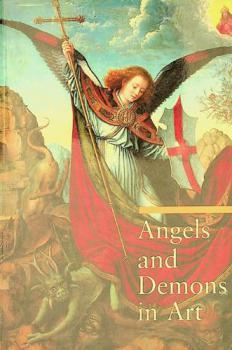

The Devil
\"Although the Devil still 'lives' in modern popular culture, for the past 250 years he has become marginal to the dominant concerns of Western intellectual thought. That life could not be thought or imagined without him, that he was a part of the everyday, continually present in nature and history, and active at the depths of our selves, has been all but forgotten. It is the aim of this work to bring modern readers to a deeper appreciation of how, from the early centuries of the Christian period through to the recent beginnings of the modern world, the human story could not be told and human life could not be lived apart from the 'life' of the Devil. With that comes the deeper recognition that, for the better part of the last two thousand years, the battle between good and evil in the hearts and minds of men and women was but the reflection of a cosmic battle between God and Satan, the divine and the diabolic, that was at the heart of history itself.\"-fromThe Devil
Lucifer, Mephistopheles, Beelzebub; Ha-Satan or the Adversary; Iblis or Shaitan: no matter what name he travels under, the Devil has throughout the ages and across civilizations been a compelling and charismatic presence. In Christianity, Judaism, and Islam, the supposed reign of God has long been challenged by the fiery malice of his opponent, as contending forces of good and evil have between them weighed human souls in the balance.
InThe Devil, Philip C. Almond explores the figure of evil incarnate from the first centuries of the Christian era. Along the way, he describes the rise of demonology as an intellectual and theological pursuit, the persecution as witches of women believed to consort with the Devil and his minions, and the decline in the belief in Hell and in angels and demons as corporeal beings as a result of the Enlightenment. Almond shows that the Prince of Darkness remains an irresistible subject in history, religion, art, literature, and culture.
Almond brilliantly locates the \"life\" of the Devil within the broader Christian story of which it is inextricably a part; the \"demonic paradox\" of the Devil as both God's enforcer and his enemy is at the heart of Christianity. Woven throughout the account of the Christian history of the Devil is another complex and complicated history: that of the idea of the Devil in Western thought. Sorcery, witchcraft, possession, even melancholy, have all been laid at the Devil's doorstep. Until the Enlightenment enforced a \"disenchantment\" with the old archetypes, even rational figures such as Thomas Aquinas were obsessed with the nature of the Devil and the specific characteristics of the orders of demons and angels. It was a significant moment both in the history of demonology and in theology when Benedict de Spinoza (1632-1677) denied the Devil's existence; almost four hundred years later, popular fascination with the idea of the Devil has not yet dimmed.
eBook


The Satanic Epic
The Satan of Paradise Lost has fascinated generations of readers. This book attempts to explain how and why Milton's Satan is so seductive. It reasserts the importance of Satan against those who would minimize the poem's sympathy for the devil and thereby make Milton orthodox. Neil Forsyth argues that William Blake got it right when he called Milton a true poet because he was \"of the Devils party\" even though he set out \"to justify the ways of God to men.\" In seeking to learn why Satan is so alluring, Forsyth ranges over diverse topics--from the origins of evil and the relevance of witchcraft to the status of the poetic narrator, the epic tradition, the nature of love between the sexes, and seventeenth-century astronomy. He considers each of these as Milton introduces them: as Satanic subjects. Satan emerges as the main challenge to Christian belief. It is Satan who questions and wonders and denounces. He is the great doubter who gives voice to many of the arguments that Christianity has provoked from within and without. And by rooting his Satanic reading of Paradise Lost in Biblical and other sources, Forsyth retrieves not only an attractive and heroic Satan but a Milton whose heretical energies are embodied in a Satanic character with a life of his own.
eBook

Johann Wier
This book deals with a fascinating and original claim in 16th-century Europe. Witches should be cured, not executed. It was the physician and scholar Johann Wier (1515-1588) who challenged the dominant idea. For his defense of witches, more than three centuries later, Sigmund Freud chose to put Wier's work among the ten books to be read. According to Wier, Satan seduced witches, thus they did not deserve to be executed, but they must be cured for their melancholy. When the witch hunt was rising, Wier was the first to use some of the arguments adopted in the emerging debate on religious tolerance in defence of witches. This is the first overall study of Wier which offers an innovative view of his thought, by highlighting Wier's sources and his attempts to involve theologians, physicians, and philosophers in his fight against cruel witch hunts. Johann Wier: Debating the Devil and Witches situates and explains his claim as a result of a moral and religious path as well as the outcome of his medical experience. The book aims to provide an insightful examination of Wier's works to read his pleas emphasizing the duty of every good Christian to not abandon anyone who strays from the flock of Christ. For these reasons, Wier was overwhelmed by bitter confutations, such as those of Jean Bodin, but he was also celebrated for his outstanding and prolific heritage for debating religious tolerance.
eBook

The Child Witches of Olague
In the early seventeenth century, thousands of children in
Spain's Navarre region claimed to have been bewitched. The
Child Witches of Olague features the legal depositions of
self-described child witches as well as their parents and victims.
The volume sheds new light on Navarre's massive witch persecution
(1608-14), illuminating the tragic cost of witch hunts and opening
a new window onto our understanding of early modern Iberian
life.
Drawing from Spanish-language sources only recently discovered,
Homza translates and annotates three court cases from Olague in
1611 and 1612. Two were defamation trials involving the slur
\"witch,\" and the third was a petition for divorce filed by an
accused witch and wife. These cases give readers rare access to the
voices of illiterate children in the early modern period. They also
speak to the emotions of witch-hunting, with testimony about
enraged, terrified parents turning to vigilante justice against
neighbors. Together the cases highlight gender norms of the time,
the profound honor code of early modern Navarre, and the power of
children to alter adult lives.
With translations of Inquisition correspondence and printed
pamphlets added for context, The Child Witches of Olague
offers a portrait of witch-hunting as a horrific, contagious
process that fractured communities. This riveting, one-of-a-kind
book will appeal to anyone interested in the history of witch
hunts, life in early modern Spain, and history as revealed through
court testimony.
eBook

Faithful Bodies
In the seventeenth-century English Atlantic, religious beliefs and practices played a central role in creating racial identity. English Protestantism provided a vocabulary and structure to describe and maintain boundaries between insider and outsider. In this path-breaking study, Heather Miyano Kopelson peels back the layers of conflicting definitions of bodies and competing practices of faith in the puritan Atlantic, demonstrating how the categories of white, black, and Indian developed alongside religious boundaries between Christian and heathen and between Catholic and Protestant.Faithful Bodiesfocuses on three communities of Protestant dissent in the Atlantic World: Bermuda, Massachusetts, and Rhode Island. In this puritan Atlantic, religion determined insider and outsider status: at times Africans and Natives could belong as long as they embraced the Protestant faith, while Irish Catholics and English Quakers remained suspect. Colonists interactions with indigenous peoples of the Americas and with West Central Africans shaped their understandings of human difference and its acceptable boundaries. Prayer, religious instruction, sexual behavior, and other public and private acts became markers of whether or not blacks and Indians were sinning Christians or godless heathens. As slavery became law, transgressing people of color counted less and less as sinners in English puritans eyes, even as some of them made Christianity an integral part of their communities. As Kopelson shows, this transformation proceeded unevenly but inexorably during the long seventeenth century.
eBook

The Prince of Darkness
The Devil, Satan, Lucifer, Mephistopheles - throughout history the Prince of Darkness, the Western world's most powerful symbol of evil, has taken many names and shapes. Jeffrey Burton Russell here chronicles the remarkable story of the Devil from antiquity to the present. While recounting how past generations have personified evil, he deepens our understanding of the ways in which people have dealt with the enduring problem of radical evil.After a compelling essay on the nature of evil, Russell uncovers the origins of the concept of the Devil in various early cultures and then traces its evolution in Western thought from the time of the ancient Hebrews through the first centuries of the Christian era. Next he turns to the medieval view of the Devil, focusing on images found in folklore, scholastic thought, art, literature, mysticism, and witchcraft. Finally, he follows the Devil into our own era, where he draws on examples from theology, philosophy, art, literature, and popular culture to describe the great changes in this traditional notion of evil brought about by the intellectual and cultural developments of modern times.Is the Devil an outmoded superstition, as most educated people today believe? Or do the horrors of the twentieth century and the specter of nuclear war make all too clear the continuing need for some vital symbol of radical evil? A single-volume distillation of Russell's epic tetralogy on the nature and personifcation of evil from ancient times to the present (published by Cornell University Press between 1977 and 1986), The Prince of Darkness invites readers to confront these and other critical questions as they explore the past faces of that figure who has been called the second most famous personage in Christianity.
eBook

Demonic and Divine Attributions around COVID-19 Vaccines: Links with Vaccine Attitudes and Behaviors, QAnon and Conspiracy Beliefs, Anger, Spiritual Struggles, Religious and Political Variables, and Supernatural and Apocalyptic Beliefs
Given the prevalence of supernatural beliefs in the United States, some people may believe that God or the devil influenced people to create or receive COVID-19 vaccines. In an Internet sample of 3196 U.S. adults (with many preregistered hypotheses), divine vaccine attributions were more common than demonic attributions. Demonic vaccine attributions were linked with more anti-vaccination attitudes and lower odds of vaccination, whereas divine attributions showed the opposite pattern. Demonic (but not divine) attributions showed consistent positive connections with conspiracy beliefs (including QAnon), anger toward people and organizations seen as pro-vaccine, and seeing one’s political opponents as enemies and as evil. Demonic attributions were also linked with more anxiety, depression, and spiritual struggle, and lower agreeableness and social desirability. Both demonic and divine attributions related positively to political conservatism, religious fundamentalism, Christian nationalism, authoritarian aggression, and traditional masculinity beliefs. Demonic (but not divine) attributions were also associated with being younger and having less education. Both demonic and divine vaccine attributions correlated positively with religiousness, belief in God and the devil, and seeing these entities as powerful, able to work through natural events, and intervening often in the world. Demonic and divine attributions also related positively to belief in heaven and hell, seeing many people as destined for hell, seeing life as a cosmic battle between good and evil, and apocalyptic or “end times” beliefs.
Journal Article
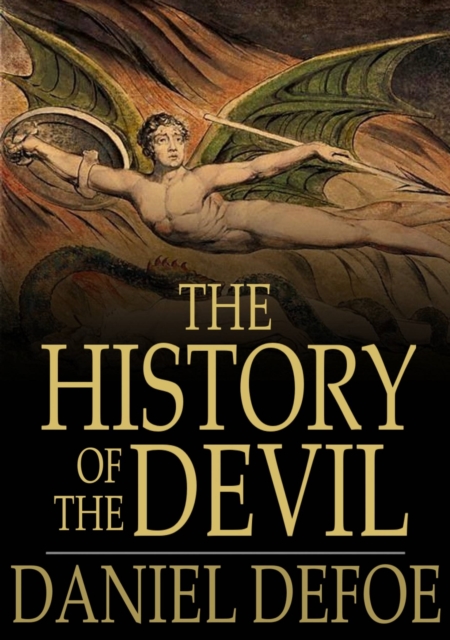
History of the Devil
This fascinating volume from the author of such influential novels as Robinson Crusoe and Moll Flanders offers an analytical take on the figure of Satan. Although Defoe offers a comprehensive history of the symbolic and literary significance of the devil, he also believes that the devil plays an active and direct role in determining the course of world events, which he outlines in great detail. Source: National Library of New Zealand Te Puna Matauranga o Aotearoa, licensed by the Department of Internal Affairs for re-use under the Creative Commons Attribution 3.0 New Zealand Licence.
eBook