
Catalogue Search | MBRL


Are you sure you want to remove the book from the shelf?

{{itemTitle}}
72
result(s) for
"classic era"
Sort by:

Elements of Sonata Theory
Elements of Sonata Theory is a comprehensive rethinking of the basic principles of sonata form in the decades around 1800. This foundational study outlines a new, up-to-date paradigm for understanding the compositional choices found in the instrumental works of Haydn, Mozart, Beethoven: sonatas, chamber music, symphonies, overtures, and concertos.
eBook

RKO Radio Pictures
In January of 1965, twenty-four-year-old U.S. Army sergeant Charles Robert Jenkins abandoned his post in South Korea, walked across the DMZ, and surrendered to communist North Korean soldiers standing sentry along the world's most heavily militarized border. He believed his action would get him back to the States and a short jail sentence. Instead he found himself in another sort of prison, where for forty years he suffered under one of the most brutal and repressive regimes the world has known. This fast-paced, harrowing tale, told plainly and simply by Jenkins (with journalist Jim Frederick), takes the reader behind the North Korean curtain and reveals the inner workings of its isolated society while offering a powerful testament to the human spirit.
eBook
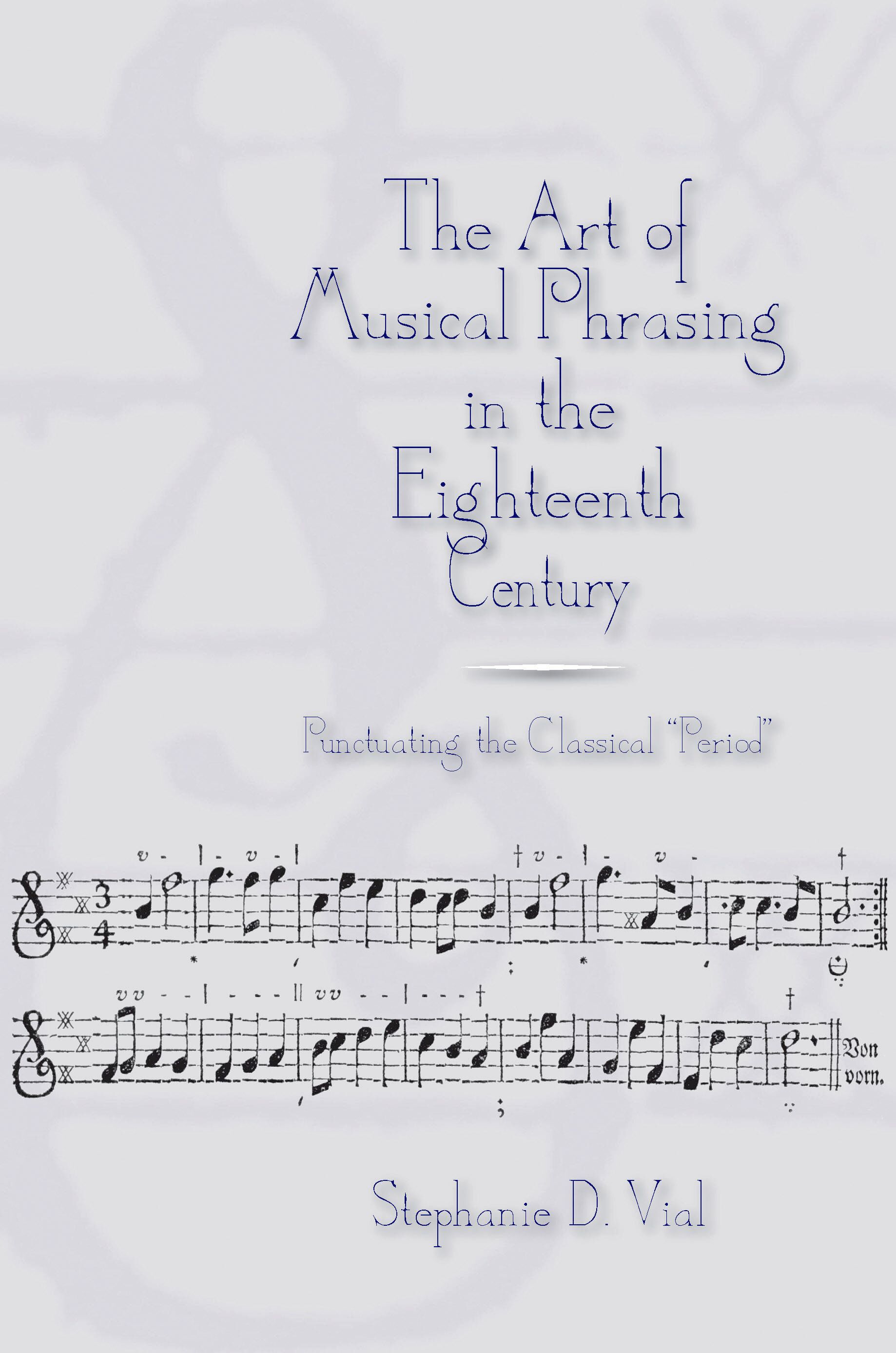
The Art of Musical Phrasing in the Eighteenth Century
Practical suggestions, and documentary evidence, for performers wishing to understand the gestures and nuances embedded in eighteenth-century musical notation.There are, of course, no commas, periods, or question marks in music of the Baroque and Classic eras. Nonetheless, the concept of \"punctuating\" music into longer and shorter units of expression was richly explored by many of the era's leading composers, theorists, and performers. The Art of Musical Phrasing in the Eighteenth Century gathers and discusses, for the first time, an extensive collection of quotations and musical illustrations relevant tophrase articulation and written and unwritten rests. Among the notable authors cited and discussed are Muffat, Telemann, C. P. E. Bach, Mattheson, Marpurg, Tartini, and Mozart's father Leopold (author of the most important eighteenth-century treatise on string playing). On a larger scale, The Art of Musical Phrasing demonstrates the role of punctuation within the history of rhetoric during the Age of Enlightenment. From this, the performer of todaycan gain a greater appreciation for both the strengths and shortcomings of the analogy that writers of the day drew between punctuation in written language and in music. Modern performers, argues Vial, have the challenge andresponsibility of understanding and conveying the nuances, inflections, and rhythmic gestures deeply embedded in eighteenth-century musical notation. The Art of Musical Phrasing, the fruit of Vial's rich experience as a cellist performing on both period and modern instruments, lays out long-needed practical suggestions for achieving this goal. Stephanie D. Vial performs and records widely as a cellist and has taught at the University ofNorth Carolina at Chapel Hill and Duke University.
eBook

Guerre et démographie en Grèce à la période classique
Pour apprécier le poids démographique de la guerre, il est possible de dépasser les carences de la paléopathologie par l'étude précise des blessures. Celle-ci est présentée en fonction des lieux du corps et des types d'armes à partir d'un corpus fondé sur les historiens et sur Plutarque. Le rapport mortalité/survie est d'environ 45%/50%, les invalidités d'environ 6%. L'utilisation des armes en est précisée, et le tableau présenté par V. Hanson un peu modifié. D'autre part, le dépouillement systématique des contingents et des pertes montre que le poids de la guerre varie considérablement et que la donnée de base de 5% de morts pour le vainqueur, 14% pour le vaincu, est à nuancer. A tout prendre, si on la rapporte à la population mobilisable et à la population totale, la ponction opérée par les guerres de l'époque classique sur la population est loin d'être aussi importante qu'on ne l'a parfois cru. To appreciate the demographic onus of war, it is possible to offset the deficiencies of paleopathology by a careful study of the wounds sustained. The study is presented in relation to the parts of the body and the types of weapons and is based on a corpus relying on the historians and Plutarch. The ratio mortality/survival is about 45%/50%, disabilities about 6%. The use of the weapons is given further definition and the description presented by V. Hanson is slightly modified. On the other hand, the systematic analysis of the contingents and losses shows that the onus of war varies considerably and that the basic ratio of 5% dead for the victor and 14% for the vanquished needs qualifying. All in all, if this ratio is set in contrast with the population that could be called up and the global population, the percentage of the casualties brought about by the wars of the classic era is far from being as important as was sometimes believed.
Journal Article

Books Worth a Spot On a Car Buff's Shelf
The author presents a detailed year-by-year rundown of the American and European auto industry from 1925 through 1948, but don't expect any mention of plebeian Chevrolets, Fords or Dodges.
Newspaper Article

On the Banks of the Tiber: Opportunity and Transformation in Early Rome
A geoarchaeological coring survey of the Forum Boarium has shed considerable light on Rome's archaic landscape. We present the first empirical evidence that substantiates ancient and modern assumptions about the existence of a river harbour and ford in early Rome. Prior to the growth of the city, the riverbank — reconstructed as a high ledge at the base of the Capitoline Hill and a low-lying shore north of the Aventine — was particularly advantageous for river-related activities. However, the river valley changed significantly in the sixth century b.c.e., as a result of complex fluvial processes that were arguably spurred by urbanisation. Around the beginning of the Republic, Rome's original harbour silted up, and a high, wide riverbank emerged in its place. The siltation continued until the Forum Boarium was urbanised in the mid-Republic. In order to build their city and maintain river harbour operations, the Romans therefore had to adapt to dynamic ecological conditions.
Journal Article

A 3600-year record of drought in southern Pacific Costa Rica
We analyzed the δ2H composition of n-alkanes isolated from Laguna Zoncho, a small lake in southern Pacific Costa Rica, to reconstruct paleohydrology. Using a core that spans the past 3600 years, we found evidence of dry periods, most notably during the Terminal Classic Drought (TCD; ~1200 cal yr BP) and the Little Ice Age (~400 cal yr BP). Previous work at Laguna Zoncho, using bulk sedimentary δ13C and geochemical analysis, found that agriculture began to decline during the TCD. Our δ2H records confirm the occurrence of arid conditions coincident with the TCD at Laguna Zoncho and show that, despite receiving more than 3000 mm of precipitation per year, this region is susceptible to multidecadal droughts.
Journal Article

Attalid aesthetics: the Pergamene ‘baroque’ reconsidered
In this paper, I explore the literary aesthetics of Attalid Pergamon, one of the Ptolemies’ fiercest cultural rivals in the Hellenistic period. Traditionally, scholars have reconstructed Pergamene poetry from the city’s grand and monumental sculptural programme, hypothesizing an underlying aesthetic dichotomy between the two kingdoms: Alexandrian ‘refinement’ versus the Pergamene ‘baroque’. In this paper, I critically reassess this view by exploring surviving scraps of Pergamene poetry: an inscribed encomiastic epigram celebrating the Olympic victory of a certain Attalus (IvP I.10) and an inscribed dedicatory epigram featuring a speaking Satyr (SGO I.06/02/05). By examining these poems’ sophisticated engagements with the literary past and contemporary scholarship, I challenge the idea of a simple opposition between the two kingdoms. In reality, the art and literature of both political centres display a similar capacity to embrace both the refined and the baroque. In conclusion, I ask how this analysis affects our interpretation of the broader aesthetic landscape of the Hellenistic era and suggest that the literature of both capitals belongs to a larger system of elite poetry which stretched far and wide across the Hellenistic world.
Journal Article

How Russian Literature Became Great
How Russian Literature Became Great
explores the cultural and political role of a modern
national literature, orchestrated in a Slavonic key but resonating
far beyond Russia's borders.
Rolf Hellebust investigates a range of literary tendencies,
philosophies, and theories from antiquity to the present: Roman
jurisprudence to German Romanticism, French Enlightenment to Czech
Structuralism, Herder to Hobsbawm, Samuel Johnson to Sainte-Beuve,
and so on. Besides the usual Russian suspects from Pushkin to
Chekhov, Hellebust includes European writers: Byron and Shelley,
Goethe and Schiller, Chateaubriand and Baudelaire, Dante,
Mickiewicz, and more.
As elsewhere, writing in Russia advertises itself via a canon of
literary monuments constituting an atemporal \"ideal order among
themselves\" (T.S. Eliot). And yet this is a tradition that could
only have been born at a specific moment in the golden
nineteenth-century age of historiography and nation-building. The
Russian example reveals the contradictions between immutability and
innovation, universality and specificity at the heart of modern
conceptions of tradition from Sainte-Beuve through Eliot and down
to the present day.
The conditions of its era of formation-the prominence of the
crucial literary-historical question of the writer's social
function, and the equation of literature with national
identity-make the Russian classical tradition the epitome of a
unified cultural text, with a complex narrative in which competing
stories of progress and decline unfold through the symbolic
biographical encounters of the authors who constitute its members.
How Russian Literature Became Great thus offers a new
paradigm for understanding the paradoxes of modern tradition.
eBook

Across the Borders of Music Eras and Forms
It is well known that the 52 concertos for keyboard(s) or other solo instruments of Carl Philipp Emanuel Bach constitute a repertoire that crosses the borderline of Baroque and Classic eras from both a chronological and a stylistic point of view. However, their analogous position concerning the Baroque ritornello form and the various Classic concerto-sonata types is not yet as clear as it should be, since most scholars tend to examine and classify these works in a rather one-sided way, basing their views either on the earlier ritornello form or on both theory and practice of (only) the late eighteenth-century concerto, thus ignoring many important aspects of formal design in Bach's concerto movements in particular. The present paper submits the findings of a comprehensive research on Bach's whole concerto output, clearly distinguishing between movements in ritornello and concerto-sonata forms; furthermore, it highlights the impressive variety of concerto-sonata structural types that Bach uses in his works: ternary but also binary sonata forms with five, four, or three ritornellos, the specific role and function of which (and especially of the intermediate ones) cannot be always restricted to the specifications of even the most recent (and seemingly all-embracing) related typologies.
Journal Article