
Catalogue Search | MBRL


Are you sure you want to remove the book from the shelf?

{{itemTitle}}
1,017
result(s) for
"clerc"
Sort by:

« Tu seras un homme mon fils ». Apprendre la masculinité à la fin du Moyen Âge (XIIe-XVe siècle)
Cet article propose une réflexion historique et historiographique sur les différentes formes d’apprentissage de la masculinité médiévale. Il étudie tout d’abord le modèle idéal commun et structurant — celui d’Adam — qui fait de l’homme un être rationnel. Puis, il s’intéresse à l’opposition essentielle entre masculinité de clercs et masculinité de laïcs avant de décliner ces différentes formes parmi les chevaliers, les artisans et les paysans. Enfin, il analyse la manière dont on se fait homme au sein de la famille, d’abord en tant que père puis en tant que fils. La masculinité médiévale dépend donc de très nombreux critères : statut clérical ou laïque, marié ou célibataire, condition sociale, profession, âge, position dans la filiation et la parenté ou rang dans la fratrie.
Journal Article

Writing the History of Buddhism in the French Translation of Fo Guo Ji: The Paratexts
This article focuses on the French translation of Fo Guo Ji (佛国记), entitled Foě-kouě-ki, ou Relation des royaumes bouddhiques, co-translated by four scholars, Jean-Pierre Abel-Rémusat, Julius Klaproth, Ernest Clerc de Landresse, and Eugène Burnouf. This study examines how the translators interpreted Buddhist doctrines and history by analyzing the translation’s paratexts, including an extensive introduction, detailed in-text annotations as well as the translators’ related studies of Buddhism and other fields. As renowned Sinologists whose expertise spanned religion, linguistics, geography, and other fields, the translators infused their interpretive work with multifaceted academic perspectives. These paratexts collectively serve as pivotal sources for understanding how the French translation constructed and interpreted Buddhist history. The study finds that Abel-Rémusat profoundly elaborated on the core of Buddhist doctrines, dispelling the prevalent mystification of Buddhism in European academia and uncovering its inherent rational logic. All four translators, endowed with profound philological and linguistic expertise, analyzed Buddhist history through a distinctive approach. Moreover, Abel-Rémusat and his successors focused more on the history of Buddhist transmission across regions and languages, positioning Buddhist history as well as Asian studies into the framework of world history.
Journal Article

Modified Analytical Approach for PV-DGs Integration into a Radial Distribution Network Considering Loss Sensitivity and Voltage Stability
Achieving the goals of distribution systems operation often involves taking vital decisions with adequate consideration for several but often contradictory technical and economic criteria. Hence, this paper presents a modified analytical approach for optimal location and sizing of solar PV-based DG units into radial distribution network (RDN) considering strategic combination of important power system planning criteria. The considered criteria are total planning cost, active power loss and voltage stability, under credible distribution network operation constraints. The optimal DG placement approach is derived from the modification of the analytical approach for DG placement using line-loss sensitivity factor and the multiobjective constriction factor-based particle swarm optimization is adopted for optimal sizing. The effectiveness of the proposed procedure is tested on the IEEE 33-bus system modeled using Matlab considering three scenarios. The results are compared with existing reports presented in the literature and the results obtained from the proposed approach shows credible improvement in the RDN steady-state operation performance for line-loss reduction, voltage profile improvement and voltage stability improvement.
Journal Article
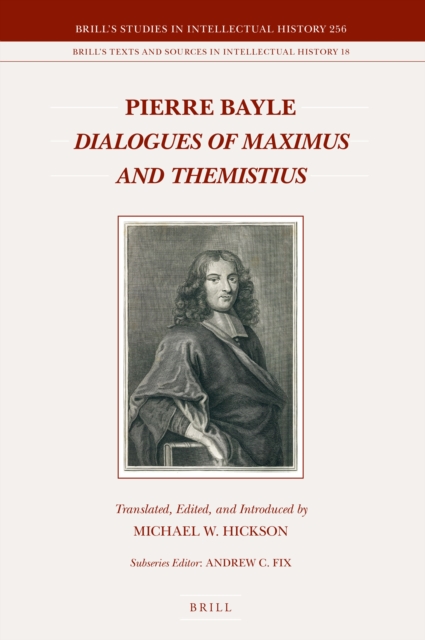
Pierre Bayle dialogues of Maximus and Themistius
Dialogues of Maximus and Themistius is the first English translation of Pierre Bayle's last book, Entretiens de Maxime et de Thémiste, published posthumously in 1707. The two parts of the Dialogues offer Bayle's final responses to Jean Le Clerc and Isaac Jaquelot, who had accused Bayle of supporting atheism through his writings on the problem of evil. The Dialogues defends Bayle's thesis that the problem of evil cannot be solved by reason alone, but serves only to demonstrate the necessity of faith. In his Introduction to the Dialogues, Michael W. Hickson provides detailed historical and philosophical background to the problem of evil in early modern philosophy, as well as summary and analysis of Bayle's debates with Le Clerc and Jaquelot.
eBook

Carotid near-occlusion frequently has high peak systolic velocity on Doppler ultrasound
Purpose
Carotid near-occlusion is a tight atherosclerotic stenosis of the internal carotid artery (ICA) resulting in decrease in diameter of the vessel lumen distal to the stenosis. Near-occlusions can be classified as with or without full collapse, and may have high peak systolic velocity (PSV) across the stenosis, mimicking conventional > 50% carotid artery stenosis. We aimed to determine how frequently near-occlusions have high PSV in the stenosis and determine how accurately carotid Doppler ultrasound can distinguish high-velocity near-occlusion from conventional stenosis.
Methods
Included patients had near-occlusion or conventional stenosis with carotid ultrasound and CT angiogram (CTA) performed within 30 days of each other. CTA examinations were analyzed by two blinded expert readers. Velocities in the internal and common carotid arteries were recorded. Mean velocity, pulsatility index, and ratios were calculated, giving 12 Doppler parameters for analysis.
Results
Of 136 patients, 82 had conventional stenosis and 54 had near-occlusion on CTA. Of near-occlusions, 40 (74%) had high PSV (≥ 125 cm/s) across the stenosis. Ten Doppler parameters significantly differed between conventional stenosis and high-velocity near-occlusion groups. However, no parameter was highly sensitive and specific to separate the groups.
Conclusion
Near-occlusions frequently have high PSV across the stenosis, particularly those without full collapse. Carotid Doppler ultrasound does not seem able to distinguish conventional stenosis from high-velocity near-occlusion. These findings question the use of ultrasound alone for preoperative imaging evaluation.
Journal Article

Sorcerers' apprentices : 100 years of law clerks at the United States Supreme Court
No detailed description available for \"Sorcerers' Apprentices\".
eBook

Dialogues of Maximus and Themistius
Dialogues of Maximus and Themistius is the first English translation of Pierre Bayle's last book, Entretiens de Maxime et de Thémiste (1707), in which Bayle defends his skeptical writings on the problem of evil against Jean Le Clerc and Isaac Jaquelot.
eBook

Typology and Old Testament Prophets in Guillaume Le Clerc’s Fergus
The late thirteenth-century verse romance
Fergus
by Guillaume Le Clerc has received a wide range of critical review. Some consider it a true epigonal text replete with incongruous and comical elements and written in the style of Chrétien de Troyes, though never living up to his standards. Others are more appreciative of Guillaume’s work, judging it to be a well-written, coherent, and innovative reworking of old themes in new and, at times, unexpected ways. Still others recognize in
Fergus
a clever parody. Most recently, it has been suggested that
Fergus
contains an important typological element that reveals the poet’s intent and overarching message. This article proposes a new typological construction and examines if this construction informs an overarching message for Guillaume’s text.
Journal Article

Passions du réel (sur Philippe Vasset, Olivia Rosenthal et Thomas Clerc)
For the last few decades in France, the \"call of the real\" (Philippe Forest) has presented itself to many writers as nothing less than an ethical imperative. Indeed, texts belonging to referential or \"factual\" literature have multiplied to such an extent that commentators - echoing Husserl's famous exhortation - have talked about a \"return to the real\" (Dominique Viart), as if literature, in its rejection of fiction, was vowing to immerse itself anew in the world. This article focuses on three recent and notable examples: Philippe Vasset's Un livre blanc (2007), Thomas Clerc's Paris, musée du XXIe siecle (2007), and Olivia Rosenthal's Viande froide (2008). If an effort to explore, track and inventory a precarious real lies at the core of these texts (precarious because it is often nearly invisible, inaudible or already fading away), they also display formal strategies that attempt to capture something singular, strange or in excess, in short everything that in the \"real\" resists or challenges representation.
Journal Article
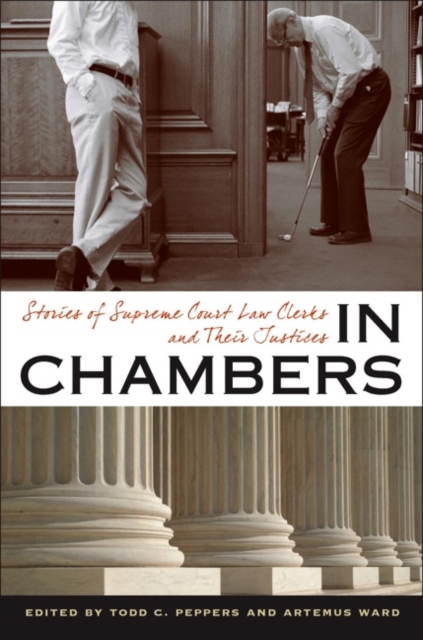
In chambers : stories of Supreme Court law clerks and their justices
Written by former law clerks, legal scholars, biographers, historians, and political scientists, the essays in In Chambers tell the fascinating story of clerking at the Supreme Court. In addition to reflecting the personal experiences of the law clerks with their justices, the essays reveal how clerks are chosen, what tasks are assigned to them, and how the institution of clerking has evolved over time, from the first clerks in the late 1800s to the clerks of Justice Ruth Bader Ginsburg and Chief Justice William Rehnquist. In Chambers offers a variety of perspectives on the unique experience of Supreme Court clerks. Former law clerks—including Alan M. Dershowitz, Charles A. Reich, and J. Harvie Wilkinson III—write about their own clerkships, painting vivid and detailed pictures of their relationships with the justices, while other authors write about the various clerkships for a single justice, putting a justice's practice into a broader context. The book also includes essays about the first African American and first woman to hold clerkships. Sharing their insights, anecdotes, and experiences in a clear, accessible style, the contributors provide readers with a rare glimpse into the inner workings of the Supreme Court.
eBook