
Catalogue Search | MBRL


Are you sure you want to remove the book from the shelf?

{{itemTitle}}
102
result(s) for
"climactic change"
Sort by:

A Skill Assessment Framework for the Fisheries and Marine Ecosystem Model Intercomparison Project
Understanding climate change impacts on global marine ecosystems and fisheries requires complex marine ecosystem models, forced by global climate projections, that can robustly detect and project changes. The Fisheries and Marine Ecosystems Model Intercomparison Project (FishMIP) uses an ensemble modeling approach to fill this crucial gap. Yet FishMIP does not have a standardised skill assessment framework to quantify the ability of member models to reproduce past observations and to guide model improvement. In this study, we apply a comprehensive model skill assessment framework to a subset of global FishMIP models that produce historical fisheries catches. We consider a suite of metrics and assess their utility in illustrating the models' ability to reproduce observed fisheries catches. Our findings reveal improvement in model performance at both global and regional (Large Marine Ecosystem) scales from the Coupled Model Intercomparison Project Phase 5 and 6 simulation rounds. Our analysis underscores the importance of employing easily interpretable, relative skill metrics to estimate the capability of models to capture temporal variations, alongside absolute error measures to characterize shifts in the magnitude of these variations between models and across simulation rounds. The skill assessment framework developed and tested here provides a first objective assessment and a baseline of the FishMIP ensemble's skill in reproducing historical catch at the global and regional scale. This assessment can be further improved and systematically applied to test the reliability of FishMIP models across the whole model ensemble from future simulation rounds and include more variables like fish biomass or production. Plain Language Summary To understand how climate change affects the world's oceans and fisheries, scientists use complex models that predict changes based on climate data. One specific initiative, the Fisheries and Marine Ecosystems Model Intercomparison Project (FishMIP), employs a variety of these models together to enhance predictions. However, FishMIP lacks a standardized method to evaluate how well these models match past data and to identify areas for improvement. In this study, we developed and applied a detailed evaluation method to some FishMIP models that predict historical fish catches. We used different measures to determine how accurately these models can replicate actual fish catches. Our results showed that the models have improved at predicting fish catches, both globally and in specific large marine regions, through two rounds of model improvements. We emphasized the value of using clear and relative measures for understanding the models' accuracy over time and specific measures to identify the differences in predictions between models and over time. This evaluation provides a baseline for understanding how well FishMIP can reproduce past fishing data and suggests ways to further refine and test these models in future studies, potentially including additional factors like fish numbers or overall productivity. Key Points We developed a standardised skill assessment framework for an ensemble of global marine ecosystem models Selected models show agreement with the trajectory of fisheries catch, but exhibit biases compared to observed absolute catch values Our framework provides a solid basis to guide global marine ensemble model improvement and increase credibility of ensemble projections
Journal Article

Climatic Variability, Plant Phenology, and Northern Ungulates
Models of climate change predict that global temperatures and precipitation will increase within the next century, with the most pronounced changes occurring in northern latitudes and during winter. A large-scale atmospheric phenomenon, the North Atlantic Oscillation (NAO), is a strong determinant of both interannual variation and decadal trends in temperatures and precipitation during winter in northern latitudes, and its recent persistence in one extreme phase may be a substantial component of increases in global temperatures. Hence, we investigated the influences of large-scale climatic variability on plant phenology and ungulate population ecology by incorporating the NAO in statistical analyses of previously published data on: (1) the timing of flowering by plants in Norway, and (2) phenotypic and demographic variation in populations of northern ungulates. We analyzed 137 time series on plant phenology for 13 species of plants in Norway spanning up to 50 yr (44 ± 0.5 yr, mean ± 1 SE) and 39 time series on phenotypic and demographic traits of 7 species of northern ungulates from 16 populations in North America and northern Europe spanning up to 30 yr (18 ± 2.0 yr). Plant phenology was significantly related to the NAO in 97 time series (71% of the total), in which dynamics of the NAO explained, on average, between 9% and 28% of the interannual variation in flowering dates. Following increasingly warm, wet winters, most plant species (9 of 13 species) bloomed earlier by an average of 13.0 ± 0.8 d to 26.4 ± 1.8 d, (mean ± 1 SE), one-third (4 of 11 species) bloomed longer by 13.4 ± 1.1 d to 18.8 ± 1.7 d, and there was an increase in spatial variability in timing of flowering across landscapes by five of six species. Woody plants displayed less sensitivity to climatic variability than did herbaceous species, and early-blooming plants were more strongly influenced by the NAO than were late-blooming plants. Ungulate phenotypic and demographic variables were significantly related to the NAO in 28 time series (72% of the total). Large-scale climatic variability influenced growth, development, fecundity, and demographic trends of all seven species of ungulates studied, and in some populations, the NAO acted together with density dependence. Individuals within mainland populations responded to winter warming with reduced body size and increased fecundity, whereas winter warming in maritime regions led to increased body size but reduced fecundity. Across sex and age classes, between 43% and 70% of the observed range in body mass among years was attributable to the dynamics of the NAO, and within cohorts of female red deer and reindeer, 47-70% of the observed range in fecundity was related to the NAO during the winter preceding cohort birth years. All but two populations of northern ungulates declined following increasingly warmer winters, and the NAO operated, in most instances, in concert with direct density dependence to limit populations. In comparison to the original analyses of these ungulate time series, in 10 of 19 series the NAO explained an equal or greater percentage of variation than that explained by local weather. These observations indicate that large-scale climatic variability has a detectable influence on the ecology of plants and animals in a variety of terrestrial ecosystems, and that the responses of plants to winter warming may, surprisingly, be more subtle than the responses of large herbivores.
Journal Article

Climate change in developing countries: results from the Netherlands Climate Change Studies Assistance Programme
This book presents an overview of the studies conducted by the Netherlands Climate Change Studies Assistance programme.The programme was set up in recognition of the need for developing countries, in particular, to face the challenges confronting all countries under the UN Framework Convention on Climate Change. The book presents an overview of the main results in 13 countries: Bolivia, Colombia, Ecuador, Egypt, Ghana, Kazakhstan, Mali, Mongolia, Senegal, Suriname, Vietnam, Yemen and Zimbabwe. It provides a critical evaluation of the methodologies and approaches used, a cross-country synthesis and recommendations for further studies. Subjects dealt with include not only impact studies, but also vulnerability and adaptation, mitigation and climate related policy.
eBook
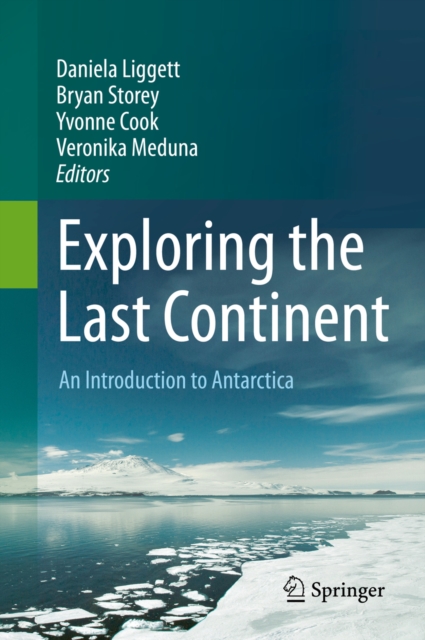
Exploring the Last Continent
This multi-disciplinary book will cater to students and those who want to have a more critical look behind the scenes of Antarctic science. This book will take a systems approach to providing insights into Antarctic ecosystems and the geophysical environment. Further, the book will link these insights to a discussion of current issues, such as climate change, bio prospecting, environmental management and Antarctic politics. It will be written and edited by experienced Antarctic researchers and scientists from a wide range of disciplines. Academic references will be included for those who wish to delve deeper into the topics discussed in the book.
eBook
Security and Climate Change
This new book explains why the international community has responded with a sense of fatalistic passivity to climate change.
It presents a distinct critique of realism through the study of this topic, commonly overlooked in international relations. The author argues that the realist view rests on a dangerous contradiction; far from delivering security it serves to limit the way we think about the new generation of risks we face. The book also provides a detailed case study evaluating US climate politics under the Clinton and Bush administrations.
eBook

Advances and Challenges in Relation to the Climate Legal Framework in Brazil/Avancos e Desafios em Relacao ao Marco Legal do Clima no Brasil/ Avances y Desafios Del Marco Legal Climatico en Brasil
This study aimed to analyze the progress and challenges related to the Brazilian Climate Legal Framework, focusing on public policies, legal aspects, and socio- environmental impacts. To this end, a detailed literature review of scientific databases was conducted, seeking to identify the main achievements, gaps, and obstacles faced in the implementation of the Climate Legal Framework. The results showed that, despite significant advances in regulation and the creation of climate governance instruments, challenges related to policy effectiveness, intersectoral integration, and social mobilization persist. The research highlights the importance of a multidisciplinary and collaborative approach to strengthening climate governance in the country, contributing to the achievement of national climate change mitigation and adaptation goals. Keywords: Climate Legal Framework. Climate Change. Environment. Este estudo teve como objetivo analisar os avancos e desafios relacionados ao Marco Legal do Clima no Brasil, com foco nas politicas publicas, aspectos legais e impactos socioambientais. Para tanto, realizou-se uma revisao bibliografica detalhada em bases de dados cientificas, buscando identificar as principais conquistas, lacunas e obstaculos enfrentados na implementacao do Marco Legal do Clima. Os resultados evidenciaram que, apesar de avancos significativos na regulamentacao e na criacao de instrumentos de governanca climatica, persistem desafios ligados a efetividade das politicas, a integracao intersetorial e a mobilizacao social. A pesquisa destaca a importancia de um enfoque multidisciplinar e colaborativo para fortalecer a governanca climatica no pais, contribuindo para o cumprimento das metas nacionais de mitigacao e adaptacao as mudancas climaticas. Palavras-chave: Marco Legal do Clima. Mudancas Climaticas. Meio Ambiente. Este estudio tuvo como objetivo analizar los avances y desafios relacionados con el Marco Legal Climatico Brasileno, con enfasis en politicas publicas, aspectos legales e impactos socioambientales. Para ello, se realizo una revision bibliografica exhaustiva de bases de datos cientificas, buscando identificar los principales logros, brechas y obstaculos en la implementacion del Marco Legal Climatico. Los resultados mostraron que, a pesar de los avances significativos en la regulacion y la creacion de instrumentos de gobernanza climatica, persisten desafios relacionados con la efectividad de las politicas, la integracion intersectorial y la movilizacion social. La investigacion destaca la importancia de un enfoque multidisciplinario y colaborativo para fortalecer la gobernanza climatica en el pais, contribuyendo asi al logro de los objetivos nacionales de mitigacion y adaptacion al cambio climatico. Palabras clave: Marco Legal Climatico. Cambio Climatico. Medio Ambiente.
Journal Article
Application of Game Theory in managing the context of high temperatures in the city of Manaus/ Aplicacao da Teoria dos Jogos no gerenciamento do contexto das altas temperaturas na cidade de Manaus/ Aplicacion de la Teoria de Juegos en la gestion del contexto de altas temperaturas en la ciudad de Manaus
The city of Manaus faces increasing challenges related to high temperatures, a problem intensified by climate change and unplanned urbanization. Efficient management of this climatic context is essential to minimize negative impacts on the population and the environment, promoting sustainability and urban well-being. In this scenario, Game Theory emerges as a strategic tool to model interactions among the various agents involved in climate management, such as government, businesses, and communities, enabling the identification of collaborative and effective solutions. This study employed a Game Theory- based model to explore the strategic dynamics among the agents involved in managing high temperatures in Manaus. The research utilized a quantitative methodology, with simulations analyzing strategic scenarios and potential equilibria, considering economic, social, and environmental aspects. The results revealed the feasibility of cooperative strategies to mitigate climatic impacts and guide more sustainable public policies. The study provides a significant contribution by proposing integrated solutions to balance economic development and environmental preservation in a challenging urban context. Keywords: Game Theory. Climate Management. High Temperatures. Urban Sustainability. Public Policies. A cidade de Manaus enfrenta desafios crescentes relacionados as altas temperaturas, um problema intensificado pelas mudancas climaticas e pela urbanizacao desordenada. A gestao eficiente desse contexto climatico e essencial para minimizar impactos negativos sobre a populacao e o meio ambiente, promovendo sustentabilidade e bem-estar urbano. Nesse cenario, a Teoria dos Jogos emerge como uma ferramenta estrategica para modelar as interacoes entre os diversos agentes envolvidos na gestao climatica, como govemo, empresas e comunidades, possibilitando identificar solucoes colaborativas e eficazes. Este estudo empregou um modelo baseado na Teoria dos Jogos para explorar as dinamicas estrategicas entre os agentes envolvidos na gestao das altas temperaturas em Manaus. A pesquisa utilizou metodologia quantitativa, com simulacoes que analisaram cenarios estrategicos e equilibrios possiveis, considerando aspectos economicos, sociais e ambientais. Os resultados revelaram a viabilidade de estrategias cooperativas que podem minimizar os impactos climaticos e orientar politicas publicas mais sustentaveis. O estudo oferece uma contribuicao significativa ao propor solucoes integradas para o equilibrio entre desenvolvimento economico e preservacao ambiental em um contexto urbano desafiador. Palavras-chave: Teoria dos Jogos. Gestao Climatica. Altas Temperaturas. Sustentabilidade Urbana. Politicas Publicas. La ciudad de Manaos enfrenta desafios crecientes relacionados con las altas temperaturas, un problema intensificado por el cambio climatico y la urbanizacion desordenada. La gestion eficiente de este contexto climatico es esencial para minimizar los impactos negativos sobre la poblacion y el medio ambiente, promoviendo la sostenibilidad y el bienestar urbano. En este escenario, la Teoria de Juegos emerge como una herramienta estrategica para modelar las interacciones entre los diversos agentes involucrados en la gestion climatica, como el gobierno, las empresas y las comunidades, permitiendo identificar soluciones colaborativas y efectivas. Este estudio empleo un modelo basado en la Teoria de Juegos para explorar las dinamicas estrategicas entre los agentes involucrados en la gestion de las altas temperaturas en Manaos. La investigacion utilizo una metodologia cuantitativa, con simulaciones que analizaron escenarios estrategicos y posibles equilibrios, considerando aspectos economicos, sociales y ambientales. Los resultados revelaron la viabilidad de estrategias cooperativas para mitigar los impactos climaticos y orientar politicas publicas mas sostenibles. El estudio ofrece una contribucion significativa al proponer soluciones integradas para equilibrar el desarrollo economico y la preservacion ambiental en un contexto urbano desafiante. Palabras clave: Teoria de Juegos. Gestion Climatica. Altas Temperaturas. Sostenibilidad Urbana. Politicas Publicas.
Journal Article
Climate Finance and Sustainable Development: the Role of BNDES in the Legal Amazon/Financiamento Climatico e Desenvolvimento Sustentavel: a Atuacao do BNDES na Amazonia Legal/Financiamiento Climatico y Desarrollo Sostenible: la Actuacion del BNDES en la Amazonia Legal
Given the environmental impacts of human activities, climate finance has become a strategic tool for mitigation and adaptation, especially in the Amazon. The objective is to analyze the role of BNDES in this context, with emphasis on COP 30. The justification lies in the urgency of aligning development and sustainability, and it is relevant for highlighting the role of a public bank in the green agenda. The methodology is qualitative and exploratory, based on documentary analysis of BNDES reports, international organizations, and economic indicators. The results indicate that Brazil receives substantial resources, mostly for mitigation, while Law 14.904/2024 strengthens local governance. It is concluded that the country holds a strategic position, yet faces challenges regarding transparency and monitoring, making it essential to expand adaptive financing to protect the Amazon. Keywords: Climate Change. Financing. Mitigation. Governance. Sustainability. Diante dos impactos ambientais das atividades humanas, o financiamento climatico torna-se estrategico para mitigacao e adaptacao, sobretudo na Amazonia. Objetiva-se analisar o papel do BNDES nesse contexto, com enfase na COP 30. A justificativa reside na urgencia de alinhar desenvolvimento e sustentabilidade, sendo relevante por evidenciar a atuacao de banco publico na agenda verde. A metodologia e qualitativa e exploratoria, baseada em analise documental de relatorios do BNDES, organizacoes internacionais e indicadores economicos. Os resultados indicam que o Brasil recebe vultosos recursos, majoritariamente para mitigacao, enquanto a Lei 14.904/2024 fortalece a governanca local. Conclui-se que o pais tem posicao estrategica, porem enfrenta desafios de transparencia e monitoramento, sendo essencial ampliar o financiamento adaptativo para proteger a Amazonia. Palavras-chave: Mudancas Climaticas. Financiamento. Mitigacao. Governanca. Sustentabilidade. Ante los impactos ambientales de las actividades humanas, la financiacion climatica se vuelve estrategica para la mitigacion y adaptacion, especialmente en la Amazonia. El objetivo es analizar el papel del BNDES en este contexto, con enfasis en la COP 30. La justificacion reside en la urgencia de alinear desarrollo y sostenibilidad, siendo relevante por evidenciar el rol de un banco publico en la agenda verde. La metodologia es cualitativa y exploratoria, basada en analisis documental de informes del BNDES, organismos internacionales e indicadores economicos. Los resultados indican que Brasil recibe recursos significativos, mayoritariamente destinados a mitigacion, mientras que la Ley 14.904/2024 fortalece la gobernanza local. Se concluye que el pais ocupa una posicion estrategica, aunque enfrenta desafios de transparencia y monitoreo, siendo esencial ampliar la financiacion adaptativa para proteger la Amazonia. Palabras clave: Cambio Climatico. Financiamiento. Mitigacion. Gobernanza. Sostenibilidad.
Journal Article
Life cycle assessment focusing on the execution steps and use in geotechnical structures reinforced with woven geotextile/ Avaliacao de ciclo de vida com foco nas etapas de execucao e uso em estruturas geotecnicas reforcadas com geotextil tecido
The Life Cycle Assessment (LCA) is one of the most used methodologies for analyzing the potential environmental impacts of the Civil Engineering sector. Although the number of LCA research in civil engineering has grown in recent years, it is noted that, in the area of geosynthetics, there are gaps to be filled. Thus, this research aimed to analyze, with the help of the LCA methodology, soil structures reinforced with geosynthetics and compare them with a traditional structure built in reinforced concrete, in order to quantify and qualify the potential environmental impacts. The methodology comprised a brief review of LCA and soil structures reinforced with geosynthetics; application of LCA phases. The research proposed the realization of an LCA study for the processes of execution and use and maintenance through the ReCiPe method. The impact categories Freshwater Eutrophication, Climate Change, Ozone Depletion and Acidification were considered relevant. The results showed that, in most of the analyzed categories, the structure of reinforced soils revealed less contribution when compared to a concrete structure; and the impact categories that had the highest emissions were the terrestrial acidification categories followed by the climate change category. Therefore, it was concluded that the LCA methodology is an effective instrument to qualitatively and quantitatively evaluate the potential impacts of soil structures reinforced with geosynthetics when compared to a traditional structure. Keywords: Life Cycle Assessment. Soil Structures. Geosynthetics. Sustainability. Environmental Impacts. A Avaliacao do Ciclo de Vida (ACV) e uma das metodologias mais utilizadas para analise dos potenciais impactos ambientais do setor da Engenharia Civil. Apesar do numero de pesquisas de ACV em engenharia civil ter crescido nos ultimos anos, nota-se que, na area de geossinteticos existem lacunas a serem preenchidas. Assim, esta pesquisa objetivou analisar, com o auxilio da metodologia de ACV, estruturas de solos reforcados com geossinteticos e compara-las com uma estrutura tradicional construida em concreto armado, a fim de quantificar e qualificar os potenciais impactos ambientais. A metodologia compreendeu em uma breve revisao sobre ACV e estruturas de solos reforcados com geossiteticos; aplicacao das fases de ACV. A pesquisa propos a realizacao de um estudo de ACV para o processos de execucao e uso e manutencao atraves do metodo ReCiPe. Foram consideradas relevantes as categorias de impacto de Eutrofizacao de agua doce, Mudancas climaticas, Destruicao do ozonio e Acidificacao. Os resultados mostraram que, na maioria das categorias analisadas, a estrutura de solos reforcados revelou menor constribuicao se comparada com uma estrutura em concreto; e as categorias de impacto que tiveram maiores emissoes foram as categorias de acidificacao terrestre seguida pela categoria de mudancas climaticas. Portanto, concluiu-se que a metodologia de ACV e um instrumento eficaz para avaliar qualitativa e quantitativamente os potenciais impactos de estruturas de solos reforcados com geossinteticos quando comparadas com uma estrutura tradicional. Palavras-chave: Avaliacao de Ciclo de Vida. Estruturas de Solos. Geossinteticos. Sustentabilidade. Impactos Ambientais.
Journal Article
Impact of Climate Change on the Distribution and Conservation of Camu-camu/ Impacto da Mudanca Climatica na Distribuicao e Conservacao de Camu-camu/ Impacto del Cambio Climatico en la Distribucion y Conservacion del Camu- camu
Global climate change poses threats to biodiversity, especially for native Amazonian species such as Myrciaria dubia (camu-camu), which is in a sensitive biome due to its dependence on lowland and igapo environments. This study aimed to model the potential distribution of the species in different future climate scenarios (SSP245 and SSP585), based on 234 occurrence records and 33 environmental variables (bioclimatic and edaphic). For this, five algorithms of species distribution modeling (SDM) were applied, and Random Forests presented the best predictive performance. The results show an expressive reduction in the environmentally suitable areas for M. dubia, especially in the most pessimistic scenario (SSP585), with losses greater than 49% of the current area. The western Amazon stands out as the main climatic refuge, while other phytogeographic domains, such as Cerrado, Caatinga and Atlantic Forest, presented severe loss of environmental suitability. The projections indicate high vulnerability of the species to climate change, highlighting the need for integrated strategies of in situ conservation, assisted migration and sustainable use, especially in territories with greater environmental resilience. Keywords: Amazon. Myrciaria Dubia. Species Distribution Modeling (SDM). Biodiversity Conservation. Biodiversity Management. Management of Genetic Resources. A mudanca climatica global impoe ameacas a biodiversidade, especialmente para especies nativas da Amazonia como Myrciaria dubia (camu-camu), que se encontra em bioma sensivel devido a sua dependencia de ambientes de varzea e igapo. Este estudo teve como objetivo modelar a distribuicao potencial da especie em diferentes cenarios climaticos futuros (SSP245 e SSP585), com base em 234 registros de ocorrencia e 33 variaveis ambientais (bioclimaticas e edaficas). Para isso, foram aplicados cinco algoritmos de modelagem de distribuicao de especies (SDM), sendo o Random Forests o que apresentou melhor desempenho preditivo. Os resultados revelam uma reducao expressiva nas areas ambientalmente adequadas para M. dubia, sobretudo no cenario mais pessimista (SSP585), com perdas superiores a 49% da area atual. A Amazonia ocidental destaca-se como principal refugio climatico, enquanto outros dominios fitogeograficos, como Cerrado, Caatinga e Mata Atlantica, apresentaram severa perda de adequabilidade ambiental. As projecoes indicam elevada vulnerabilidade da especie a mudanca climatica, ressaltando a necessidade de estrategias integradas de conservacao in situ, migracao assistida e uso sustentavel, especialmente em territorios com maior resiliencia ambiental. Palavras-chave: Amazonia. Myrciaria Dubia. Modelagem de Distribuicao de Especies (SDM). Conservacao da Biodiversidade. Gestao da Biodiversidade. Gestao de Recursos Geneticos. El cambio climatico global impone amenazas a la biodiversidad, especialmente para especies nativas del Amazonas como Myrciaria dubia (camu-camu), que se encuentra en bioma sensible debido a su dependencia de ambientes de varzea e igapo. Este estudio tuvo como objetivo modelar la distribucion potencial de la especie en diferentes escenarios climaticos futuros (SSP245 y SSP585), sobre la base de 234 registros de ocurrencia y 33 variables ambientales (bioclimaticas y edaficas). Para ello, se aplicaron cinco algoritmos de modelado de distribucion de especies (SDM), siendo el Random Forests el que presento mejor rendimiento predictivo. Los resultados revelan una reduccion expresiva en las areas ambientalmente adecuadas para M. dubia, sobre todo en el escenario mas pesimista (SSP585), con perdidas superiores al 49% del area actual. La Amazonia occidental se destaca como principal refugio climatico, mientras que otros dominios fitogeograficos, como el Cerrado, Caatinga y Mata Atlantica, presentaron severa perdida de adecuacion ambiental. Las proyecciones indican alta vulnerabilidad de la especie al cambio climatico, destacando la necesidad de estrategias integradas de conservacion in situ, migracion asistida y uso sostenible, especialmente en territorios con mayor resiliencia ambiental. Palabras clave: Amazonia. Myrciaria Dubia. Modelacion de Distribucion de Especies (SDM). Conservacion de la Biodiversidad. Gestion de la Biodiversidad. Gestion de Recursos Geneticos.
Journal Article