
Catalogue Search | MBRL


Are you sure you want to remove the book from the shelf?

{{itemTitle}}
168,773
result(s) for
"cold war"
Sort by:


Cold war cultures
The Cold War was not only about the imperial ambitions of the super powers, their military strategies, and antagonistic ideologies. It was also about conflicting worldviews and their correlates in the daily life of the societies involved. The term \"Cold War Culture\" is often used in a broad sense to describe media influences, social practices, and symbolic representations as they shape, and are shaped by, international relations. Yet, it remains in question whether - or to what extent - the Cold War Culture model can be applied to European societies, both in the East and the West. While every European country had to adapt to the constraints imposed by the Cold War, individual development was affected by specific conditions as detailed in these chapters. This volume offers an important contribution to the international debate on this issue of the Cold War impact on everyday life by providing a better understanding of its history and legacy in Eastern and Western Europe.
eBook

Nature and the Iron Curtain : environmental policy and social movements in Communist and capitalist countries, 1945-1990
\"Nature and the Iron Curtain contrasts communist and capitalist countries with respect to their environmental politics in the context of the Cold War. Its chapters draw from archives across Europe and the U.S. to present new perspectives on the origins and evolution of modern environmentalism on both sides of the Iron Curtain. The book explores similarities and differences among several nations with different economies and political systems, and highlights connections between environmental movements in Eastern and Western Europe\"-- Dust jacket.
Book

Bound to Fail
The liberal international order, erected after the Cold War, was crumbling by 2019. It was flawed from the start and thus destined to fail. The spread of liberal democracy around the globe—essential for building that order—faced strong resistance because of nationalism, which emphasizes self-determination. Some targeted states also resisted U.S. efforts to promote liberal democracy for security-related reasons. Additionally, problems arose because a liberal order calls for states to delegate substantial decisionmaking authority to international institutions and to allow refugees and immigrants to move easily across borders. Modern nation-states privilege sovereignty and national identity, however, which guarantees trouble when institutions become powerful and borders porous. Furthermore, the hyperglobalization that is integral to the liberal order creates economic problems among the lower and middle classes within the liberal democracies, fueling a backlash against that order. Finally, the liberal order accelerated China’s rise, which helped transform the system from unipolar to multipolar. A liberal international order is possible only in unipolarity. The new multipolar world will feature three realist orders: a thin international order that facilitates cooperation, and two bounded orders—one dominated by China, the other by the United States—poised for waging security competition between them.
Journal Article
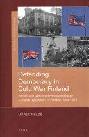
Defending democracy in cold war Finland : British and American propaganda and cultural diplomacy in Finland, 1944-1970
In 'Defending Democracy in Cold War Finland', Marek Fields offers a thorough account on the various informational and cultural strategies Britain and the United States used during the early Cold War decades in order to increase their influence and contain communism in Finland. The book shows that by using propaganda and cultural diplomacy in an exceptionally challenging environment, the two Western powers were able to achieve their main objectives in the region, i.e. to defend democracy and strengthen Finland?s attachment to the West, surprisingly well. Making use of a large variety of British, American and Finnish archives, Fields proves that the Western countries? interest in Finland during the Cold War was stronger than it has previously been realised.
Book

Fragmented fatherland
1945 to 1980 marks an extensive period of mass migration of students, refugees, ex-soldiers, and workers from an extraordinarily wide range of countries to West Germany. Turkish, Kurdish, and Italian groups have been studied extensively, and while this book uses these groups as points of comparison, it focuses on ethnic communities of varying social structures—from Spain, Iran, Ukraine, Greece, Croatia, and Algeria—and examines the interaction between immigrant networks and West German state institutions as well as the ways in which patterns of cooperation and conflict differ. This study demonstrates how the social consequences of mass immigration became intertwined with the ideological battles of Cold War Germany and how the political life and popular movements within these immigrant communities played a crucial role in shaping West German society.
eBook


Polarization versus Democracy
When can we realistically expect ordinary people to check the authoritarian ambitions of elected politicians? An answer to this question is key to understanding the most prominent development in the dynamic of democratic survival since the end of the Cold War: the subversion of democracy by elected incumbents and its emergence as the most common form of democratic breakdown. This article proposes an explanation according to which political polarization undermines the public's ability to serve as a democratic check: In polarized electorates, voters are willing to trade off democratic principles for partisan interests. The article presents evidence that supports this claim; raises questions about the real-world relevance of conventional measures of support for democracy; and highlights the importance of understanding the role that ordinary people play in democratic backsliding.
Journal Article

Summerlings
\"A Cold War coming-of-age story in which three best friends confront their fears of The Bomb, Russian spies, girls, and their role in the tragic accident that ushers them into adulthood\"-- Provided by publisher.
Book

Beyond the divide
Cold War history has emphasized the division of Europe into two warring camps with separate ideologies and little in common. This volume presents an alternative perspective by suggesting that there were transnational networks bridging the gap and connecting like-minded people on both sides of the divide. Long before the fall of the Berlin Wall, there were institutions, organizations, and individuals who brought people from the East and the West together, joined by shared professions, ideas, and sometimes even through marriage. The volume aims at proving that the post-WWII histories of Western and Eastern Europe were entangled by looking at cases involving France, Denmark, Poland, Romania, Switzerland, and others.
eBook