
Catalogue Search | MBRL


Are you sure you want to remove the book from the shelf?

{{itemTitle}}
84
result(s) for
"collage (technique)"
Sort by:

Explorations with collage! : merging photographs, paper, and fiber
A digital collage technique layers together virtual images into a new piece of art, ready for mixed-media and collage makers to use as an eye-opening element. Artist and teacher Wen Redmond shows how by sharing 42 of her main techniques (and many variations) here.
BOOK

Country-Specific Associations Made by Consumers: A Dual-Coding Theory Perspective
Extant country-of-origin research has focused on the deliberate use of country-specific associations (CSAs) as a cognitive cue, captured by consumer responses to direct questioning. However, such responses only capture rational and verbally held aspects of CSAs and do not reveal emotional and nonverbally held aspects. Drawing from dual-coding theory, the authors (1) develop propositions about the existence of two distinct types of CSAs (rational and emotional) and the differences in consumers' communication of these associations, (2) apply a three-stage qualitative design in two complementary studies to test these propositions, (3) link the identified CSAs to brand origin recognition and brand ownership, and (4) generate a consumer typology on how CSAs are communicated. Their results indicate that people tend to communicate rational CSAs verbally and emotional CSAs nonverbally. Whereas both rational and emotional associations positively affect consumers' brand origin recognition accuracy, only emotional associations affect brand ownership. The authors consider theoretical and managerial implications in light of recent criticism on country-of-origin research and offer suggestions for further research.
Journal Article

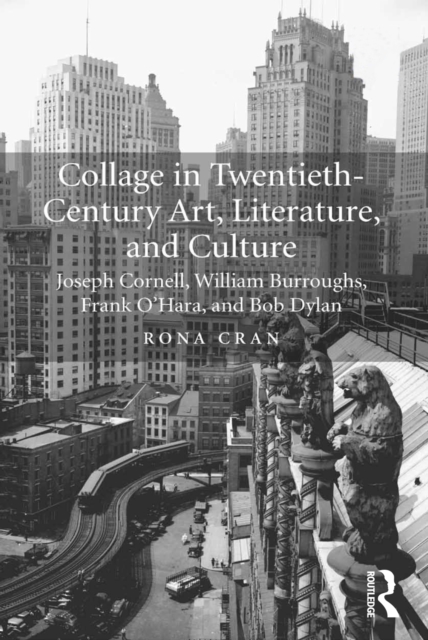
Collage in Twentieth-Century Art, Literature, and Culture
Emphasizing the diversity of twentieth-century collage practices, Rona Cran's book explores the role that it played in the work of Joseph Cornell, William Burroughs, Frank O'Hara, and Bob Dylan. For all four, collage was an important creative catalyst, employed cathartically, aggressively, and experimentally. Collage's catalytic effect, Cran argues, enabled each to overcome a potentially destabilizing crisis in representation. Cornell, convinced that he was an artist and yet hampered by his inability to draw or paint, used collage to gain access to the art world and to show what he was capable of given the right medium. Burroughs' formal problems with linear composition were turned to his advantage by collage, which enabled him to move beyond narrative and chronological requirement. O'Hara used collage to navigate an effective path between plastic art and literature, and to choose the facets of each which best suited his compositional style. Bob Dylan's self-conscious application of collage techniques elevated his brand of rock-and-roll to a level of heightened aestheticism. Throughout her book, Cran shows that to delineate collage stringently as one thing or another is to severely limit our understanding of the work of the artists and writers who came to use it in non-traditional ways.
eBook

Geninne's art : birds in watercolor, collage, and ink : a field guide to art techniques and observing in the wild
Geninne presents an artist's field guide to her processes of observing and photographing birds in the wild, then translating those impressions to watercolour and collage. Santa Fe nature artist Geninne Zlatkis is well-known on Instagram and Pinterest for her charming paintings and collages of birds. In Geninne's Birds in Watercolor, Collage, and Ink, for the first time, she offers her fans a field guide to her art process. A skilled nature photographer as well as artist, Geninne begins her work in the field by observing and photographing birds and flowering plants. Then takes her observations back to the studio, where she turns them into works on paper. Readers will discover, step-by-step, how Geninne selects her materials and then creates her personal imagery. What makes Geninne's work so successful is her imaginative and colourful interpretation of the birds she has observed so closely. Her work is approachable, and her fans will love to see how she does it, so that they can try it too.
Book

Mere and Easy
Collage making offers everyone from small children to trained artists the ability to express themselves through images. In this new Common Threads collection, Jorge Lucero draws on the archive of the journal Visual Arts Research to present articles focused on the place of collage in fine art and education. Guided by the twinned concepts of mereness --collage's reputation as a trifle--and easiness --the technique's accessibility to all--the authors explore how subversive, debased, and effortless the collage gesture can be. What emerges is in and of itself a collage, one that groups disparate scholarship into a whole that reveals how the technique may serve as a method of scholarship and as a wellspring of vibrant, even radical, pedagogical utility. Contributors: Michael Biggs, Ian Buchanan, Daniela Büchler, Paul Duncum, Charles R. Garoian, Kit Grauer, Anniina Suominen Guyas, Kathleen Keys, Jorge Lucero, Dan Nadaner, Ryan Patton, Janet N. Stevenson, Robert W. Sweeny, and Stuart Thompson.
eBook

If you can cut, you can collage : from paper scraps to works of art
\"Collage is a wonderful creative outlet, particularly for people who want to make art, but don't feel they have the skills, or confidence, for other endeavors. You can still explore and experiment with color, composition, and various themes and end up with exciting and often unexpected results.
If you Can Cut, You Can Collage takes some of the mystery out of collage through easy illustrated pages that show readers the basic techniques of collecting and cutting imagery, composing and adhering compositions, and then provides a wealth of exercises that get readers going on their own creative projects.
We'll get you started with simple, focused, projects like making a collage with only circles, where you'll learn important concepts like how to create a focal point, how to use repetition successfully, how to achieve contrast, balance, symmetry, and more. You'll be incorporating vintage ephemera, typography and lettering, and even urban and found materials in no time!\"-- Provided by publisher.
If you Can Cut, You Can Collage takes some of the mystery out of collage through easy illustrated pages that show readers the basic techniques of collecting and cutting imagery, composing and adhering compositions, and then provides a wealth of exercises that get readers going on their own creative projects.
We'll get you started with simple, focused, projects like making a collage with only circles, where you'll learn important concepts like how to create a focal point, how to use repetition successfully, how to achieve contrast, balance, symmetry, and more. You'll be incorporating vintage ephemera, typography and lettering, and even urban and found materials in no time!\"-- Provided by publisher.
Book


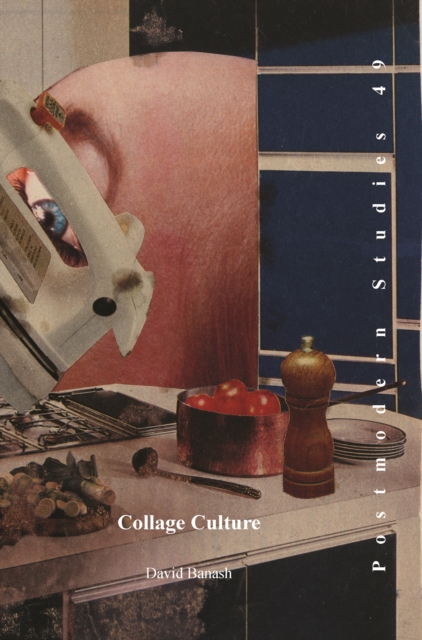
Collage Culture
Collage Culture develops a comprehensive theory of the origins and meanings of collage and readymades in modern and postmodern art, literature, and everyday life. Demonstrating that the origins of collage are found in assembly line technologies and mass media forms of layout and advertising in early twentieth-century newspapers, Collage Culture traces how the historical avant-garde turns the fragmentation of Fordist production against nationalist, fascist, and capitalist ideologies, using the radical potential unleashed by new technologies to produce critical collages. David Banash adeptly surveys the reinvention of collage by a generation of postmodern artists who develop new forms including cut-ups, sampling, zines, plagiarism, and copying to cope with the banalities and demands of consumer culture. Banash argues that collage mirrors the profoundly dialectical relations between the cut of assembly lines and the readymades of consumerism even as its cutting-edges move against the imperatives of passive consumption and disposability instituted by those technologies, forms, and relations. Collage Culture surveys and analyzes works of advertising, assemblage, film, literature, music, painting, and photography from the historical avant-garde to the most recent developments of postmodernism.
eBook