
Catalogue Search | MBRL


Are you sure you want to remove the book from the shelf?

{{itemTitle}}
41
result(s) for
"collective forms of memory"
Sort by:

Memorializing the GDR
Since unification, eastern Germany has witnessed a rapidly changing memorial landscape, as the fate of former socialist monuments has been hotly debated and new commemorative projects have met with fierce controversy. Memorializing the GDR provides the first in-depth study of this contested arena of public memory, investigating the individuals and groups devoted to the creation or destruction of memorials as well as their broader aesthetic, political, and historical contexts. Emphasizing the interrelationship of built environment, memory and identity, it brings to light the conflicting memories of recent German history, as well as the nuances of national and regional constructions of identity.
eBook
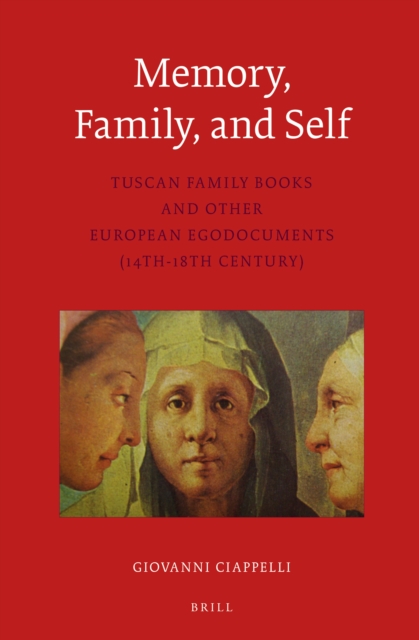
Memory, Family, and Self
The book deals with both a reconstruction of Tuscan family books' evolution and persistency, and several aspects of social history: reading and private libraries, domestic devotion, the memory of historical events. Starting with the Renaissance, the investigation broadens to the 17th-18th centuries and other forms of memory: private diaries and autobiographies. A final section is dedicated to the issue of memory in the egodocuments of early modern Europe.
eBook

Kutonga Kwaro Gamba
Like Kenya, Namibia, and South Africa, Zimbabwe was one of the countries that the imperial mission had targeted to establish as a settler economy. The objective of creating a white settler colony was evident in the entire colonial system, including place naming. Generally, place naming served political functions of declaring power and authority over the entire colony. While white minority rule ended in 1980, it, however, left some symbolic imprints on the cultural landscape of the independent nation, Zimbabwe. Given that colonialism entrenched white identity on the cultural landscape, this article interrogates efforts by the Mnangagwa government, which assumed political office in November 2017, to dislodge Rhodesian memory from the cultural landscape. This article demonstrates that decolonisation is not an event but an ongoing process that political elites execute whenever they want to serve present political purposes. It interrogates the dialectics of political power and remembering the past in Zimbabwe during the aftermath of the military-induced political change of November 2017. The re-inscription of the landscape that the Mnangagwa regime executed specifically targeted military cantonments throughout the country. This decolonisation process was ostensibly done to dismantle white identities from the cultural landscape. However, this article argues that the place renaming exercise served to write back the liberation war legacy into mainstream history, symbolically declared the regime’s political power, and served to legitimise the political status quo. These political purposes had roots in the succession race and the internal party politics within the Zimbabwe African National Union- Patriotic Front (ZANU- PF) that preceded the political transition.
Journal Article

Flood Perception from Local Perspective of Rural Community vs. Geomorphological Control of Fluvial Processes in Large Alluvial Valley (the Middle Vistula River, Poland)
The origin and dynamics of a 2010 pluvial flood in the valley of a large European river are described. In order to study how local people perceive this catastrophic event a small administrative unit (rural municipality) within the Holocene floodplain (thus flooded to 90%) was chosen. Using a questionnaire a human-research survey was performed in the field among 287 people living in flood-prone areas. Almost half of the interviewees feel safe and do not expect a flood recurrence (interpreted as a levee effect). Seventeen percent believe the levee was intentionally breached due to political issues. Six percent of interviewees link the breach with small mammals using levees as a habitat, e.g., beavers, moles, and foxes. The sex and age of interviewees are related to these opinions. Most interviewees (39%) think that flooding was a result of embankment (dyke) instability. The spatial distribution of the survey results are analyzed. Maps presenting: inundation height, economic loss, attitude to geohazards and perception of possible flood recurrence were drawn. Causes of the flood as viewed by local inhabitants and in the context of the riverine geological setting and its processes are discussed. Particular attention is paid to processes linking the levee breach location with specific geomorphic features of the Holocene floodplain. A wide perspective of fluvial geomorphology where erosive landforms of crevasse channels (and associated depositional crevasse splays) are indicators of geohazards was adopted. This distinct geomorphological imprint left by overbank flow is considered a natural flood mark. Such an approach is completely neglected by interviewees who overestimate the role of hydrotechnical structures.
Journal Article

Re-membering Blackness: Digital Archives, Collective Memory, and a University’s Black History
The Re-membering Blackness Digital Archive at the University of Scranton shares the university’s racial story as part of a campus-wide initiative devoted to reconciliation and collective memory. By bringing together archival records on Black history in a thematic digital collection, the project presents a corrective lens through which the university community transformed its understanding of the historical Black experience on campus and considered how this history reverberates in the present. The initiative contributes to a growing collection of institutional research projects on African American history and the legacies of slavery and racism in higher education. This article considers the metaphor of archives as memory within critical archival literature, and it examines the relationship between archives and collective memory in the context of the University of Scranton’s initiative to recover Black memory.
Journal Article

The Revitalization Path of Historical and Cultural Districts Based on the Concept of Urban Memory: A Case Study of Shangcheng, Huangling County
The prevailing challenges of fading characteristics and identity crises in historical and cultural districts of small and medium-sized cities have been identified. Traditional analytical methods have been found to be deficient in systematically capturing the unique forms and urban memory of these districts. The present study thus adopts the Shangcheng Historical and Cultural District of Huangling County as a case study, proposing a comprehensive analytical framework that integrates urban memory and multi-dimensional methods such as space syntax, grounded-theory-inspired coding, and urban image analysis. The district is subject to a systematic assessment of its spatial form, structural design, and the mechanisms by which urban memory is conveyed. The proposal sets out targeted renewal strategies for four aspects: paths, edges, nodes and landmarks, and districts. The research findings are as follows: (1) Paths with high integration and connection degrees simultaneously serve as both sacrificial axes and carriers of folk narratives. (2) Edges are composed of the city wall ruins, Loess Plateau landform, and street spaces. The fishbone-like street structure leads to significant differences in the connection degrees of main and secondary roads. (3) Nodes such as Guanyv Temple-Confucian Temple, the South Gate, and the North City Wall Ruins Square have high visual control, while the visual integration and visual control of the Qiaoshan Middle School and Gongsun Road historical nodes are relatively low, and their spatial accessibility is insufficient. (4) Based on the “memory–space” coupling relationship, the district is divided into the Academy Life Area, the Historical and Cultural Core Experience Area, and the Comprehensive Service Area, providing an effective path to alleviate the problem of functional homogenization. The present study proffers a novel perspective on the revitalization mechanisms of historical districts in small and medium-sized cities, encompassing both theoretical integration and practical strategy levels. It further contributes methodological inspirations and localized planning experiences for addressing the cultural disconnection and spatial inactivity problems of historical urban areas on a global scale.
Journal Article

Jewish Space in Contemporary Poland
In a time of national introspection regarding the country's involvement in the persecution of Jews, Poland has begun to reimagine spaces of and for Jewishness in the Polish landscape, not as a form of nostalgia but as a way to encourage the pluralization of contemporary society. The essays in this book explore issues of the restoration, restitution, memorializing, and tourism that have brought present inhabitants into contact with initiatives to revive Jewish sites. They reveal that an emergent Jewish presence in both urban and rural landscapes exists in conflict and collaboration with other remembered minorities, engaging in complex negotiations with local, regional, national, and international groups and interests. With its emphasis on spaces and built environments, this volume illuminates the role of the material world in the complex encounter with the Jewish past in contemporary Poland.
eBook

Landscape memory: the imprint of the past on contemporary landscape forms and processes
The imprint of the past upon contemporary landscape forms and processes is differentiated in terms of geologic, climatic and anthropogenic memory. Geologic memory refers to controls exerted upon relief, erodibility, erosivity and accommodation space (areas in landscapes where sediments are stored and reworked). These factors set the imposed boundary conditions within which contemporary landscape-forming processes operate. Climatic memory refers to the influence of past climatic conditions upon contemporary landscape forms and processes. Climatic controls exert a primary influence upon the nature of geomorphic processes, while the influence of climate upon ground cover affects the effectiveness of these processes. Climate change may induce profound alterations to the flux boundary conditions under which contemporary landscapes operate. This is exemplified by the variable imprint of glacial/interglacial cycles in differing parts of the world. Anthropogenic memory refers to the imprint of past human activities on contemporary landscapes, whereby human disturbance in the past altered landscape forms, processes and associated flow/sediment fluxes in a manner that continues to affect the way the contemporary landscape works. Contrasting examples from a tectonically stable landscape (Australia) and a tectonically uplifting landscape (New Zealand) are used to highlight the variable influence of geologic, climatic and anthropogenic memory upon the persistence and erasure of landscape forms and resulting implications for sediment flux in differing settings.
Journal Article

The Space for Preservation and Dilapidation of Historical Houses in Modlimowo Village in the Light of Post-Dependence Studies and Historical Politics after 1945
The main purpose of this article is to present the results of the research on spatial degradation of Modlimowo village. Modlimowo is an example of a settlement form typical of the Western Pomerania region. Until 1945, half-timbered buildings of Modlimowo village constituted a well-preserved architectural and cultural heritage of this region. Over the past 25 years, changes in the spatial layout of Modlimowo Village irreversibly destroyed the architectural layout of the village, its cultural landscape, and affected its spatial character. The process involved the demolition of around 70% of its historical buildings. The residents, the descendants of post-war settlers, also acted in favor of the rapid degradation. This was typical in the Polish western lands, the area of so-called “Recovered Territories.” The historical memory encapsulated in the village’s spatial structure has been successfully decoded. Spatial degradation of the village of Modlimowo is an example that proves a certain regularity. The processes and mechanisms that govern the devastation taking place in Polish villages of the region of the “Recovered Territories” are subject to extensive analysis in terms of social, economic, cultural, historical, and architectural aspects. There is an ongoing discussion about the reasons for this situation. The political reality of post-war Poland and the persistent traumas of that period have had a significant impact on the actual situation of the Polish countryside. The described research may offer a contribution to the ongoing discussion regarding post-dependence, as it extends the research field typical of architecture to include aspects of the importance of collective memory as well as historical politics. The theoretical model of the conducted research was based on the grounded theory. The author chose this form due to the specific flexibility it offers. An important aspect analyzed in the research was the ability to adapt to the existing conditions. Supplementing the collected data with historical and ethnographic materials proved to be very helpful. The open interview method enabled the collection of the required, standardized data. The conducted research allows to conclude that the language of the historical architectural forms typical for the region was not understood by its new inhabitants. Therefore, newcomers felt free to thoughtlessly demolish whatever previous occupants had left. The analysis of the political context, the trauma of the post-war regime, and post-memory mechanisms can help to diagnose the reality of those times.
Journal Article
Mülkiyet Tutkusunun Türkiye Toplumsal Hafızasına Yansımaları: Orhan Kemal Romanları Odağında Bir İnceleme
The matter of ownership is among the most controversial subjects of critical economy-politics, and it basically notes the materialized insecurity of the acquisition of wealth through inefficient processes. The concept has been a subject of many critical studies, not only in terms of the political economy, but also in sociological, artistic, and literary fields. Essentially, the methods of addressing and framing the levels of ownership ideology, which names the imperious power of capital against productive labor in literary-sociological discourse, can give important clues about the dominant relations in a particular historical period, the conception of ownership, and the place that this conception has in the collective memory. In this study, the issue of the types of cultural value debates the passion for ownership and ownership ideology, as reflected in Orhan Kemal’s novels and novel characters, and therefore, their effects on the collective memory of Turkey, as well as the various perspectives, relationship styles, and behavioral patterns this influence creates. For this purpose, six of Orhan Kemal’s novels dated between the beginnings of the 1950s to the end of the 1970s, were examined using content analysis and focusing on the passion for ownership if any and the criticism of ownership ideology. It is assumed that this study will be an important contribution to the research field of Turkish literature sociology, in the sense that it showcases the relationship between passion for ownership and collective memory to the discussion in Turkey. It was concluded that the ownership forms that change over time also change the perception and thought of ownership in individuals, and this situation draws attention to different personality types and related behavioral patterns in the collective memory of Turkey
Journal Article