
Catalogue Search | MBRL


Are you sure you want to remove the book from the shelf?

{{itemTitle}}
1,388
result(s) for
"colonial fiction"
Sort by:

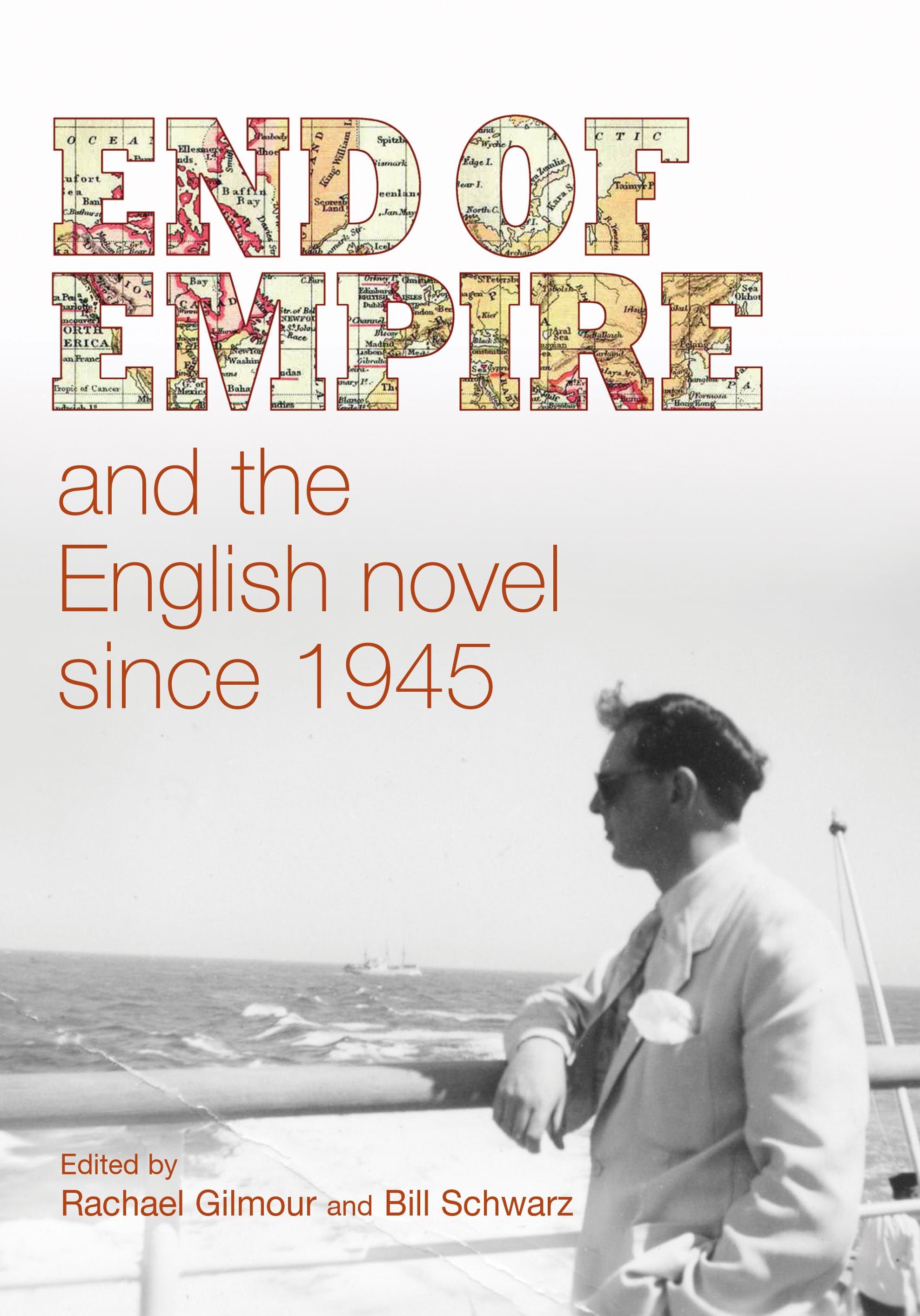
End of empire and the English novel since 1945
Available in paperback for the first time, this first book-length study explores the history of postwar England during the end of empire through a reading of novels which appeared at the time, moving from George Orwell and William Golding to Penelope Lively, Alan Hollinghurst and Ian McEwan. Particular genres are also discussed, including the family saga, travel writing, detective fiction and popular romances.All included reflect on the predicament of an England which no longer lies at the centre of imperial power, arriving at a fascinating diversity of conclusions about the meaning and consequences of the end of empire and the privileged location of the novel for discussing what decolonization meant for the domestic English population of the metropole. The book is written in an easy style, unburdened by large sections of abstract reflection. It endeavours to bring alive in a new way the traditions of the English novel.
eBook

Kipling in Polish: The Ironic Face of the Poet of the Empire
This article looks at Polish translations of three short stories by Rudyard Kipling in order to examine how translation affects the ironic tropes found in those texts. Mateo’s typology of techniques for handling irony in translation (1995) is used to show how this rhetorical device works within the broader cultural and historical context. It appears that the way Polish translators in the early 1900s interpreted irony in contemporary colonial fiction depended on their ability to recognize social problems in the British Empire, to identify the distinctive British sense of humour, and to understand the realities of colonial life. The short stories under discussion are “Georgie Porgie,” 1888 (translated by Feliks Chwalibóg, 1909), “The Limitations of Pambe Serang,” 1889 (Feliks Chwalibóg, 1910) and “The Strange Ride of Morrowbie Jukes,” 1885 (unknown translator, 1900).
Journal Article

The traitor's wife : a novel
\"In the harsh wilderness of colonial Massachusetts, Martha Allen takes work as a servant in her cousin's household. While overseeing the neglected home, she locks wills with those around her, including the tall and silent Thomas Carrier, known for both his immense strength and his mysterious past. As Martha comes to know him, she falls in love--and the two begin a courtship that suits their independent natures. But in the rugged new world they inhabit, danger is ever present, whether from the London assassins out for bounty, or the wolves--in many forms--who hunt for blood.\"--P. [4] of cover.
Book

Neoliberal Disgust in Aravind Adiga's The White Tiger
How does scatology function in postcolonial fiction today? And what might that idiom tell us about neoliberalism as a cynical political rationality sweeping the developing world? Aravind Adiga's exemplary 2008 satire on globalizing India, The White Tiger, parodies how neoliberalism normalizes misanthropic self-interest as the truth of society and human nature today. Michel Foucault identified this self-interest as a newly emergent form of rational choice, one that shapes human beings into “entrepreneurs of themselves.” These subjects are governed by the brutally instrumentalist terms of investment, risk, and cost-benefit. The novel parodies this subject position through the language of neoliberal disgust, a form of scatological rhetoric that inverts the traditionally oppositional function of scatology by rendering the victims of underdevelopment the authors of their own oppression.
Journal Article


End of empire and the English novel since 1945
\"This first book-length study explores the history of post-war England during the end of empire through a reading of novels which appeared at that time, moving from George Orwell and William Golding to Penelope Lively, Alan Hollinghurst and Ian McEwan. Particular genres are also discussed, including the family saga, travel writing, detective fiction and popular romances. All included reflect on the predicament of an England which no longer lies at the centre of imperial power, arriving at a fascinating diversity of conclusions about the meaning and consequences of the end of empire. Some explicitly address the empire and its demise; others do so in a more muted form. Gilmour and Schwarz link together the historical question of the end of the British empire with the literary issue of the place of the English novel in the post-war years, for the first time addressing the literary responses and the privileged location of the novel for discussing what decolonisation meant for the domestic English population of the metropole. Rather than emphasizing the 'provincial' properties, emphasis is given to the curious echoes and displacements which operate inside the English postwar novel during the years of decolonization. This will interest scholars and general readers concerned with the fate of the English novel and the domestic impact of decolonisation, and is an important inclusion to the expanding historical canon which deals with the end of empire.\"
eBook

Poison in the colony : James Town 1622
After the colony of James Town is founded in 1607. After Captain John Smith establishes trade with the Native Americans. After Pocahontas befriends the colonists. After early settlers both thrive and die in this new world . . . a girl is born. Virginia.
Book
Kipling po polsku. Ironiczne oblicze piewcy imperium
Considering the Polish translations of three selected short stories by Rudyard Kipling, the author reflects on the translation of the ironic figures that appear in the texts. Using Mateo’s typology of the translator’s choices while facing irony (1995), the author tries to show the role of this rhetorical device in a wider cultural and historical context. The Polish translators’ way of interpreting irony that appears in the colonial fiction in the early 20th century seems to be determined by their ability to understand the British Empire’s social problems as well as by their sensitivity to the distinctive British humour and their knowledge of colonial life realities. The analysed short stories are: Georgie Porgie, 1888 (translated by Feliks Chwalibóg, 1909), The Limitations of Pambe Serang, 1889 (Feliks Chwalibóg, 1910) and The Strange Ride of Morrowbie Jukes, 1885 (unknown translator, 1900).
Journal Article