
Catalogue Search | MBRL


Are you sure you want to remove the book from the shelf?

{{itemTitle}}
2,150,116
result(s) for
"commercial"
Sort by:


Forced to Be Good
Preferential trade agreements have become common ways to protect or restrict access to national markets in products and services. The United States has signed trade agreements with almost two dozen countries as close as Mexico and Canada and as distant as Morocco and Australia. The European Union has done the same. In addition to addressing economic issues, these agreements also regulate the protection of human rights. InForced to Be Good, Emilie M. Hafner-Burton tells the story of the politics of such agreements and of the ways in which governments pursue market integration policies that advance their own political interests, including human rights.
How and why do global norms for social justice become international regulations linked to seemingly unrelated issues, such as trade? Hafner-Burton finds that the process has been unconventional. Efforts by human rights advocates and labor unions to spread human rights ideals, for example, do not explain why American and European governments employ preferential trade agreements to protect human rights. Instead, most of the regulations protecting human rights are codified in global moral principles and laws only because they serve policymakers' interests in accumulating power or resources or solving other problems. Otherwise, demands by moral advocates are tossed aside. And, as Hafner-Burton shows, even the inclusion of human rights protections in trade agreements is no guarantee of real change, because many of the governments that sign on to fair trade regulations oppose such protections and do not intend to force their implementation.
Ultimately, Hafner-Burton finds that, despite the difficulty of enforcing good regulations and the less-than-noble motives for including them, trade agreements that include human rights provisions have made a positive difference in the lives of some of the people they are intended-on paper, at least-to protect.
eBook


The regulation of air transport : from protection to liberalisation, and back again
\"The regulation of modern civil aviation can be traced back to the later years of the Second World War. An intense debate about the future regulatory regime resulted in a compromise which to this day essentially dictates the structure of the global airline industry. Further progress towards 'normalising' the industry appears to be slowing down, and perhaps even going into reverse. Without an understanding of the development of regulation, it is not possible to understand fully the industry's current problems and how they might be resolved Many books have been written about the development of international air transport, covering deregulation, privatisation, the emergence of new business models among other things, but few if any have taken a broad view of the trends which have determined the industry's current structure. The Regulation of International Air Transport charts the regulation of international air transport from the end of the Second World War to the present day, following the key trends and developments. It provides an overview of what has determined the industry's current structure, the problems still facing the industry and the ways in which it could develop in the future. This wide-ranging study is important reading for both professional and academics within the aviation field, as well as anyone interested in the development of aviation regulations\"-- Provided by publisher.
BOOK

Correction: Liu et al. The Impact of Commercial Credit on Firm Innovation: Evidence from Chinese A-Share Listed Companies. Sustainability 2022, 14, 1481
The authors would like to make the following corrections about the published paper [...]
Journal Article

Detached commercial architecture
Focuses on the planning and design of commercial architecture that belongs to one brand. Nowadays companies tend to build single buildings for their own brands to highlight their brand value and characters. The book includes more than 20 amazing projects from different countries with various styles. These projects interpret basic architectural vocabulary of detached commercial buildings and demonstrate design principles comprehensively. Each project has its unique characteristics: some use unique forms and skillful colour combination to give unique features to the buildings, some emphasise integration with environment, some place the buildings in historical and cultural inheritance, some use new materials and reasonable texture to reinforce the expression, some focus on the use functions, some conform to contemporary requirements of low carbon and energy saving...The content is divided into four parts: architecture with shopping environment, architectural forms and materials, color, and eco-architecture. The projects are presented in combination with design guidelines, depicting the international status of detached commercial architecture now.
Book

Air transport in the Asia Pacific
\"Air transport in the Asia Pacific has undergone significant transformation in the last three decades. What was once a region in the shadow of larger and more prosperous continents such as North America and Europe is now at the forefront of expansion in commercial air-service networks, frequency and capacity, and the overall growth in the contribution of air transport to economies on regional and, in many cases, individual country levels. Despite this, it represents an area that is generally under-represented in the commercial air-transport academic literature. Air Transport in the Asia Pacific seeks to fill this gap\"--Provided by publisher.
Book
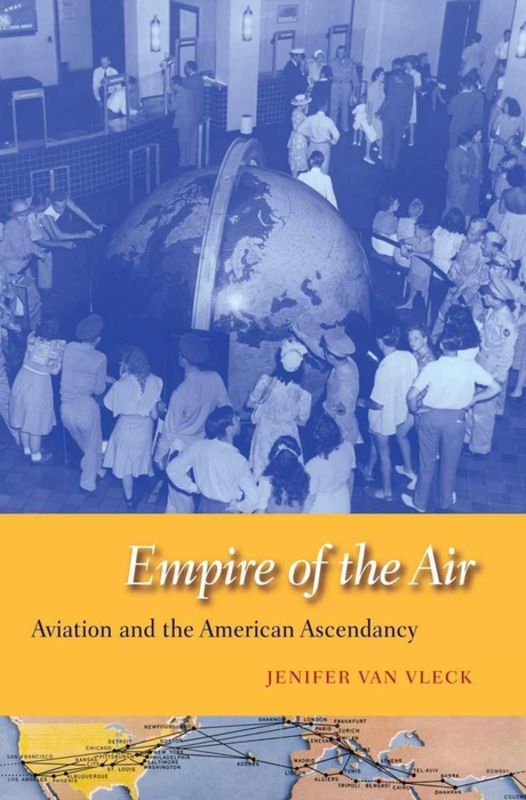
Empire of the air : aviation and the American ascendancy
Jenifer Van Vleck's Empire of the Air reveals the central role commercial aviation played in the U.S. ascent to global preeminence in the twentieth century, as the federal government partnered with the aviation industry to deliver American power across the globe and sell the idea of the \"American Century\" to the public at home and abroad.
eBook