
Catalogue Search | MBRL


Are you sure you want to remove the book from the shelf?

{{itemTitle}}
3,758
result(s) for
"conquest"
Sort by:

Inca apocalypse : the Spanish conquest and the transformation of the Andean world
This book describes a period of several decades during the sixteenth century when conquistadores, Catholic friars, and imperial officials attempted to conquer the Inca Empire and impose Spanish colonial rule. When Francisco Pizarro captured the Inca warlord Atahuallpa at Cajamarca in 1532, European Catholics and Andean peoples interpreted the event using long-held beliefs about how their worlds would end, and what the next era might look like. The Inca world did not end at Cajamarca, despite some popular misunderstandings of the Spanish conquest of Peru. In the years that followed, some Inca lords resisted Spanish rule, but many Andean nobles converted to Christianity and renegotiated their sovereign claims into privileges as Spanish subjects. Catholic empire took a lifetime to establish in the Inca world, and it required the repeated conquest of rebellious conquistadores, the reorganization of native populations, and the economic overhaul of diverse Andean landscapes. These disruptive processes of modern world-building carried forward old ideas about sovereignty, social change, and human progress. Although they are overshadowed by the Western philosophies and technologies that drive our world today, those apocalyptic relics remain with us to the present.
eBook

At Home with the Sapa Inca
By examining the stunning stone buildings and dynamic spaces of the royal estate of Chinchero, Nair brings to light the rich complexity of Inca architecture. This investigation ranges from the paradigms of Inca scholarship and a summary of Inca cultural practices to the key events of Topa Inca's reign and the many individual elements of Chinchero's extraordinary built environment. What emerges are the subtle, often sophisticated ways in which the Inca manipulated space and architecture in order to impose their authority, identity, and agenda. The remains of grand buildings, as well as a series of deft architectural gestures in the landscape, reveal the unique places that were created within the royal estate and how one space deeply informed the other. These dynamic settings created private places for an aging ruler to spend time with a preferred wife and son, while also providing impressive spaces for imperial theatrics that reiterated the power of Topa Inca, the choice of his preferred heir, and the ruler's close relationship with sacred forces. This careful study of architectural details also exposes several false paradigms that have profoundly misguided how we understand Inca architecture, including the belief that it ended with the arrival of Spaniards in the Andes. Instead, Nair reveals how, amidst the entanglement and violence of the European encounter, an indigenous town emerged that was rooted in Inca ways of understanding space, place, and architecture and that paid homage to a landscape that defined home for Topa Inca.
eBook

River spirit
1890s Sudan. When Akuany and her brother are orphaned in a village raid, they are taken in by a young merchant, Yaseen, who promises to care for them - a vow that tethers him to Akuany throughout their adulthood. As revolution begins to brew, led by the self-proclaimed Mahdi, Sudan begins to prise itself from Ottoman rule, and everyone must choose a side. Yaseen feels beholden to stand against this false Mahdi, a decision that threatens to splinter his family. Meanwhile, Akuany is moved across the country alone, sold and traded from house to house, with only Yaseen as her intermittent lifeline. Their struggle mirrors the increasingly bloody struggle for Sudan itself: for freedom, safety and the possibility of love. 'River Spirit' is the story of a people who, against the odds and for a brief time, gained independence from foreign rule through their willpower, subterfuge, and sacrifice.
Book

Death in the Snow
Pedro de Alvarado is best known as Cortés's right-hand man in the conquest of Mexico and the ruthless conqueror of Guatemala. Less known is his intent to intrude in the conquest of Peru and lay claim to the riches of the Inca Empire. Death in the Snow conveys the delusions of one headstrong conquistador and mourns the loss of countless Indigenous lives, casualties of Alvarado's lust for fame and fortune.
eBook

Alva Ixtlilxochitl's Native Archive and the Circulation of Knowledge in Colonial Mexico
Modern Language Association's Katherine Singer Kovacs
Prize, Honorable Mention, 2016 Born between 1568 and 1580,
Alva Ixtlilxochitl was a direct descendant of Ixtlilxochitl I and
Ixtlilxochitl II, who had been rulers of Texcoco, one of the major
city-states in pre-Conquest Mesoamerica. After a distinguished
education and introduction into the life of the empire of New Spain
in Mexico, Ixtlilxochitl was employed by the viceroy to write
histories of the indigenous peoples in Mexico. Engaging with this
history and delving deep into the resultant archives of this life's
work, Amber Brian addresses the question of how knowledge and
history came to be crafted in this era. Brian takes the reader
through not only the history of the archives itself, but explores
how its inheritors played as crucial a role in shaping this
indigenous history as the author. The archive helped inspire an
emerging nationalism at a crucial juncture in Latin American
history, as Creoles and indigenous peoples appropriated the history
to give rise to a belief in Mexican exceptionalism. This belief,
ultimately, shaped the modern state and impacted the course of
history in the Americas. Without the work of Ixtlilxochitl, that
history would look very different today.
eBook
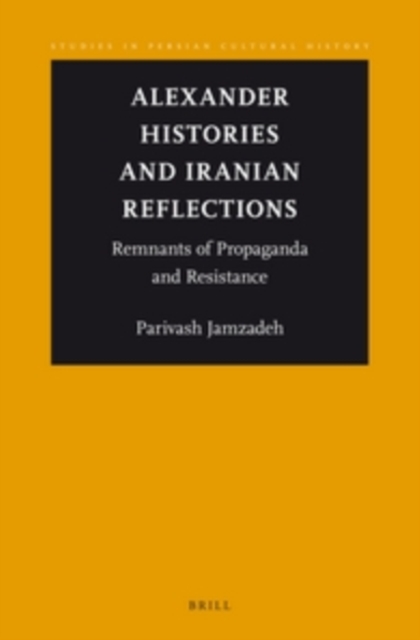
Alexander histories and Iranian reflections : remnants of propaganda and resistance
Parivash Jamzadeh demonstrates how the propaganda material used during Alexander the Great's military campaign to conquer the Achaemenid empire shows multiple layers of Iranian influences. She also shows that the studied sources do not always offer an accurate account of the contemporary Iranian customs and occasionally included historical inaccuracies.
eBook