
Catalogue Search | MBRL


Are you sure you want to remove the book from the shelf?

{{itemTitle}}
221
result(s) for
"contrainte"
Sort by:
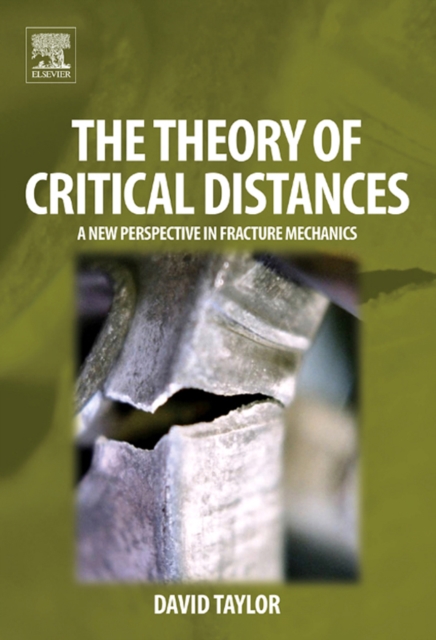
Theory of Critical Distances - A New Perspective in Fracture Mechanics
Critical distance methods are extremely useful for predicting fracture and fatigue in engineering components and represent an important development in the theory of fracture mechanics. Despite being in use for over fifty years in some fields, there has never been a book about these methods until now. The increasing use of computer-aided stress analysis has made these methods extremely easy to use in practical situations. This is turn has prompted researchers to re-examine the underlying theory with renewed interest. The book begins with a general introduction to the phenomena of mechanical failure in materials. After a simple explanation of how to use critical distance methods, and a more detailed exposition of the methods including their history and classification, the book continues by showing examples of how critical distance approaches can be applied to predict fracture and fatigue in different classes of materials. Subsequent chapters include some more complex theoretical areas, such as multiaxial loading and contact problems, and a range of practical examples using case studies of real engineering components. This book will be of interest to academic researchers, industrial engineers and research students.
eBook

La contrainte faite vertu. Sens et enjeux du mot coactus chez Spinoza
L'opposition entre contrainte et libre nécessité a conduit nombre de commentateurs de Spinoza à concevoir la libération éthique comme une reconquête de soi contre les aliénations causées par l'extériorité, et à confondre plus ou moins explicitement contrainte et contrariété de la puissance d'agir. L'analyse du mot coactus dans le texte spinoziste montre que les modes finis ne peuvent être et ne peuvent se libérer que par et dans la contrainte, qui n'est pas forcément contrariante. Une telle analyse rejoint celles des sociologues Émile Durkheim et Pierre Bourdieu.
Journal Article

Structural Geology Algorithms
State-of-the-art analysis of geological structures has become increasingly quantitative but traditionally, graphical methods are used in teaching. This innovative lab book provides a unified methodology for problem-solving in structural geology using linear algebra and computation. Assuming only limited mathematical training, the book begins with classic orientation problems and progresses to more fundamental topics of stress, strain and error propagation. It introduces linear algebra methods as the foundation for understanding vectors and tensors, and demonstrates the application of geometry and kinematics in geoscience without requiring students to take a supplementary mathematics course. All algorithms are illustrated with a suite of online MATLAB functions, allowing users to modify the code to solve their own structural problems. Containing 20 worked examples and over 60 exercises, this is the ideal lab book for advanced undergraduates or beginning graduate students. It will also provide professional structural geologists with a valuable reference and refresher for calculations.
eBook

Mesoporosity as a new parameter for understanding tension stress generation in trees
The mechanism for tree orientation in angiosperms is based on the production of high tensile stress on the upper side of the inclined axis. In many species, the stress level is strongly related to the presence of a peculiar layer, called G-layer, in the fibre wall. The structure of G-layer has been recently described as a hydrogel thanks to N2 adsorption-desorption isotherms of supercritically dried samples showing a high mesoporosity (pores size from 2 to 50 nm). This led us to revisit the concept of G-layer that was until now only described from anatomical observation. Adsorption isotherms of both normal wood and tension wood have been measured on six tropical species. Measurements show that mesoporosity is high in tension wood with typical thick G-layer while it is much less with thinner G-layer, sometimes no more than normal wood. The mesoporosity of tension wood species without G-layer is as low as in normal wood. Not depending on the amount of pores, the pore sizes distribution are always centred around 6-12 nm. These results suggest that, among species producing fibres with G-layer, large structural differences of G-layer exist between species
Journal Article
Stress Corrosion Cracking
The problem of stress corrosion cracking (SCC), which causes sudden failure of metals and other materials subjected to stress in corrosive environment(s), has a significant impact on a number of sectors including the oil and gas industries and nuclear power production.
eBook
Structural and Stress Analysis (2nd Edition)
Structural analysis is the cornerstone of civil engineering and all students must obtain a thorough understanding of the techniques available to analyse and predict stress in any structure.
The new edition of this popular textbook provides the student with a comprehensive introduction to all types of structural and stress analysis, starting from an explanation of the basic principles of statics, normal and shear force, and bending moments and torsion. Building on the success of the first edition, new material on structural dynamics and finite element method has been included.
eBook
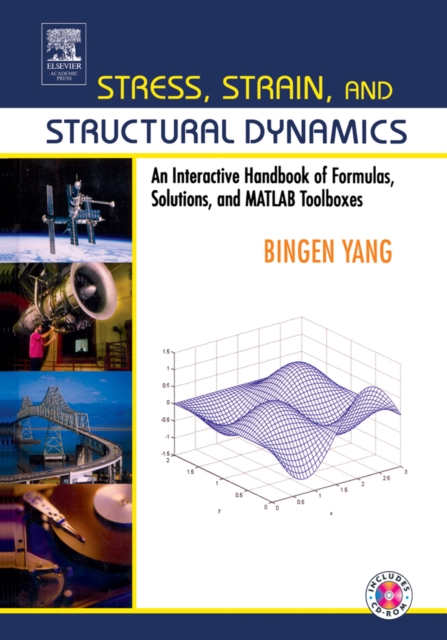
Stress, Strain, and Structural Dynamics - An Interactive Handbook of Formulas, Solutions, and MATLAB Toolboxes
This book is a comprehensive and definitive reference to statics and dynamics of solids and structures, including mechanics of materials, structural mechanics, elasticity, rigid-body dynamics, vibrations, structural dynamics, and structural controls. This text integrates the development of fundamental theories, formulas and mathematical models with user-friendly interactive computer programs, written in the powerful and popular MATLAB. This unique merger of technical referencing and interactive computing allows instant solution of a variety of engineering problems, and in-depth exploration of the physics of deformation, stress and motion by analysis, simulation, and graphics. For instructors, the book offers an easy and efficient approach to curriculum development and teaching innovation.
eBook

Earthquake and volcano deformation
Earthquake and Volcano Deformationis the first textbook to present the mechanical models of earthquake and volcanic processes, emphasizing earth-surface deformations that can be compared with observations from Global Positioning System (GPS) receivers, Interferometric Radar (InSAR), and borehole strain- and tiltmeters. Paul Segall provides the physical and mathematical fundamentals for the models used to interpret deformation measurements near active faults and volcanic centers.
Segall highlights analytical methods of continuum mechanics applied to problems of active crustal deformation. Topics include elastic dislocation theory in homogeneous and layered half-spaces, crack models of faults and planar intrusions, elastic fields due to pressurized spherical and ellipsoidal magma chambers, time-dependent deformation resulting from faulting in an elastic layer overlying a viscoelastic half-space and related earthquake cycle models, poroelastic effects due to faulting and magma chamber inflation in a fluid-saturated crust, and the effects of gravity on deformation. He also explains changes in the gravitational field due to faulting and magmatic intrusion, effects of irregular surface topography and earth curvature, and modern concepts in rate- and state-dependent fault friction. This textbook presents sample calculations and compares model predictions against field data from seismic and volcanic settings from around the world.
Earthquake and Volcano Deformationrequires working knowledge of stress and strain, and advanced calculus. It is appropriate for advanced undergraduates and graduate students in geophysics, geology, and engineering.
Professors: A supplementary Instructor's Manual is available for this book. It is restricted to teachers using the text in courses. For information on how to obtain a copy, refer to: http://press.princeton.edu/class_use/solutions.html
eBook
Design for thermal stresses
\"This resource presents accessible coverage for designers of equipment that focuses on the basics through advanced design techniques for thermal stresses. Various numerical and analytical design approaches are introduced for thermal stresses, and example problems are included to illustrate the application of the principles for practicing engineers and students. Numerous problems and exercises further reinforce the coverage\"--
eBook

Judging Addicts
The number of people incarcerated in the U.S. now exceeds 2.3 million, due in part to the increasing criminalization of drug use: over 25% of people incarcerated in jails and prisons are there for drug offenses. Judging Addicts examines this increased criminalization of drugs and the medicalization of addiction in the U.S. by focusing on drug courts, where defendants are sent to drug treatment instead of prison. Rebecca Tiger explores how advocates of these courts make their case for what they call “enlightened coercion,” detailing how they use medical theories of addiction to justify increased criminal justice oversight of defendants who, through this process, are defined as both “sick” and “bad.” Tiger shows how these courts fuse punitive and therapeutic approaches to drug use in the name of a “progressive” and “enlightened” approach to addiction. She critiques the medicalization of drug users, showing how the disease designation can complement, rather than contradict, punitive approaches, demonstrating that these courts are neither unprecedented nor unique, and that they contain great potential to expand punitive control over drug users. Tiger argues that the medicalization of addiction has done little to stem the punishment of drug users because of a key conceptual overlap in the medical and punitive approaches—that habitual drug use is a problem that needs to be fixed through sobriety. Judging Addicts presses policymakers to implement humane responses to persistent substance use that remove its control entirely from the criminal justice system and ultimately explores the nature of crime and punishment in the U.S. today.
eBook