
Catalogue Search | MBRL


Are you sure you want to remove the book from the shelf?

{{itemTitle}}
2,595
result(s) for
"corbusier"
Sort by:
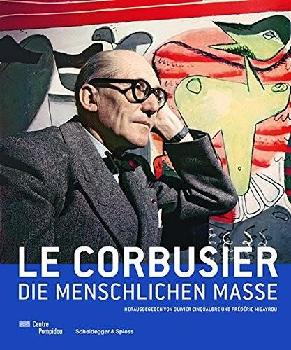
Le Corbusier - the measures of man
Few figures tower over modern architecture and city life like Le Corbusier. His dramatic rethinking of the principles and aims of architectural design made a profound impression on the spaces of twentieth-century cities and the ways that people lived in them. This volume offers an up-to-date picture of Le Corbusier's achievement.
Book

Orthopedic Design Revisited: Le Corbusier and L’Esprit nouveau, 1920-1925
Este artículo revisa los principios de diseño ortopédico de Le Corbusier para presentar una serie de preocupaciones más generales sobre la higiene energética. Examinando el modo en que determinados objetos de diseño reflejan las preocupaciones emergentes de la psicología moderna, se demostrará cómo Le Corbusier veía las artes decorativas como una forma de gestionar el aspecto energético de la experiencia humana, previniendo crisis y aliviando la sobrecarga psicológica que define un conjunto de experiencias recién urbanizadas y cosmopolitas. Al enmarcar el diseño en el contexto más amplio de la higiene energética, el objetivo de este artículo es situar a Le Corbusier como un diseñador integral que respondió a las exigencias médicas y tecnocientíficas de la vida moderna.
Journal Article


Reinterpreting Le Corbusier’s Concept of Unlimited Growth for University Campus Transformation Under Demographic Decline: A Typo-Morphological and Spatial Adaptation Framework
Declining birth rates are reshaping higher education across East Asia, accelerating the large-scale underutilization and, in some contexts, partial abandonment of university campus assets. Although adaptive reuse has been widely discussed, campus transformation is often framed primarily as a programmatic or policy problem, with limited attention to the inherited spatial logic embedded in campus morphology. This study revisits Le Corbusier’s concept of unlimited growth as a generative framework for campus transformation. Rather than treating it as a museum-specific historical typology, the research reinterprets unlimited growth as a scalable spatial logic defined by modular continuity, circulation hierarchy, and open-ended sequencing. To enhance reproducibility and operational clarity, the study formalizes a typo-morphological decoding protocol—modules, circulation, and growth sequence—and applies it through plan-, section-, and diagram-based analysis. Through comparative examination of three museum precedents—Sanskar Kendra Museum, the National Museum of Western Art (Tokyo), and the Chandigarh Museum and Art Gallery—the study extracts a set of transferable spatial mechanisms: modular increment, circulation-centered ordering, directional displacement, and fifth-façade ecological continuity. These mechanisms are then translated into an operational right-sizing model and tested through a design-operational demonstrator on a single anonymized Taiwanese campus experiencing demographic contraction. The findings indicate that unlimited growth functions not merely as a formal principle but as a spatial governance logic that supports phased consolidation, adaptive recomposition, and system-level coherence under long-term uncertainty. Importantly, this framework contributes to sustainability by reducing land consumption through spatial consolidation, minimizing unnecessary new construction, enabling adaptive reuse of existing campus assets, and improving long-term resource-use efficiency through phased right-sizing and ecological continuity. This study further advances a reproducible, mechanism-based methodological framework for institutional spatial transformation, providing a transferable approach for large-scale campus restructuring under conditions of long-term demographic and environmental uncertainty.
Journal Article

Le Corbusier : the built work
\"The most thoroughgoing survey of nearly all of Le Corbusier's extant projects, beautifully photographed and authoritatively detailed. Le Corbusier is widely acknowledged as the most influential architect of the twentieth century. As extensively researched and documented as his works are, however, they have never been exhaustively surveyed in photographs until now. Photographer Richard Pare has crossed the globe for years to document the extant works of Le Corbusier--from his first villas in Switzerland to his mid-career works in his role as the first global architect in locations as far-flung as Argentina and Russia, and his late works, including his sole North American project, at Harvard University, and an extensive civic plan for Chandigarh, India.\"-- provided by publisher.
Book

Senses of place: architectural design for the multisensory mind
Traditionally, architectural practice has been dominated by the eye/sight. In recent decades, though, architects and designers have increasingly started to consider the other senses, namely sound, touch (including proprioception, kinesthesis, and the vestibular sense), smell, and on rare occasions, even taste in their work. As yet, there has been little recognition of the growing understanding of the
multisensory
nature of the human mind that has emerged from the field of cognitive neuroscience research. This review therefore provides a summary of the role of the human senses in architectural design practice, both when considered individually and, more importantly, when studied collectively. For it is only by recognizing the fundamentally multisensory nature of perception that one can really hope to explain a number of surprising crossmodal environmental or atmospheric interactions, such as between lighting colour and thermal comfort and between sound and the perceived safety of public space. At the same time, however, the contemporary focus on synaesthetic design needs to be reframed in terms of the crossmodal correspondences and multisensory integration, at least if the most is to be made of multisensory interactions and synergies that have been uncovered in recent years. Looking to the future, the hope is that architectural design practice will increasingly incorporate our growing understanding of the human senses, and how they influence one another. Such a multisensory approach will hopefully lead to the development of buildings and urban spaces that do a better job of promoting our social, cognitive, and emotional development, rather than hindering it, as has too often been the case previously.
Journal Article

Le Corbusier : the complete buildings
\"This visual tour of every one of Le Corbusier's buildings across the world represents the most comprehensive photographic archive of the architect's work. In 2010, photographer Cemal Emden set out to document every building designed by the master architect Le Corbusier. Traveling through three continents, Emden photographed all the 52 buildings that remain standing. Each of these buildings is featured in the book and captured from multiple angles, with images revealing their exterior and interior details. Interspersed throughout the book are texts by leading architects and scholars, whose commentaries are as fascinating and varied as the buildings themselves. The book closes with an illustrated, annotated index. From the early Villa Vallet, built in Switzerland in 1905, to his groundbreaking Unitâe d'Habitation in Marseille, completed in 1947, this ambitious project presents the entirety and diversity of Le Corbusier's architectural output. Visually arresting and endlessly engaging, it will appeal to the architect's many fans, as well as anyone interested in the foundation of modern architecture.\"-- Provided by publisher.
Book

Sueñan los androides con ovejas eléctricas? Una conversación con Salvador Pérez Arroyo
Salvador Pérez Arroyo tiene algo de maestro oriental. Incluso antes de haber hecho las maletas y trasladado su vida a lo que nosotros llamamos el Extremo Oriente, el ser de Salvador tenía ya una presencia próxima y distante a la vez. Desde la elegancia de su deambular por las aulas y pasillos de la vieja Escuela de Arquitectura de Madrid, Salvador ejercía un magisterio profundo, original y culto, muy distinto del de otros colegas contemporáneos. En su heterodoxa cátedra convocaba a muy variados profesionales –desde Iñaki Ábalos o Juan Herreros a Alejandro Zaera– con la única condición de estar dispuestos a trabajar codo con codo con los estudiantes para desvelar conjuntamente el futuro de la arquitectura.Salvador es un arquitecto y un académico atípico. Un fuera de radar que, en estos tiempos convulsos, todavía mantiene el magisterio de quien no ha renunciado a vivir el tiempo que le ha tocado en suerte. También se puede decir de él que nunca ha rehusado a responder a ninguna fórmula que le hayamos planteado: entrevistas, reflexiones, escritos, etcétera. Esta conversación que se publica aquí se ha producido en el momento de un nuevo traslado de Salvador. En este caso desde Vietnam a Italia, a Padua en concreto, donde ha decidido instalarse por el gusto de recuperar las conversaciones con sus colegas de antaño.El título de la conversación, un evidente robado a la obra de Philip K. Dick, ilustra su interés y su autoridad por la contemporaneidad. En este caso le planteamos cuestiones relacionadas con la práctica del proyecto y con su docencia, en esta nueva era que abre la inteligencia artificial. En su discurso aparecen igualmente muchos de los personajes que han ayudado a configurar nuestro tiempo, desde David Lynch a Michel Houellebecq, pasando también por los arquitectos Sigurd Lewerentz o Le Corbusier.
Journal Article

Voiture minimum : Le Corbusier and the automobile
\"Le Corbusier, who famously called a house 'a machine for living,' was fascinated--even obsessed--by another kind of machine, the automobile. His writings were strewn with references to autos ... In his 'white phase' of the twenties and thirties, he insisted that his buildings be photographed with a modern automobile in the foreground. Le Corbusier moved beyond the theoretical in 1936, entering (with his cousin Pierre Jeanneret) an automobile design competition, submitting plans for 'a minimalist vehicle for maximum functionality,' the Voiture Minimum. Despite Le Corbusier's energetic promotion of his design to several important automakers, the Voiture Minimum was never mass-produced. This book is the first to tell the full and true story of Le Corbusier's adventure in automobile design. Architect Antonio Amado describes the project in detail, linking it to Le Corbusier's architectural work, to Modernist utopian urban visions, and to the automobile design projects of other architects including Walter Gropius and Frank Lloyd Wright. The story is supported by many images and documents, including architects' favorite cars, sketches and models of the Voiture Minimum, and copies of Le Corbusier's correspondence with prospective manufacturers.\"--Dust jacket.
BOOK

Architectural work of Le Corbusier in Paris and freedom of decision. Housing architecture
The authors analyzed the numerous limitations accompanying Le Corbusier in his professional work and their impact on the final shape of residential buildings constructed in Paris. At the same time, they point to the sources of this architecture and discuss various conditions that caused changes in the architect’s decisions. The text will include the authors’ observations resulting from visits to the facilities designed by Le Corbusier, the relationship with investors during the design of residential houses will be presented, their current condition and the transformations that have taken place over the twentieth century will be presented. The text was created as a result of the analysis of source materials, a query at Fondation Le Corbusier, research conducted in situ and interviews with users.
Journal Article