
Catalogue Search | MBRL


Are you sure you want to remove the book from the shelf?

{{itemTitle}}
320
result(s) for
"cross-cultural pragmatics"
Sort by:

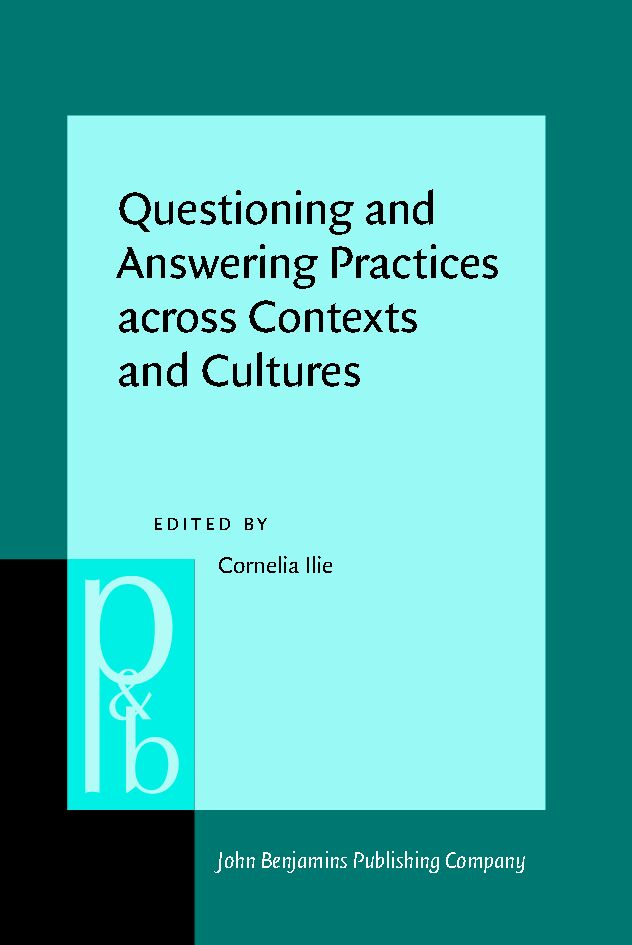
Questioning and Answering Practices across Contexts and Cultures
This book showcases innovative research about the multi-functional and dynamic interrelatedness of questioning and answering practices in institution- and culture-specific interactions ranging from under-explored to extensively researched ones.
eBook

Cognitive salience features enhance multitask deep learning for pragmatic reasoning across cultures
Cross-cultural pragmatic reasoning requires computational systems to interpret implicit meanings and culturally-specific communication patterns beyond literal semantic comprehension. This study proposes a cognitive salience feature-driven multi-task deep learning model that integrates attention-based mechanisms mirroring human perceptual priorities with culture-conditioned gating for cross-cultural pragmatic inference. The model jointly optimizes four pragmatic reasoning tasks-implicature detection, speech act classification, politeness assessment, and cultural appropriateness evaluation-through dynamic task weighting and gradient conflict resolution strategies. Comprehensive experiments conducted on a multilingual corpus spanning eight cultural groups demonstrate that the proposed approach achieves 83.2% overall accuracy and 77.5% cross-cultural transfer accuracy, representing substantial improvements of 9.7 and 12.7% points respectively over standard multi-task learning baselines. Ablation studies confirm that cognitive salience mechanisms contribute 5.2% performance gain, while culture-conditioned processing enhances cross-cultural generalization. The model's learned salience patterns exhibit strong correlation (0.81) with theory-driven pragmatic markers, validating interpretability and theoretical grounding. This work advances computational pragmatics by demonstrating that human-inspired cognitive mechanisms significantly enhance artificial systems' cross-cultural reasoning capabilities.
Journal Article
RETRACTED ARTICLE: Cognitive salience features enhance multitask deep learning for pragmatic reasoning across cultures
Cross-cultural pragmatic reasoning requires computational systems to interpret implicit meanings and culturally-specific communication patterns beyond literal semantic comprehension. This study proposes a cognitive salience feature-driven multi-task deep learning model that integrates attention-based mechanisms mirroring human perceptual priorities with culture-conditioned gating for cross-cultural pragmatic inference. The model jointly optimizes four pragmatic reasoning tasks—implicature detection, speech act classification, politeness assessment, and cultural appropriateness evaluation—through dynamic task weighting and gradient conflict resolution strategies. Comprehensive experiments conducted on a multilingual corpus spanning eight cultural groups demonstrate that the proposed approach achieves 83.2% overall accuracy and 77.5% cross-cultural transfer accuracy, representing substantial improvements of 9.7 and 12.7% points respectively over standard multi-task learning baselines. Ablation studies confirm that cognitive salience mechanisms contribute 5.2% performance gain, while culture-conditioned processing enhances cross-cultural generalization. The model’s learned salience patterns exhibit strong correlation (0.81) with theory-driven pragmatic markers, validating interpretability and theoretical grounding. This work advances computational pragmatics by demonstrating that human-inspired cognitive mechanisms significantly enhance artificial systems’ cross-cultural reasoning capabilities.
Journal Article

Using Speech Act and Interaction Theory to Capture Learner Difficulties: An L2 Pragmatic Approach
In this academic note, we aim to outline the foundations of a major L2 pragmatic project that we have been engaged in over the past few years. We believe the readers may find our system and its typology relevant to their own research studies. Central categorical parts of the project; that is to say, speech acts and interaction, are introduced in detail. More illustrations are followed using typical Persian examples on how refusal, as a popular category of speech acts in L2 (cross-cultural) pragmatics, can be analysed in our system, keeping in mind the target audience of the present contribution.
Journal Article

A Multimodal AI Framework for Cross-Cultural Pragmatic Competence Analysis in Global English Communication
Driven by computational linguistics, intercultural communication, and situated cognition, this paper has proposed a research prototype of multimodal, culture-sensitive evaluation of cross-cultural pragmatic competence in English as a global language. The Multimodal Cross-cultural Pragmatic Analysis System (MCPAS) proposed combines verbal, paraverbal, and nonverbal cues through language modeling based on transformers, acoustic-prosodic analysis, and computer-vision characteristics, and applies a culture-calibration layer to condition pragmatic inference on empirically observed cultural orientations and maintain within-group variation. MCPAS is trained and tested on a culturally varied corpus of 645 participants of 27 cultural settings (872 h; 1.9 million utterances). With culture-calibrated inference, in 24-class speech-act classification, the system achieves 94.3% micro-averaged accuracy on a discussed test set, using class-balanced performance (speech-act F1 = 0.913; overall feature-recognition F1 = 0.874). The consistency with the independent expert judgments is high (weighted Cohen’s k = 0.861), and test-retest reliabilities provide high levels of reliability (ICC in general = 0.913). Mixed-methods assessment also investigates the usability of pedagogical methods using expert evaluation, teacher practice, and a small-scale student intervention, indicating that system outputs can be converted into classroom- and professional-based instructional feedback and activities. The results are presented of the corpus and settings under study, external benchmark testing, wider cultural transfer testing, and deployment testing in uncontrolled settings, which is also an important area of future research.
Journal Article

A Cross-Cultural Analysis of the Speech Act of Congratulation in Vietnamese and American Contexts
This study investigates the cross-cultural pragmatics of congratulatory speech acts by comparing Vietnamese and American speakers. Using a mixed-methods approach, the research integrates both quantitative and qualitative analyses to examine strategy usage and formulation. Data were collected through a Discourse Completion Task (DCT) administered to 78 Vietnamese and 78 American participants. The DCT presented three situational scenarios reflecting varying power dynamics. Findings indicate that while both groups primarily employ Illocutionary Force Indicating Devices, cultural variations shape secondary strategies. Vietnamese speakers favor Offering good wishes and Suggestion to Celebrate, reflecting their collectivist cultural values, while American speakers frequently use Expression of Positive emotions and Expression of Personal happiness, in line with individualistic communication norms. Power dynamics influence strategy selection, with lower-power individuals favoring direct strategies to enhance social rapport. Vietnamese participants uniquely suggest that the congratulated individual host a celebration, while Americans maintain consistent emotional expressiveness across hierarchical contexts. Data coding followed Elwood’s (2004) taxonomy, with adaptations to reflect context-specific findings. This study contributes to the field of intercultural pragmatics by demonstrating how sociocultural factors and power dynamics shape congratulatory expressions. The results have implications for cross-cultural communication, language education, and professional intercultural interactions.
Journal Article

\Gender and social power dynamics in compliment responses: A cross-cultural pragmatic study of university students in Indonesia and Pakistan\
This cross-cultural study examines the dynamics of compliment response strategies among university students in Indonesia and Pakistan, focusing on the influence of gender and power dynamics. The study utilizes a mixed-methods approach, through qualitative analysis, we identified prevalent themes and patterns in students' responses by categorizing them according to Yu's classification. Subsequently, we quantified these qualitative categories using frequencies and percentages, offering a comprehensive understanding of the distribution of various compliment response strategies. The study comprises 100 undergraduate students evenly split between Indonesia and Pakistan, with equal gender representation (25 males, 25 females) in each country, aged 18-24. Data collection employed a Google Forms questionnaire as a Discourse Completion Task. The questionnaire encompassed demographic details and responses to compliment scenarios. Upon data collection, responses were categorized into six strategies based on Yu's (Yu, 2004) taxonomy. Noteworthy variations emerge in compliment response strategies between Indonesian and Pakistani students, as well as across gender lines. Indonesian participants, reflecting cultural values of modesty and social harmony, display a preference for acceptance and amendment strategies. In contrast, Pakistani students, particularly males, show a higher propensity for no acceptance and no acknowledgment strategies, alongside acceptance and amendment strategies. These findings underscore the intricate dynamics of compliment responses, spotlighting the interplay of gender, power dynamics, and cultural influences. The study paves the way for future exploration of intercultural communication and fosters cross-cultural connections. This is particularly relevant for Pakistan, where limited research on compliment responses exists.
Journal Article

A Cross-Cultural Study of Complaint Strategies by Native Speakers of American English and Vietnamese Learners of English
This study investigates cross-cultural differences in the realization of complaint strategies between native speakers of American English and Vietnamese learners of English (EFL). Adopting a pragmalinguistic and sociopragmatic framework, the research applies Trosborg’s (1995) taxonomy of complaints and politeness theory (Brown & Levinson, 1987) to analyze 136 complaint responses from each group, collected via Discourse Completion Tasks (DCTs). Quantitative and qualitative analyses reveal that American participants favored indirect accusations (B3) and requests for repair (A5), often employing a broader range of downgraders and upgraders to navigate face-threatening acts. In contrast, Vietnamese learners preferred indirect complaints (B4) and blaming (A6), with more limited use of internal modifiers. Social distance significantly affected strategy choice in both groups, with higher levels prompting greater use of politeness devices. The findings underscore cultural influences on complaint behavior and suggest that learners' pragmatic performance is shaped by both linguistic proficiency and socio-cultural norms. Pedagogically, the study highlights the need for explicit EFL instruction in strategic politeness, including training on modifier use and contextual appropriateness. This research contributes to intercultural pragmatics by offering insights into how complaints are negotiated across languages, cultures, and social roles.
Journal Article

A Cognitive Study on Politeness Intention Processing and Its Association with Pragmatic Failure in Cross-Cultural Communication
Although a large number of studies have focused on various aspects of politeness, very little is known about how politeness intention is activated cognitively during verbal communication. The present study aims to explore the cognitive mechanism of politeness intention processing, and how it is related to pragmatic failure during cross-cultural communication. Using 30 Chinese EFL university students who were instructed to finish a probe word judgment task with 96 virtual scenarios, the results indicate that within both mono- and cross-cultural contexts, the response time in the experimental scenarios was significantly slower than that of the filler scenarios. This suggests that politeness intention was activated while understanding the surface meaning of the conversation; however, the EFL learners could not completely avoid the negative transfer of their native politeness conventions when they were comprehending the conversational intention of the target language. Furthermore, no significant differences in response time were found between the groups with high and low English pragmatic competence, illustrating that transferring the pragmatic rules and principles into cross-cultural communication skills was more cognitively demanding. Overall, this study adds to the literature on politeness research and provides some implications for foreign language pragmatic instructions.
Journal Article