
Catalogue Search | MBRL


Are you sure you want to remove the book from the shelf?

{{itemTitle}}
6,489
result(s) for
"cultural anxiety"
Sort by:
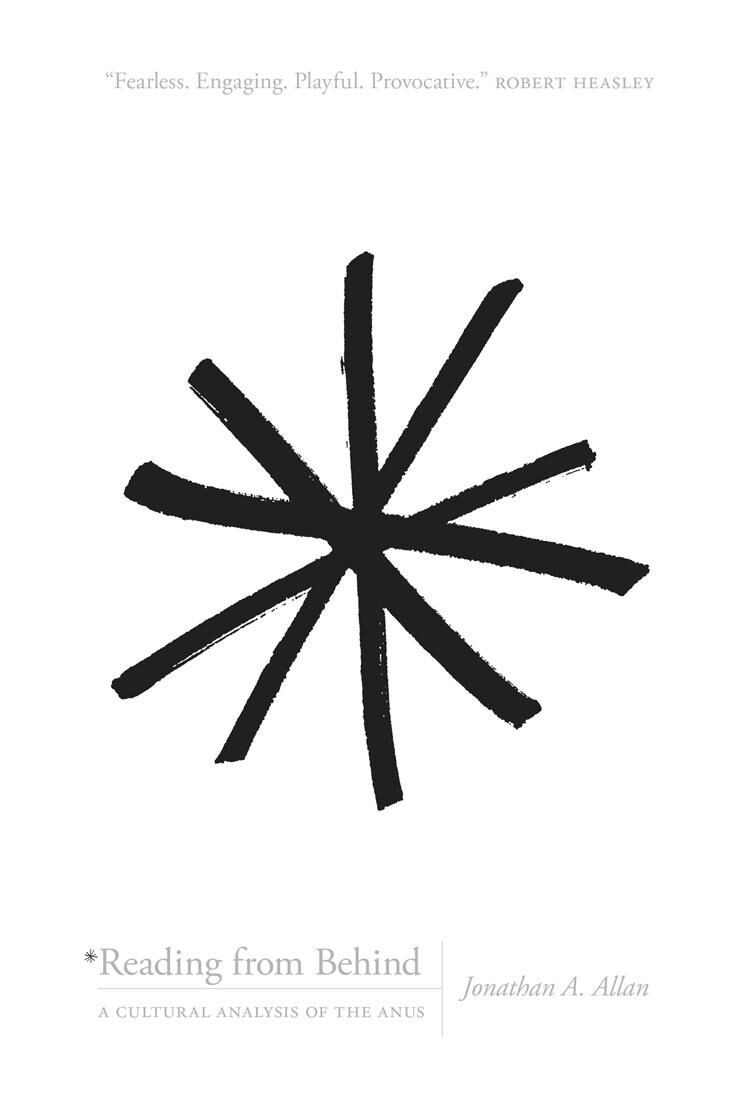
Reading from Behind
Since we all have one and use it every day, why is it that people squirm when the anus is mentioned? In Reading from Behind, Jonathan Allan addresses this question in a playful, yet scholarly exploration of everything from porn to poetry, from Brokeback Mountain to Myra Breckinridge, democratizing the anus as a site of necessity and as a location of pleasure.
eBook

Anxiety Inventory for Respiratory Disease: Cross-Cultural Adaptation and Semantic Validity of the Brazilian Version for Individuals with Chronic Obstructive Pulmonary Disease
Most instruments available to screen for anxiety in people with chronic obstructive pulmonary disease (COPD) are not disease specific. Therefore, the Anxiety Inventory for Respiratory Disease (AIR) was developed to measure anxiety for this patient group; however, it requires cross-cultural adaptation for use in non-English speaking countries.
To carry out cross-cultural adaptation of the AIR scale for Brazilian patients with COPD and to analyze its semantic validity.
This methodological study followed six stages: 1) Initial translation by two independent translators fluent in English; 2) Synthesis of translations; 3) Back translation by two English first language translators; 4) Expert committee review (eight healthcare professionals, a methodologist, the translators, and back-translators); 5) Pre-final version evaluation with 30 patients with COPD through a cognitive interview; and 6) Submission of documents. Semantic validity was analyzed by agreement rate and content validity index (CVI) for the committee equivalence assessments.
1) Initial translation: the two translated versions presented eight divergences; 2) Synthesis of translations: the differences were discussed to reach consensus; 3) Back-translation: there were no important inconsistencies; 4) Expert Committee: the experts proposed eight and the instrument developer proposed three changes, which were analyzed and voted on, resulting in the pre-final version; 5) Evaluation of the pre-final version: data collection allowed for other changes and the formulation of instructions by applying the adapted instrument in an interview format. Patients rated the questions as clear or very clear; 6) The expert committee and the developer approved the final documents. The agreement rate and CVI were ≥ 0.80 for all items of the scale final version.
The process of cross-cultural adaptation followed all necessary stages and the semantic validity results were adequate, providing the Brazilian version of the AIR to assess anxiety symptoms in patients with COPD.
Journal Article

Telling Anxiety
From two world wars to rapid industrialization and population shifts, events of the twentieth century engendered cultural anxieties to an extent hitherto unseen, particularly in Europe. In Telling Anxiety , Jennifer Willging examines manifestations of such anxieties in the selected narratives of four women writing in French – Marguerite Duras, Nathalie Sarraute, Annie Ernaux, and Anne Hébert. Willging demonstrates that the anxieties inherent in these women's works (whether attributed to characters, narrators, or implied authors) are multiple in nature and relate to a general post-Second World War scepticism about the power of language to express non-linguistic phenomena such as the destruction and loss of life that a large portion of Europe endured during that period.
Willging maintains that while these women writers are profoundly wary of language and its artificiality, they eschew the radical linguistic scepticism of many post-war male writers and theorists. Rather, she argues, the anxiety that these four writers express stems less from a loss of faith in language's referential function than from a culturally ingrained doubt about their own ability as women to make language reflect certain realities. Ultimately, Telling Anxiety shows the crippling obstacles of literary agency for women in the twentieth century from the perspective of those who fully understood the significant responsibility of their work.
eBook

Ansiedad finisecular e hibridez cultural en el imaginario dariano de Azul (1888)
El objetivo de este artículo es analizar la construcción de una hibridez cultural, política y estética en dos poemas de Azul (“Estival” y “Anagke”). En estos poemas, Rubén Darío presenta al lector una visión cultural compleja de América Latina a finales del siglo XIX. Al mismo tiempo, estos poemas muestran una cierta ansiedad cultural finisecular producto de la modernización capitalista, de los nuevos circuitos de consumo, del nuevo y cada vez más amplio público lector y, finalmente, de la moderna función del escritor en una sociedad en constante aceleración. Mi hipótesis es que las transformaciones culturales y políticas del período generan una mezcla de tradiciones literarias y de imaginarios culturales que repercuten en nuevas formas de escritura.
Journal Article

Effects of Psychological Distress and Coping Resources on Internet Gaming Disorder: Comparison between Chinese and Japanese University Students
The high prevalence of Internet gaming disorder (IGD) among Asian youth indicates an urgent need to identify protective factors and examine their consistency across Asian cultures in order to facilitate cost-effective interventions. Based on the transactional theory of stress and coping, this study collected data of 1243 online gamers (45% males; 18–25 years) through an anonymous survey from universities in China and Japan and investigated whether three coping resources (i.e., mindfulness, coping flexibility, and social support) serve to protect Chinese and Japanese youth from the impact of psychological distress on IGD tendency. After adjusting for the measurement non-invariance across samples, we found that Japanese students reported higher levels of IGD tendency and psychological distress than Chinese students. The results of multiple-group SEM analyses showed that, after controlling for other predictors, mindfulness served as the strongest protective factor against IGD across samples. Moreover, the buffering effect of mindfulness on the association between psychological distress and IGD tendency of female (but not male) students was observed. Our findings highlighted the cross-cultural invariance of the impact of psychological distress and coping resources on IGD in Chinese and Japanese youth, which can be considered in future IGD prevention programs.
Journal Article

Law’s mobility
This chapter examines the mobility of laws in the trans-Tasman colonial world, suggesting that the way colonial subjects both adopted, remade, remodelled and enacted laws reflected the mobility of both people and ideas, and also anxieties about mobility itself. It revisits some Australian and New Zealand legal history scholarship which has been central to understanding the transmission and uptake of imperial ‘laws’ in new colonial sites, raising questions about the cultural malleability of legality in colonial settings and reflecting on the question of mobility as a social problem which had to be addressed by colonial legislators. The chapter considers the laws that were formulated to regulate the movement of colonial populations, including vagrants and transients, Indigenous peoples, and new immigrants.
Book Chapter

Postmodernist Identity Construction and Consumption
With the transition from modernism to postmodernism, identity as a concept has started to become redefined in sociology literature. The aim of this study is to show that postmodernism and symbolic interactionism are fused together to delineate both the scene as well as an actor’s identity. In that way, the interaction of a social structure with a culture that won’t be completely ignored, and, with the opinion that the categorized roles can skillfully be shaped and diversified by actors, it is possible to refrain from a pure determinism. But the transformation to enter different roles lacks meaning. Individuals pay more attention to their appearance more than who they are in order to be accepted by each group. In this manner, a metaphysical shell game begins. In the following study, the “Social Appearance Anxiety” was used as an indicator of this game. And to determine who is willing to play the game, cultural parameters were utilized. This study was based on the analysis of the data collected through two questionnaires given to 181 students studying at Hitit University. The INDCOL questionnaire [Singelis et al., 1995] measuring cultural values and “Social Appearance Anxiety” scale developed by [Hart, 2008] were used in the study.
Journal Article


Clockwork Counterfactuals
This chapter focuses on Steampunk’s use of allohistorical tropes, including the reversal of hindsight bias and point of divergence tropes, to present a rhetoric of science and technology reflective of our contemporary cultural anxieties surrounding technological development. Steampunk’s historical point of divergence is, significantly, the golden period of technological enlightenment and discovery immediately preceding the wide adoption of environmentally destructive diesel and coal combustion engines, and before the experiments in atomic physics that followed them. Steampunk preserves a moment in technological history in which the destructive potential of science was still largely unrealized, when inventors were imagined to be journeyman tinkerers like Franklin or Da Vinci rather than scientists like Oppenheimer. In short, Steampunk presents a tinkerer’s rhetoric of inquiry using an imagined late 19th century as its vehicle. This perspective is critical of the close relationship between science and capitalism that developed during the Industrial Revolution, and given the emergence of Steampunk in the 1970s and 80s also contains echoes of the rise of modern environmentalism and Cold War nuclear paranoia. To develop these perspectives, this chapter analyzes two steampunk novels: Harry Harrison’s A Transatlantic Tunnel, Hurrah! and Cherie Priest’s Boneshaker.
Book Chapter