
Catalogue Search | MBRL


Are you sure you want to remove the book from the shelf?

{{itemTitle}}
15,034
result(s) for
"cultural workers"
Sort by:


A comparative analysis of the economic sustainability of cultural work in the UK since the COVID-19 pandemic and examination of universal basic income as a solution for cultural workers
The COVID-19 pandemic and related lockdowns across the world have greatly affected an already vulnerable cultural economy and the structural precarity of many cultural workers. After documenting the impacts of the pandemic in the cultural sector and the effectiveness of governmental responses in the UK and in Europe, the article focuses on the visual arts and explores calls for reforms of the cultural economy. While the UK government's recovery plan went against the country's cultural policy tradition due to the plan's interventionist and financially generous nature, it disproportionally benefitted organisations rather than individuals working in the sector, especially in England. The study, conducted on visual arts workers in the UK, shows that many were unable to access these financial recovery schemes and fell through the cracks of the complex criteria set for these funds. This article informs the current debate on measures that are potentially more economically sustainable and wellbeing protective than those currently in place for cultural workers, such as Universal Basic Income. Its applicability is explored with reference to the historic French and recent Irish examples.
Journal Article

Movers and makers : uncertainty, resilience, and migrant creativity in worlds of flux
\"This book considers the impact of movement on creativity and innovation across different diasporic communities. In a highly original examination of twenty-first century migrant life, Parminder Bhachu explores what it is about these groups and individuals which predispose them to create ideas, products and markets. How is it that those who do not come from the traditional structures of power and economic capital are able to thrive and be upwardly mobile? Ethnographic material highlights the life histories and narratives of figures drawn from the worlds of art, science, film, technology, architecture, music and product design, to illustrate themes such as racism, representation, displacement and cultural inheritance\"-- Provided by publisher.
Book

Weapons of the Chic: Instagram Influencer Engagement Pods as Practices of Resistance to Instagram Platform Labor
This article examines the phenomenon of Instagram influencer “engagement pods” as an emergent form of resistance that responds to the reconfigured working conditions of platformized cultural production. Engagement pods are grassroots communities that agree to mutually like, comment on, share, or otherwise engage with each other’s posts, no matter the content, to game Instagram’s algorithm into prioritizing the participants’ content and show it to a broader audience. I argue that engagement pods represent a response to the material conditions of platformized cultural production on Instagram, where proprietary curation algorithms wrest knowledge and control of the labor process from producers. Cooperative algorithm hacking of this sort, although quite distinct from traditional organizing strategies, responds to the coercive force of the “threat of invisibility” that necessitates constant data production. They represent a collective attempt to exert some control over their “conditions of presence-to-others” and, in so doing, combat precarity and protect wages in the field. In a post-industrial economy where traditional models of labor organizing have struggled to address the conditions of platformized cultural work, I argue that the unusual phenomenon of Instagram engagement pods represents an organic form of worker resistance that responds to the unique conditions of these workers.
Journal Article


Professional Self-Structuration in the Arts: Sustaining Creative Careers in the 21st Century
In this paper, we investigate the ongoing, self-motivated activity called freelancing or self-employment, and explore ideas about the entrepreneurial competencies needed to conduct a sustainable work life in the arts. We present the findings of a comparative concept analysis of three concept clusters concerning working in the arts and creative sector: Portfolio of jobs, Portfolio of hybrid practices, and the Portfolio/Protean career. We relate these concept clusters to ideas about arts entrepreneurship and professionalism in the arts in order to investigate our research questions: How do cultural workers/artists in today’s social context create economically and creatively sustainable careers? What can we learn from their experiences about broader questions of the cultural value of art, the ongoing trend toward professionalization, and the changing roles of the worker and the entrepreneur in 21st-century economic life? To begin to answer these questions, we undertake a conceptual literature review and use conceptual mapping as a primary tool. We draw on a critical analysis of research, practice, and policy, as well as numerous discussions and interviews with creative professionals and the authors’ own experiences with educating students who aim to become cultural workers in the creative sector. Based on our findings, we developed the Integrated Model for Self-Structuring Portfolio Professions. This model demonstrates how incomes and work practices tend to be clustered into portfolios that are self-structured by individual creative workers, acting as the entrepreneurs in their own career management and sustainability.
Journal Article

The challenge of working for Americans : perspectives of an international workforce
\"Internationalization is now a necessity for American organizations, leading to unprecedented cultural exchanges in multinational employers. Much has been written about Americans working abroad, but how do non-Americans feel about working for Americans? To answer this question, Bond Benton directly surveyed nearly 600 Foreign Service Nationals working for the US State Department. These State Department employees speak to the perceptions of non-Americans working in an overtly American environment. This unprecedented work offers insights that are enlightening, challenging, and occasionally shocking. Researchers, practitioners, students, and those interested in understanding America's place in the world can all consider what happens when those who are \"exceptional\" become those who are \"the other.\"\"-- Provided by publisher.
Book

Revisiting Compassion and Job Performance: A Constructive Study in South Korean Public Art Institutions
This study empirically examines how employee compassion relates to job performance. Specifically, this study is a constructive replication and expansion of a previous study on the relationship between compassion and job performance using multiple sources of measurement. It investigates unexplored pathways within the public art sector in South Korea. Focusing on the mediating roles of positive work-related identity (PWRI) and positive psychological capital, we collected data from public art institutions in Korea, including galleries and museums, using a survey method. We tested the hypotheses using structural equation modeling and the PROCESS bootstrapping method. Our findings demonstrate a positive association between compassion and job performance, serially mediated by PWRI and positive psychological capital. Theoretically, by constructively replicating and expanding the previous findings, our study contributes to a robust understanding of how compassion could enhance employee performance. Practically, this study reinforces the value of fostering compassion and positive psychological resources to improve job performance, particularly within the public art sector.
Journal Article

Born out of place : migrant mothers and the politics of international labor
\" Hong Kong is a meeting ground for migrant domestic workers, traders, refugees, asylum seekers, tourists and businessmen, and local residents. At the heart of this book are the stories and experiences of migrant mothers from Indonesia and the Philippines, their South Asian, African, Chinese, and Western expatriate partners, and their Hong Kong born babies. Constable gives voice to the immigrant mothers in this Asian world city and, in the process, raises a serious question: do we regard immigrants as people, or just workers? This accessible ethnography provides insight into global problems of mobility, family, and citizenship and points to the consequences, creative responses, melodramas, and tragedies of labor and migration policies\"-- Provided by publisher.
Book
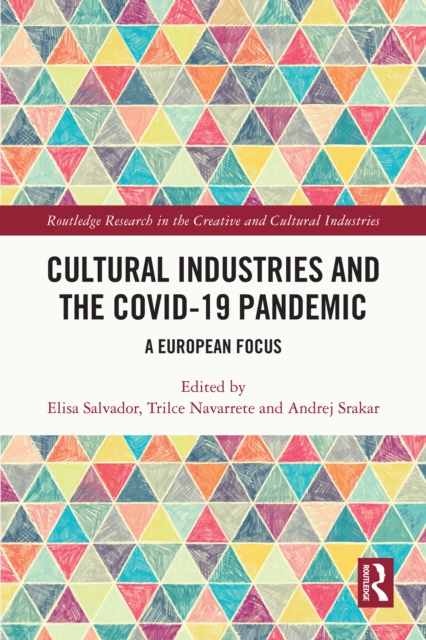
Cultural Industries and the Covid-19 Pandemic
Already dealing with disruptive market forces, the Cultural and Creative Industries (CCIs) faced fundamental challenges resulting from the global health crisis, wrought by the COVID-19 pandemic. With catastrophic changes to cultural consumption, cultural organizations are dealing with short-, medium-, and long-term threats to livelihoods under lockdown.
This book aims at filling the literature gap about the consequences of one of the hardest crises - COVID-19 - severely impacting all the fields of the CCIs. With a focus on European countries and taking into account the evolving and unstable context caused by the pandemic still in progress, this book investigates the first reactions and actual strategies of CCIs' actors, government bodies, and cultural institutions facing the COVID-19 crisis and the potential consequences of these emergency strategies for the future of the CCIs. Solutions adopted during the repeated lockdowns by CCIs' actors could originate new forms of cultural consumption and/or new innovative market strategies. This book brings together a constellation of contributors to analyze the cultural sector as it seeks to emerge from this existential challenge.
The global perspectives presented in this book provide research-based evidence to understand and reflect on an unprecedented period, allowing reflective practitioners to learn and develop from a range of real-world cases. The book will also be of interest to researchers, academics, and students with a particular interest in the management of cultural and creative organizations and crisis management.
eBook