
Catalogue Search | MBRL


Are you sure you want to remove the book from the shelf?

{{itemTitle}}
12,429
result(s) for
"data processing policy"
Sort by:

Education technology policies in the Middle East : globalisation, neoliberalism and the knowledge economy
This book explores the potential educational technologies have for transforming education in the Middle East. Although technology has increasingly become a part of classrooms around the globe over recent decades, its application in classrooms in the MENA region remains underused and this book draws on a case study from the Arabian Gulf to examine the beneficial impact technologies have on teaching and learning. The book identifies the many social and cultural pressures that prevent government technology policies to be implemented in the way that the international community would find recognisable and acceptable and how education policy from the Global North is transplanted into a separate context without considering the different requirements. The study seeks to address the ways in which educational technology policy in government schools plays a part in the enactment of education reforms and how government policy aspirations are played out in practice.
Book
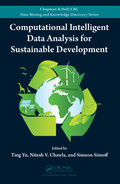
Computational Intelligent Data Analysis for Sustainable Development
Going beyond performing simple analyses, researchers involved in the highly dynamic field of computational intelligent data analysis design algorithms that solve increasingly complex data problems in changing environments, including economic, environmental, and social data. This volume presents novel methodologies for automatically processing these types of data to support rational decision making for sustainable development. Through numerous case studies and applications, it illustrates important data analysis methods, including mathematical optimization, machine learning, signal processing, and temporal and spatial analysis, for quantifying and describing sustainable development problems.
eBook


Massive Point Cloud Processing for Efficient Construction Quality Inspection and Control
The construction of large-scale civil infrastructures requires massive spatiotemporal data to support the management and control of scheduling, quality control, and safety monitoring. Existing artificial-intelligence-based data processing algorithms rely heavily on experienced engineers to adjust the parameters of data processing, which is inefficient and time-consuming when dealing with huge datasets. Limited studies have compared the performance of different algorithms on a unified dataset. This study proposes a framework and evaluation system for comparing different data processing policies for processing huge spatiotemporal data in construction quality control. The proposed method compares the combination of multiple types of algorithms involved in the processing of massive point cloud data. The performance of data processing strategies is evaluated through this framework, and the optimal point cloud processing strategies are explored based on registration accuracy and data fidelity. Results show that a reasonable choice of combinations of point cloud sampling, filtering, and registration algorithms can significantly improve the efficiency of point cloud data processing and satisfy engineering demands for data accuracy and completeness. The proposed method can be applied to the civil engineering problem of processing a large amount of point cloud data and selecting the optimal processing method.
Journal Article

Blockchain and crypto currency : building a high quality marketplace for crypto data
This open access book contributes to the creation of a cyber ecosystem supported by blockchain technology in which technology and people can coexist in harmony. Blockchains have shown that trusted records, or ledgers, of permanent data can be stored on the Internet in a decentralized manner. The decentralization of the recording process is expected to significantly economize the cost of transactions. Creating a ledger on data, a blockchain makes it possible to designate the owner of each piece of data, to trade data pieces, and to market them. This book examines the formation of markets for various types of data from the theory of market quality proposed and developed by M. Yano. Blockchains are expected to give data itself the status of a new production factor. Bringing ownership of data to the hands of data producers, blockchains can reduce the possibility of information leakage, enhance the sharing and use of IoT data, and prevent data monopoly and misuse. The industry will have a bright future as soon as better technology is developed and when a healthy infrastructure is created to support the blockchain market.
Book

GIS for housing and urban development
The report describes potential applications of geographic information systems (GIS) and spatial analysis by HUD's Office of Policy Development and Research for understanding housing needs, addressing broader issues of urban poverty and community development, and improving access to information and services by the many users of HUD's data.
eBook


A Minimum Cloud Cover Mosaic Image Model of the Operational Land Imager Landsat-8 Multitemporal Data using Tile based
The need for remote sensing minimum cloud cover or cloud free mosaic images is now increasing in line with the increased of national development activities based on one map policy. However, the continuity and availability of cloud and haze free remote sensing data for the purpose of monitoring the natural resources are still low. This paper presents a model of medium resolution remote sensing data processing of Landsat-8 uses a new approach called mosaic tile based model (MTB), which is developed from the mosaic pixel based model (MPB) algorithm, to obtain an annual multitemporal mosaic image with minimum cloud cover mosaic imageries. The MTB model is an approach constructed from a set of pixels (called tiles) considering the image quality that is extracted from cloud and haze free areas, vegetation coverage, and open land coverage of multitemporal imageries. The data used in the model are from Landsat-8 Operational Land Imager (OLI) covering 10 scenes area, with 2.5 years recording period from June 2015 to June 2017; covered Riau, West Sumatra and North Sumatra Provinces. The MTB model is examined with tile size of 0.1 degrees (11x11 km2), 0.05 degrees (5.5x5.5 km2), and 0.02 degrees (2.2x2.2 km2). The result of the analysis shows that the smallest tile size 0.02 gives the best result in terms of minimum cloud cover and haze (or named clear area). The comparison of clear area values to cloud cover and haze for three years (2015, 2016 and 2017) for the three mosaic images of MTB are 68.2%, 78.8%, and 86.4%, respectively.
Journal Article

Why don't we defend better? : data breaches, risk management, and public policy
\"The wave of data breaches raises two pressing questions : Why don't we defend our networks better? And, what practical incentives can we create to improve our defenses? Why Don't We Defend Better? : Data Breaches, Risk Management, and Public Policy answers those questions. It distinguishes three technical sources of data breaches corresponding to three types of vulnerabilities: software, human, and network. It discusses two risk management goals: business and consumer. The authors propose mandatory anonymous reporting of information as an essential step toward better defense, as well as a general reporting requirement. They also provide a systematic overview of data breach defense, combining technological and public policy considerations\"-- Provided by publisher.
Book

Computational intelligent data analysis for sustainable development
Intelligent data analysis techniques offer powerful solutions to collecting and analyzing vast quantities of environmental and economic data, which lead to better decision making for sustainable development. This volume is the first to discuss the treatment of intelligent data analysis techniques in sustainable development applications. The book describes the emerging use of data mining, machine learning, artificial neural networks, data visualization, knowledge discovery, GIS, and other technologies to tackle environmental, economic, and social issues, including climate change, risk management, and population growth.
Book