
Catalogue Search | MBRL


Are you sure you want to remove the book from the shelf?

{{itemTitle}}
464,672
result(s) for
"deficiency"
Sort by:
Just Doctoring
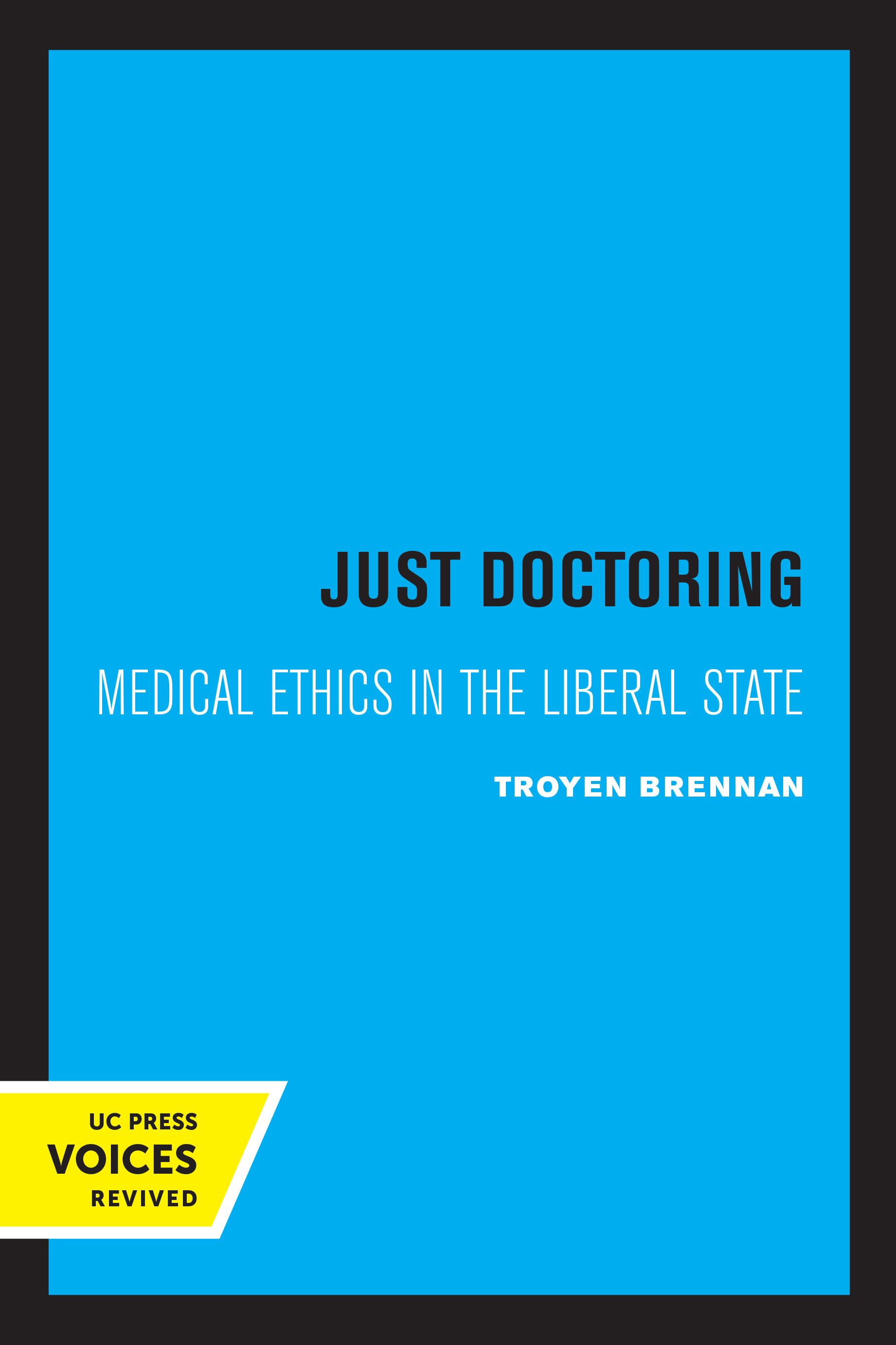
Just Doctoring draws the doctor-patient relationship out of the consulting room and into the middle of the legal and political arenas where it more and more frequently appears. Traditionally, medical ethics has focused on the isolated relationship of physician to patient in a setting that has left the physician virtually untouched by market constraints or government regulation. Arguing that changes in health care institutions and legal attention to patient rights have made conventional approaches obsolete, Troyen Brennan points the way to a new, more aware and engaged medical ethics. The medical profession is no longer isolated, even theoretically, from the liberal, market-dominated state. Old ideas of physician beneficence and altruism must make way for a justice-based medical ethics, assuming a relationship between equals more compatible with liberal political philosophy. Brennan offers clinical examples of many of today's most challenging medical problems--from informed consent to care rationing and the repercussions of the HIV epidemic--and gives his recommendation for a new ethical perspective. This lively and controversial plea for a rethinking of medical ethics goes right to the heart of medical care at the end of the twentieth century. This title is part of UC Press's Voices Revived program, which commemorates University of California Press's mission to seek out and cultivate the brightest minds and give them voice, reach, and impact. Drawing on a backlist dating to 1893, Voices Revived makes high-quality, peer-reviewed scholarship accessible once again using print-on-demand technology. This title was originally published in 1991. Many titles in the Voices Revived program are also newly available as ebooks, offered at a discounted price to support wider access to scholarly work.
eBook

Stiehm's Immune Deficiencies
Stiehm's Immune Deficiencies: Inborn Errors in Immunity, Second Edition, is ideal for physicians and other caregivers who specialize in immunology, allergies, infectious diseases and pulmonary medicine.
eBook
Prevalence of nutrient deficiencies in bariatric patients
The aims of this study were to determine the prevalence of nutrient deficiencies in patients who present for bariatric surgery, assess nutritional status after surgery, and compare these with preoperative levels.
A retrospective study was conducted to identify preoperative and 1-year postoperative nutrition deficiencies in patients undergoing bariatric surgery. The screening included serum ferritin, vitamin D, vitamin B
12, homocysteine, folate, red blood cell folate, and hemoglobin. Results were available for 232 patients preoperatively and 149 patients postoperatively. Two-tailed χ
2 tests and paired-sample
t tests were used.
Preoperatively, vitamin D deficiency was noted at 57%. The prevalence of abnormalities 1 year after roux-en-Y gastric bypass was higher compared with preoperative levels (
P < .05). After surgery, anemia was detected in 17%, elevated homocysteine levels (women only) in 29%, low ferritin in 15%, low vitamin B
12 in 11%, and low RBC folate in 12%. Mean hemoglobin, ferritin, and RBC folate levels deteriorated significantly but remained well within normal ranges. The prevalence of vitamin D deficiencies decreased, but not significantly. In sleeve gastrectomy patients, mean ferritin levels decreased (
P < .05), without any patient developing a deficiency.
Vitamin D deficiency is common among morbidly obese patients seeking bariatric surgery. Because the prevalence of micronutrient deficiencies persists or worsens postoperatively, routine nutrition screening, recommendation of appropriate supplements, and monitoring adherence are imperative in this population.
Journal Article

Efficacy of a multi micronutrient-fortified drink in improving iron and micronutrient status among schoolchildren with low iron stores in India: a randomised, double-masked placebo-controlled trial
Background/Objectives:
A multiple micronutrient-fortified drink could be an effective strategy to combating micronutrient deficiencies in school going children. To assess the efficacy of a multiple micronutrient-fortified drink in reducing iron deficiency (ID), ID anemia (IDA), anemia and improving micronutrient status among schoolchildren with low iron stores. The study employed a school-based, randomized, double-blind, placebo-controlled design.
Subjects/Methods:
Schoolchildren with low serum ferritin (SF <20 μg/l) (
n
=246), aged 6–12 years were randomly assigned to receive either a multi-micronutrient fortified or an unfortified identical control drink. The drinks were provided 6 days/week for 8 weeks. Anthropometric and biochemical assessments were taken at baseline and endline.
Results:
Study groups at baseline were comparable, and compliance to the intervention was similar. The overall prevalence of ID, IDA and anemia was 64%, 19% and 24%, respectively. The prevalence of ID, IDA, vitamin C and vitamin B
12
deficiencies significantly reduced by 42%, 18%, 21% and 5%, respectively, in the intervention arm (
P
<0.01) as compared with the control arm at the end of the study. Similarly, the concentration of hemoglobin, SF, vitamin A, vitamin B
12
, vitamin C and body iron stores were significantly higher in the intervention arm in comparison to the control arm (
P
<0.001). Red cell folate levels also improved significantly in the intervention arm (
P
=0.04), however, serum zinc status did not change in either of the study arms. Children who had received the fortified drink had significantly lower odds of being ID (0.15; 95% confidence interval (CI): 0.09–0.27), IDA (0.14; 95% CI: 0.04–0.52), vitamin B
12
deficient (0.36; 95% CI: 0.18–0.73) and vitamin C deficient (0.24; 95% CI: 0.13–0.46), after adjusting for baseline age, gender and weight.
Conclusions:
The multi micronutrient-fortified drink was efficacious in reducing the prevalence of ID, IDA, vitamin C and vitamin B
12
deficiency and improved micronutrient status in schoolchildren.
Journal Article

Biochemical assessment of the nutritional status of infants, children and adolescents in South Africa (1997–2022): a systematic review
To conduct a systematic review of the published peer-reviewed articles on the biochemical assessment of nutritional status of South African infants, children and adolescents in 1997-2022.
Online databases (Pubmed, CINAHL, EbscoHost and SAePublications) were used to identify thirty-nine papers.
South Africa, 1997-2022.
Infants, children and adolescents.
Vitamin A deficiency prevalence was 35-67 % before 2001 and mostly below 16 % after 2008. Anaemia ranged from 5·4 to 75·0 %, with 36-54 % of infants below 1 year being anaemic. Among 0- to 6-year-olds, iron deficiency (ID) was 7·2-39·4 % in rural and 16-41·9 % in urban areas. Zn deficiency remained high, especially among 0- to 6-year-olds, at 39-48 %. Iodine insufficiency (UIC < 100 µg/l) was between 0 and 28·8 %, with excessive levels in two areas. Vitamin D deficiency was 5 % for 11- to 17-year-olds in one urban study but 33-87 % in under 10-week-old infants. The 2005 national survey reported sufficient folate status among 0- to 6-year-olds, and vitamin B
deficiency was 0-21 %. Low-grade inflammation was between 5 % and 42 % depending on the biomarker and cut-offs.
Vitamin A status may have improved meaningfully during the last 25 years in South Africa to below 16 %, and iodine and folate deficiency appears to be low particularly among 0- to 6-year-olds. However, confirmation is needed by a national survey. Anaemia, Fe and Zn deficiencies still pose severe problems, especially among 0- to 6-year-olds. Sufficient data on vitamin D and B
status are lacking.
Journal Article

Anemia, Micronutrient Deficiencies, and Malaria in Children and Women in Sierra Leone Prior to the Ebola Outbreak - Findings of a Cross-Sectional Study
To identify the factors associated with anemia and to document the severity of micronutrient deficiencies, malaria and inflammation, a nationally representative cross-sectional survey was conducted. A three-stage sampling procedure was used to randomly select children <5 years of age and adult women from households in two strata (urban and rural). Household and individual data were collected, and blood samples from children and women were used to measure the prevalence of malaria, inflammation, and deficiencies of iron, vitamin A, folate, and vitamin B12. 839 children and 945 non-pregnant women were included in the survey. In children, the prevalence rates of anemia (76.3%; 95% CI: 71.8, 80.4), malaria (52.6%; 95% CI: 46.0, 59.0), and acute and chronic inflammation (72.6%; 95% CI: 67.5, 77.1) were high. However, the prevalence of vitamin A deficiency (17.4%; 95% CI: 13.9, 21.6) was moderate, and the prevalence of iron deficiency (5.2%; 95% CI: 3.3, 8.1) and iron-deficiency anemia (3.8%; 95% CI: 2.5, 5.8) were low. Malaria and inflammation were associated with anemia, yet they explained only 25% of the population-attributable risk. In women, 44.8% (95% CI: 40.1, 49.5), 35.1% (95% CI: 30.1, 40.4), and 23.6% (95% CI: 20.4, 27.3) were affected by anemia, malaria, or inflammation, respectively. The prevalence rates of iron deficiency (8.3%; 95% CI: 6.2, 11.1), iron-deficiency anemia (6.1%; 95% CI: 4.4, 8.6), vitamin A deficiency (2.1%; 95% CI: 1.1, 3.1) and vitamin B12 deficiency (0.5%; 95% CI: 0.2, 1.4) were low, while folate deficiency was high (79.2%; 95% CI: 74.1, 83.5). Iron deficiency, malaria, and inflammation were significantly associated with anemia, but explained only 25% of cases of anemia. Anemia in children and women is a severe public health problem in Sierra Leone. Since malaria and inflammation only contributed to 25% of anemia, other causes of anemia, such as hemoglobinopathies, should also be explored.
Journal Article
Lipid-soluble vitamins A, D, and E in HIV-infected pregnant women in Tanzania
Background/Objectives:
There is limited published research examining lipid-soluble vitamins in human immunodeficiency virus (HIV)-infected pregnant women, particularly in resource-limited settings.
Subjects/Methods:
This is an observational analysis of 1078 HIV-infected pregnant women enrolled in a trial of vitamin supplementation in Tanzania. Baseline data on sociodemographic and anthropometric characteristics, clinical signs and symptoms, and laboratory parameters were used to identify correlates of low plasma vitamin A (<0.7 μmol/l), vitamin D (<80 nmol/l) and vitamin E (<9.7 μmol/l) status. Binomial regression was used to estimate risk ratios and 95% confidence intervals.
Results:
Approximately 35, 39 and 51% of the women had low levels of vitamins A, D and E, respectively. Severe anemia (hemoglobin <85 g/l;
P
<0.01), plasma vitamin E (
P
=0.02), selenium (
P
=0.01) and vitamin D (
P
=0.02) concentrations were significant correlates of low vitamin A status in multivariate models. Erythrocyte Sedimentation Rate (ESR) was independently related to low vitamin A status in a nonlinear manner (
P
=0.01). The correlates of low vitamin D status were CD8 cell count (
P
=0.01), high ESR (ESR >81 mm/h;
P
<0.01), gestational age at enrollment (nonlinear;
P
=0.03) and plasma vitamins A (
P
=0.02) and E (
P
=0.01). For low vitamin E status, the correlates were money spent on food per household per day (
P
<0.01), plasma vitamin A concentration (nonlinear;
P
<0.01) and a gestational age <16 weeks at enrollment (
P
<0.01).
Conclusions:
Low concentrations of lipid-soluble vitamins are widely prevalent among HIV-infected women in Tanzania and are correlated with other nutritional insufficiencies. Identifying HIV-infected persons at greater risk of poor nutritional status and infections may help inform design and implementation of appropriate interventions.
Journal Article

Vitamin D, B9, and B12 Deficiencies as Key Drivers of Clinical Severity and Metabolic Comorbidities in Major Psychiatric Disorders
Background/Objectives: Severe mental illnesses such as schizophrenia, major depressive disorder, and bipolar disorder are often accompanied by metabolic comorbidities. While the role of vitamins in physical health is well-established, their involvement in psychiatric disorders has garnered increasing attention in recent years. Methods: We conducted a cross-sectional analysis of 1003 patients diagnosed with severe mental illnesses. Vitamin D, B9, and B12 serum levels were measured, and deficiencies were defined using established clinical cutoffs. Multivariate regression analyses were performed to identify associations between vitamin deficiencies and clinical outcomes. Results: Our findings revealed that vitamin deficiencies were prevalent across all diagnostic groups, with particularly high rates in patients with schizophrenia and major depressive disorder. Vitamin D deficiency was significantly associated with worse psychiatric outcomes, including increased depressive symptoms (adjusted OR = 1.89, p = 0.018), lower Global Assessment of Functioning scores (adjusted OR = −0.18, p < 0.001), and higher rates of metabolic syndrome (adjusted OR = 1.97, p = 0.007). Folate and B12 deficiencies were also linked to greater psychiatric symptom severity and metabolic disturbances, including increased risks of obesity and dyslipidemia. Conclusions: Our study highlights the critical role of vitamins deficiencies in both psychiatric and metabolic health of patients with severe mental illnesses. These findings underscore the importance of routine screening and correction of these deficiencies as part of comprehensive care in psychiatric populations. The integration of nutritional interventions may offer a novel and holistic approach to improving both mental and physical health outcomes.
Journal Article