
Catalogue Search | MBRL


Are you sure you want to remove the book from the shelf?

{{itemTitle}}
536
result(s) for
"devotional practices"
Sort by:

Towards an Historical Sociology of the Purāṇas: Are the Purāṇas Really Concerned About Society?
The aim of this paper is to canvass the possibility of what a sociological study of the Purāṇas might be. That is, whether this be the view(s) of society presented in the Purāṇas or the social conditions which may have produced the genre and individual texts within it. I argue that there is a very clear intertextual relationship between the Purāṇas and the Mahābhārata, even where there are considerable narrative differences. On the one hand, I see the Purāṇas as partly being conservative and adaptive texts fully accepting the brahmanical view of society developed in the Mahābhārata. On the other hand, they seem to have also accepted the existence of a wide variety of social groups arising in the early centuries of the Common Era and their corresponding occupations. I also raise the question of the sociological implications of devotional practices, which are so dominant in the Purāṇas. Finally, I study a few chapters from the Mārkaṇḍeya Purāṇa, which, in the manvantara section, raises the possibility of varṇasaṃkara, gender relations, and the treatment of brahmins by members of other varṇas.
Journal Article

Contested Bodies
This article examines regional notions and practices of trans*femininity and how cross-regional concepts of trans*femininity play within these. The jōgappas, a male-to-female trans*community in rural North Karnataka, worship the deity Ellamma in her local manifestation as initiated devotees. As part of their service to Ellamma, they adopt signs of fem ininity such as female attire, jewelry, or long hair but also maintain asceticism and an intact and thus physically male body, which guarantees the required ritual purity. This enables them to embody Ellamma by providing her an adequate body, which the goddess can inhabit and influence with her femininity and divinity. Jōgappas have recently become increasingly influenced by powerful discourses on gender and femininity, particularly those defined by the cross-regionally organized hijras. For hijras, norms of trans*femininity are based on surgical emasculation and the physical making of a female body. Material from ethnographic field research documented since 2013 reveals that the core of trans*femininities in the specific context of the jōgappas lies in the close relationship and interaction between the worldly and the divine, and for now continues to be crucial for the distinct identity of the jōgappas. The material also shows examples of negotiations and changes within the jōgappa community, which are driven by cross-regional hierarchies and individual tensions, and lead to a growing distance between the jōgappas and Ellamma, potentially resulting in a loss of specificity of the jōgappa identity.
Journal Article

Holy Matter
A magnificent proliferation of new Christ-centered devotional practices-including affective meditation, imitative suffering, crusade, Eucharistic cults and miracles, passion drama, and liturgical performance-reveals profound changes in the Western Christian temperament of the twelfth century and beyond. This change has often been attributed by scholars to an increasing emphasis on God's embodiment in the incarnation and crucifixion of Christ. In Holy Matter, Sara Ritchey offers a fresh narrative explaining theological and devotional change by journeying beyond the human body to ask how religious men and women understood the effects of God's incarnation on the natural, material world. She finds a remarkable willingness on the part of medieval Christians to embrace the material world-its trees, flowers, vines, its worms and wolves-as a locus for divine encounter.
Early signs that perceptions of the material world were shifting can be seen in reformed communities of religious women in the twelfth-century Rhineland. Here Ritchey finds that, in response to the constraints of gendered regulations and spiritual ideals, women created new identities as virgins who, like the mother of Christ, impelled the world's re-creation-their notion of the world's re-creation held that God created the world a second time when Christ was born. In this second act of creation God was seen to be present in the physical world, thus making matter holy. Ritchey then traces the diffusion of this new religious doctrine beyond the Rhineland, showing the profound impact it had on both women and men in professed religious life, especially Franciscans in Italy and Carthusians in England. Drawing on a wide range of sources including art, liturgy, prayer, poetry, meditative guides, and treatises of spiritual instruction, Holy Matter reveals an important transformation in late medieval devotional practice, a shift from metaphor to material, from gazing on images of a God made visible in the splendor of natural beauty to looking at the natural world itself, and finding there God's presence and promise of salvation.
eBook

Always Being With Her Practitioners: A Study of the Diversified Devotional Practices of the Cult of Zhunti 準提 in Late Imperial China (1368–1911)
As one of the most venerated Buddhist deities in late imperial China, the core of the cult of the goddess Zhunti lies in the diversity of its devotional practices. Nevertheless, influenced by a problematic methodology, previous studies on this topic highly relied on the prescriptive materials and attached too much importance to the elite practitioners, thus presenting an incomplete picture of the actual situation. Therefore, this article divides the devotional practices of the Zhunti cult into full-fledged liturgies and separately performed devotional practices, and takes advantage of both the descriptive and prescriptive sources to reveal how real historical actors (elites/non-elites, men/women) drew on religious culture to suit their own religious exploration.
Journal Article

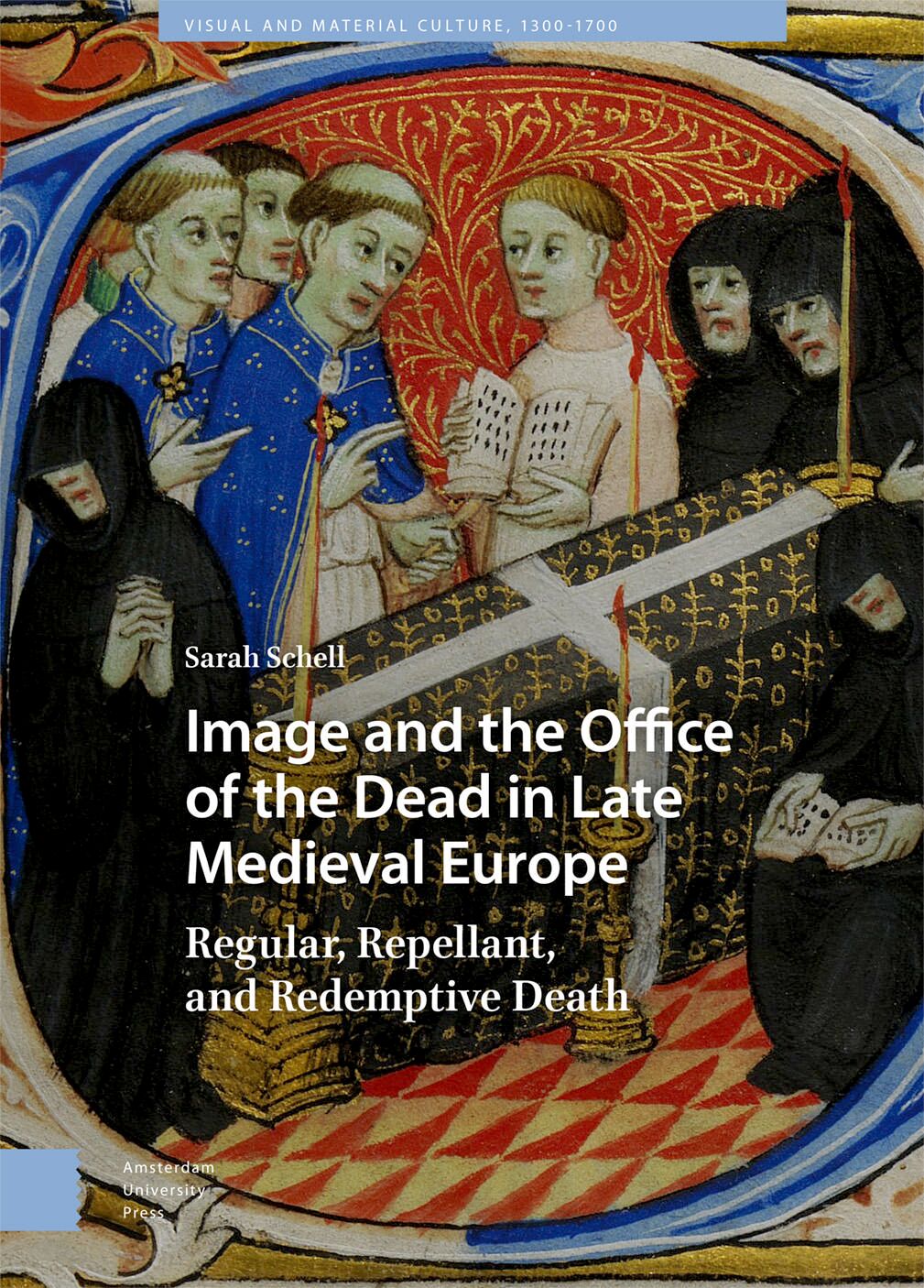
Image and the Office of the Dead in Late Medieval Europe
Image and the Office of the Dead in Late Medieval Europe explores the Office of the Dead as a site of interaction between text, image, and experience in the culture of commemoration that thrived in the fourteenth and fifteenth centuries. The Office of the Dead was a familiar liturgical ritual, and its perceived importance and utility are evident in its regular inclusion in devotional compilations, which crossed the boundaries between lay and religious readers. The Office was present in all medieval deaths: as a focus for private contemplation, a site of public performance, a reassuring ritual, and a voice for the bereaved. Examining the images at the Office of the Dead and related written, visual, and material evidence, this book explores the relationship of these images to the text in which they are embedded and to the broader experiences of and aspirations for death.
eBook
Continuity as Care: Devotional Maintenance, Renewal, Accumulation, and Disposal in Tibetan and Himalayan Buddhist Material Religion
This paper draws from the author’s direct experience with material care, adaptation, renewal, and disposal made while working within Himalayan and Tibetan Buddhist practitioner communities as a museum professional, conservator, and object-based researcher. It considers the function and utility of Buddhist tantric religious objects in terms of their care and capacity for practitioner engagement. In addition to exploring specific examples of what is referred to here as ‘devotional maintenance’, this paper will discuss how these strategies for object custodianship are related to Tibetan and Himalayan religious life and the specific epistemological and soteriological paradigm in which these actions are performed. Working from the perspective of a non-practitioner and material specialist, this research builds on observations of material care-taking to engage with local concepts of continuity, value, and longevity, including practices of accumulation, renewal, or disposal. Thinking critically about the methods and standards of heritage preservation provokes a discussion of how they can be interpreted as acts of care. At the same time, this paper will explore material custodianship through the cultivation of merit and an object’s capacity to transmit ‘blessings’ or the gift of beneficial influence (byin rlabs).
Journal Article
Devotion in Flesh and Bone
In contemporary Japan the fame of Mount Yudono (Yamagata prefecture) derives from the high concentration of mummified bodies of ascetics, which are enshrined in various temples of this mountainous area. These taxidermic statues are often interpreted as the final result of a voluntary abandonment of the body in which the ascetic self-interred within a sepulchral underground cell before dying. However, the present article seeks to reconsider these mummies as ad hoc manipulations of the ascetics’ corpses, which were executed by disciples and lay devotees after the natural death of the ascetics. Such a rethinking of the mummified bodies of Yudono does not diminish their religious value as cultic objects; rather, it adds complexity by highlighting a creative tension between the historical and meta-historical dimension of these full-body relics. The semantic variety of such mummified bodies results from a continual oscillation between narrative sources, which, on the one hand, depict Yudono ascetics within the ordinariness of their human existence (historical dimension) and, on the other, make them transcend space and time (meta-historical dimension). The article demonstrates that the ascetics of Yudono could extend their charisma beyond the normal lifespan thanks to their mummified corpses, which worked as sensorial supports of the ascetics’ power upon which lay devotees could continuously rely.
Journal Article
Sculptures and Accessories: Domestic Piety in the Norwegian Parish around 1300
Eagerly venerated and able to perform miracles, medieval relics and religious artefacts in the Latin West would occasionally also be subject to sensorial and tactile devotional practices. Evidenced by various reports, artefacts were grasped and stroked, kissed and tasted, carried and pulled. For medieval Norway, however, there is very little documentary and/or physical evidence of such sensorial engagements with religious artefacts. Nevertheless, two church inventories for the parish churches in Hålandsdalen (1306) and Ylmheim (1321/1323) offer a small glimpse of what may have been a semi-domestic devotional practice related to sculpture, namely the embellishing of wooden sculptures in parish churches with silver bracelets and silver brooches. According to wills from England and the continent, jewellery was a common material gift donated to parishes by women. Such a practice is likely to have been taking place in Norway, too, yet the lack of coherent source material complicate the matter. Nonetheless, using a few preserved objects and archaeological finds as well as medieval sermons, homiletic texts and events recorded in Old Norse sagas, this article teases out more of the significances of the silver items mentioned in the two inventories by exploring the interfaces between devotional acts, decorative needs, and possibly gendered experiences, as well as object itineraries between the domestic and the religious space.
Journal Article

Practice, Process, and Performance: Shaping a Devotional Habitus in the Margins of Bernard of Clairvaux's Sermons on the Song of Songs
Illustrations and annotation in the margins of manuscripts can offer unique insights into the medieval reading experience. This article explores how Douai, Bibliothèque municipale, MS 373, a manuscript containing Bernard of Clairvaux's Sermones super Cantica canticorum, produced and read in late medieval England, facilitates and reflects a performative mode of reading. While a movement from reading to bodily performance is suggested, this article argues that the opposite movement is also encouraged, as part of a nonlinear mode of reading in which images function both as a starting point and as a point of return for devotional practice.
Journal Article