
Catalogue Search | MBRL


Are you sure you want to remove the book from the shelf?

{{itemTitle}}
1,031
result(s) for
"digital folklore"
Sort by:

Digital Folklore of Rural Tourism in Poland
Numerous development techniques and attributes that define the unique essentiality of archaic rural tourism websites in Poland have been identified. However, the use of e-folklore graphics on the websites heretofore has not been analysed. The paper’s objective is to identify forms of digital folklore found on archaic websites of rural tourism facilities functioning in Poland from 2000 to 2015. The analysed sample was 185 websites stored in the Internet Archive. The focal points were the dynamics of content presentation and the type of graphic components, including marquee text containers and GIFs. The use of characteristic graphics and digital stamps was recorded as well. The results fuel a discussion concerning potential reasons for deleting copies stored in digital archives. It is further concluded that all digital copies, even those far from being complete or perfect, contribute to the integrity of the digital ecosystem as a whole. Therefore, the process of archiving Internet content must not be exclusive. Therefore, any actions towards preserving the digital ecosystem for further investigation are reasonable.
Journal Article

From Traditional Traveler to Blogging Traveler: Are Travel Blogs a New Type of Digital Folklore? /Geleneksel Seyyahtan Blogger Seyyaha: Seyahat Blogları Dijital Folklorun Yeni Bir Türü Müdür?
Inventions and discoveries; It directly affects the political, socio-cultural, religious and economic lives of societies, affects world history and brings cultural change with it. One of the inventions that we can consider as a turning point for human history is the internet network, which accelerated globalization and cultural change in the second half of the 20th century. The internet, which has recently become a research area of many disciplines, has started to attract the attention of folklorists after the 1990s and this new field; It has been described with different names such as internet folklore, netlore, digital folklore, digital culture, e-folklore, techno-culture, virtual environment, second oral culture environment. Internet technology has made the concept of globalization visible and this new age has been evaluated as the \"Information Age\". In this study, travel blogs are the subject of blogs, which is one of the social networking networks of new media within the scope of digital folklore. Travel books, which are a type of sharing experiences and experiences about places visited and seen by people called travelers or travelers; It gives information about the socio-cultural, political, literary, religious and economic structure of the period in which it was written. In the study, the characteristics of the traveler typology in the travel blogs, which is one of the social networking networks where the writer and reader are interactive, which is called Web 2.0 in the new media, were determined, then compared with the traditional traveler, and it was discussed whether travel blogs are a new type of digital folklore. It has been concluded that although travel blogs are digital, they are not a new genre of folklore, and travel blogs are the second form of the traditional travel book, which is a product of written culture as a result of cultural change, in the oral culture environment. travel blogs; Instead of defining it as a new genre, it has been suggested to evaluate the information age and accordingly the change of the new context of transmission, production and consumption of culture and to look at the subject holistically.
Journal Article

Digital Game Narratives as Living Culture: Never Alone
This study explores the representation of Iñupiat culture in the digital game Never Alone, released in 2014, by considering the culture of the Iñupiat people living in Alaska. It also aims to examine the effects of Never Alone on the preservation and transmission of Iñupiat culture. It can be argued that technology can play an important role in the reinvention of culture and traditions. In this respect, the study analyzes the game Never Alone in a descriptive way to reveal how Iñupiat culture is processed in the digital environment and how its cultural elements come together with the digital game experi-ence. In particular, it examines how Iñupiat culture is integrated into the game’s narrative and inter-face design. In this context, the study aims to contribute not only to folklore and digital game re-search but also to the academic debate on the safeguarding of intangible cultural heritage. The hy-pothesis of the study is that Never Alone is a successful example of exploring traditional narratives in interactive digital environments. Based on this hypothesis, the role of the game in the rediscovery and transmission of endangered cultures is discussed. It also considers the applicability of similar methods in the transmission of other endangered cultures, such as the Iñupiat community, into the future. The main argument of the study is the necessity of using technology as an effective tool in the reproduction and transmission of cultural heritage. At a time when traditional practices are being eroded in the age of high technology, innovative methods are needed to safeguard intangible cultural heritage. Digital games, especially with their immersive storytelling and interactive nature, can offer a new perspective for these efforts. Never Alone is a prominent example in this context, successfully reflecting the fusion of technology and culture as a game in which indigenous people played an active role in the development process. This collaboration with the Iñupiat community during the develop-ment process enhanced the game’s authenticity and cultural richness. The findings of the analysis reveal that Never Alone goes beyond being an entertainment tool and plays an active role in preserv-ing cultural heritage. The results also show that the game, rooted in Iñupiat culture, has become a dynamic repository of traditional knowledge. The game’s potential to preserve cultural heritage is supported by the fact that it reaches millions of players. This success supports the argument that digital games are powerful tools for the preservation and transmission of cultural heritage. This global success of Never Alone positions digital games as global cultural ambassadors. This reinforc-es the idea that digital games are an effective channel for cross-cultural interaction. Furthermore, the fact that the game offers the opportunity to correct misrepresentations and accurately portray Iñupiat culture emphasizes the importance of digital games in cultural representation. The game’s effects not only impacted the Iñupiat community, but also opened up a global discussion on the potential of digital games to contribute to cultural heritage preservation. The findings highlight the need for fur-ther studies to investigate the effects of similar game experiences that support different local cultures. Furthermore, investigating the effects of collaborative game development processes that strengthen cultural communities and examining the educational effectiveness of digital games could be potential topics for future research.
Journal Article
Initiatives to Preserve the Content of Vanishing Web Hosting
Free hosting services have contributed to the development of the Internet or even acted as a catalyst thereof. This paper aims to answer the questions of what free hosting services represent for Internet users and why initiatives exist to archive content published on free servers. The empirical part of this study attempts to verify whether websites on free servers were designed in an archaic way, which could justify their discontinuation. Initiatives to preserve the content of vanishing web hosting sites are characterized based on a review of various source materials, including the academic literature and Internet resources. This empirical study involved 168 archaic websites, which were analyzed in three dimensions. Marketing components and design were assessed as well. Each assessment dimension was assigned diagnostic variables. The values of the diagnostic variables were standardized using zero unitarization. It was found that the owners of discontinued servers were not interested in creating and maintaining archives. Hence, numerous grassroots initiatives have emerged to salvage their content, although enthusiasm among the archive community seems to have dwindled. Many grassroots archives are available, but a considerable number are no longer supported. In this context, this paper proposes the term ‘vanishing hosting’. It provides a nostalgic and sentimental perspective on the termination of free hosting services. The authors noted that free hosting services have largely lost their past import. It is demonstrated that free servers traditionally hosted archaic websites, which justified their deletion from a business perspective. Moreover, the paper presents an outline of a method to revitalize the tourism sector based on changes brought about by global technology to the digital ecosystem. It is proposed that changes in search engine algorithms vicariously contribute to the revitalization of the tourism sector since they often drive the replacement of old websites with newer versions (latest technology and better quality). This leads to the improved online presentation of tourism service portfolios and the general quality of the content in search engine results.
Journal Article

Promoting Agritourism in Poland with Ready-Made Digital Components and Rustic Cyberfolklore
Online content can have unique cultural value. It is certainly the case for digital representations of folklore found on websites related to rural tourism, including agritourism. It is true for both archaic websites, copies of which are found in digital archives, and modern websites. The purpose of this paper is to assess the frequency of ready-made digital components and rustic folklore on agritourism farms’ websites. The exploration and comparative analysis involved 866 websites from two independent sets: (1) archaic websites, copies of which are available in the Internet Archive and (2) currently operational websites published in the Polish ccTLD (country code top-level domain). We employed HTML code exploration to verify the websites’ development technique and their selected characteristics, including content management systems (CMSs) and responsiveness. In the set of the ccTLD websites, we recorded such design attributes as the type of graphic layout, hero image, and parallax scrolling. The research demonstrated that ready-made folklore graphics were relatively rare among the investigated websites. Elements of rustic cyberfolklore were found only on 17 archaic websites (approx. 4%) and 52 ccTLD websites (approx. 12%). They were most often Kashubian patterns. The research suggests that rustic cyberfolklore is most often found on websites of agritourism farms in areas where local communities and ethnic groups are particularly active and strongly identify with regional traditions.
Journal Article
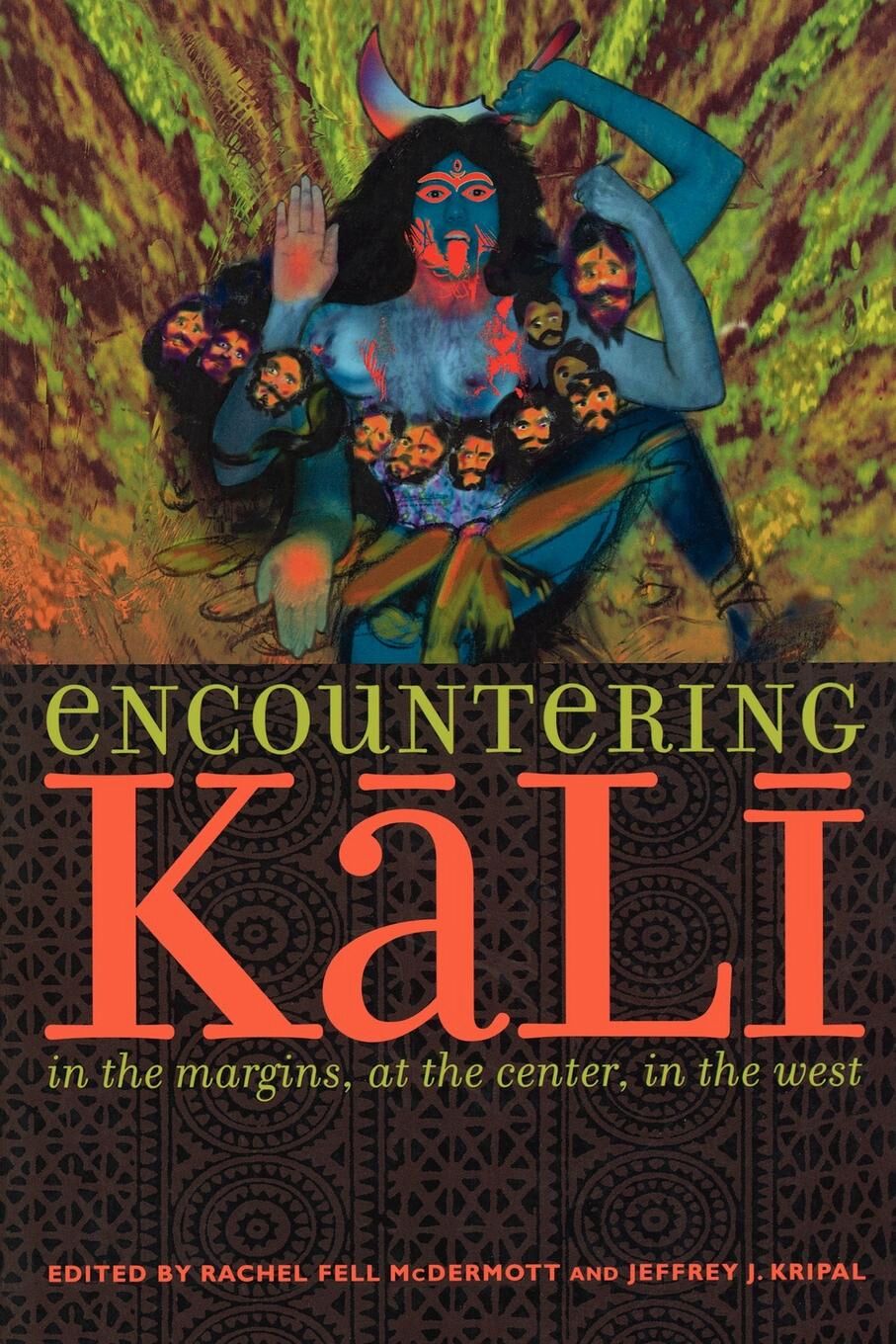
Encountering Kali
Encountering Kali explores one of the most remarkable divinities the world has seen—the Hindu goddess Kali. She is simultaneously understood as a blood-thirsty warrior, a goddess of ritual possession, a Tantric sexual partner, and an all-loving, compassionate Mother. Popular and scholarly interest in her has been on the rise in the West in recent years. Responding to this phenomenon, this volume focuses on the complexities involved in interpreting Kali in both her indigenous South Asian settings and her more recent Western incarnations. Using scriptural history, temple architecture, political violence, feminist and psychoanalytic criticism, autobiographical reflection, and the goddess's recent guises on the Internet, the contributors pose questions relevant to our understanding of Kali, as they illuminate the problems and promises inherent in every act of cross-cultural interpretation.
eBook
CovidEaster – Humour in the Digital Sharing of Easter Festive Material During the COVID-19 Pandemic
During the COVID-19 pandemic, social media usage increased due to limitations on physical gatherings. As a result, social media platforms also became important outlets for celebrating holidays. This study therefore analyses the role of humour in the digital sharing of Easter festive material during the COVID-19 pandemic in the context of digital folklore. The research was conducted on the social media platform Instagram using Easter-related hashtags (#covideaster) to collect a digital corpus consisting of various visual-verbal internet genres, mainly internet memes and their subgenres. The corpus was divided into six thematic-motif groups and analysed in relation to topical cycle jokes, newslore, political humour, and disaster humour. Two groups present typical Easter symbols incorporated into pandemic-related memes, reflecting a modified typical image of Easter before and after the pandemic. They deliver humorous messages through incongruity resolution using familiar Easter-related imagery and news-inspired pandemic verbal messages. The remaining four groups present Easter in atypical ways, incorporating elements from popular culture, politics, classic jokes, and a parody of Leonardo da Vinci’s Last Supper. It was concluded that the role of humour in the digital sharing of Easter festive material during the pandemic served various purposes. It provided a means of coping with the situation, acted as a communication tool for conveying important safety messages, and fostered a sense of community and connection among Instagram users.
Journal Article
Mudrolije. Internetski memi poslovičnoga karaktera na primjeru mrežne stranice Mudrolije sa Twittera
This article discusses the problem of proverbial textual internet memes. These can be compared with proverbs in their form and content, and with literary oral poetics in their means of transmission. All described memes are from the Instagram profile Mudrolije sa Twittera and they can be divided into two separate groups. In the first group are memes that paraphrase already existing proverbs, and in the second are memes that imitate the genre of proverbs in their structure and stylistics, and which can be considered their surrogates in online communication. It has been noted that these memes behave like short literary forms in internet communication and that they generate new online proverbial messages that can be compared with proverbs. These memes are created by imitating a proverbial form (shortness, truthfulness, experience) and transmitted in the same way as the short oral forms, but via different forms of communication – instead of verbal communication they are transmitted online, i.e. through virtual communication.
Journal Article

Mudrolije
U radu se govori o tekstualnim internetskim memima poslovičnoga karaktera koji se oblikom i sadržajem vežu uz poslovicu, a načinom prenošenja uz usmenoknjiževnu poetiku. Opisuju se memi s instagramske mrežne stranice Mudrolije sa Twittera, koji se dijele u dvije skupine. U prvoj su memi koji parafraziraju postojeće poslovice, a u drugoj su oni koji strukturom i stilizacijom oponašaju žanr poslovice, a koji se mogu promatrati kao njezini surogati u suvremenim načinima komunikacije. Zamjećuje se kako se ti novi memi ponašaju poput klasičnih kratkih usmenoknjiževnih oblika u internetskoj komunikaciji te svojom popularnošću i repetitivnošću na mreži stvaraju nove poruke poslovičnoga karaktera. Memi nastaju po receptu provjerenoga (kratkoća, istinitost, iskustvo) – odnosno usmenoknjiževna poetika izlazi iz svoga ustaljenog usmenog načina prenošenja te se pojavljuje u virtualnome prostoru u kojemu prenosi poruke istoga značenja, ali u drugačijemu (virtualnom, mrežnom) obliku. This article discusses the problem of proverbial textual internet memes. These can be compared with proverbs in their form and content, and with literary oral poetics in their means of transmission. All described memes are from the Instagram profile Mudrolije sa Twittera and they can be divided into two separate groups. In the first group are memes that paraphrase already existing proverbs, and in the second are memes tha t imitate the genre of proverbs in their structure and stylistics, and which can be considered their surrogates in online communication. It has been noted that these memes behave like short literary forms in internet communication and that they generate new online proverbial messages that can be compared with proverbs. These memes are created by imitating a proverbial form (shortness, truthfulness, experience) and transmitted in the same way as the short oral forms, but via different forms of communication – instead of verbal communication they are transmitted online, i.e. through virtual communication.
Journal Article
Folklorun Dijitalleşmesine İlişkin Temel Sorunlar ve Sınırlılıklar
Folklor literatüründe sanal ortamın ve bilhassa sosyal medyanın hem mevcut folklorik deneyimlerin yeniden üretildiği, yaşatıldığı ve geniş kitlelere erişiminin sağlandığı hem de yeni folklor biçimlerinin yaratıldığı alan olarak kabul edilmesine ilişkin görüşler ağırlığını korumaktadır. Ancak söz konusu iyimser yaklaşımların sorgulanmasına ve sosyal medyanın ekonomik kaygılar ve amaçlar taşıyan ekonomi-politik altyapısının üzerinde durulmasına ihtiyaç duyulmaktadır. Bu gereksinimleri yaratan temel sebep, ticari temellere dayanan ana akım sosyal medyaların kamusal müştereklerin uzağında kalan ticari yapılar olmasıdır. Sosyal medyanın ekonomi-politik altyapısını mümkün kılan en önemli unsur üretketici gözetimidir. Üretketici kavramı üreticiyle tüketici arasındaki sınırların yıkılıp birbiriyle iç içe geçmesini ifade ederken aynı zamanda sosyal medya kullanıcılarının içeriklerin hem üreticisi hem de tüketicisi konumunda olmasından dolayı sosyal medya kullanıcılarının üretketici olarak tanımlanmasına olanak kılar. Üretketici gözetiminin hâkim olduğu ve üretketicinin dijital emeği üzerine inşa edilen hedefli reklamcılık sistemi, sosyal medyada görünürlüğün ve dikkat çekmenin satın alınabilir olgulara dönüşmesine neden olmaktadır. Bununla birlikte üretketiciler tarafından yaratılan etkileşim ekosistemleri sosyal medyadaki görünürlüğün ve dikkat çekiciliğin yanıltıcı ve sorunlu olduğunu göstermektedir. Bu tespitlerin yalnızca kişisel içeriklerin değil aynı zamanda folklorik içeriklerin de sosyal medyadaki görünürlüğünü olumsuz etkilediği düşünülmektedir. Ayrıca sosyal medyadaki folklorik içeriklerin hâkim kültürü temsil eden içeriklerle girdiği rekabetin eşitsizliğe dayanması folklorik içeriklerin sosyal medyadaki varlığını tehdit eden önemli bir sorundur. Söz konusu tespitlerden hareketle sosyal medyanın katılımcı kültüre ve katılımcılığa sunduğu katkıları sınayan eleştirel bir yaklaşımla folklorik üretim aracı olup olmadığından öte folklorik içeriklerin görünürlüğüne ilişkin eşitsizlikleri sorunsallaştırarak folklorik içeriklerin sosyal medyadaki görünürlüğünün ve mevcudiyetinin tartışılması amaçlanmaktadır. Bu doğrultuda sosyal medyanın ticari temellere dayanan altyapısının çözümlemesi için öncelikle sosyal medya şirketleri tarafından yaratılan hedefli reklamcılık sistemine değinilerek görünürlüğün ve dikkat çekiciliğin satın alınabilir olgulara dönüşmesinin üzerinde durulmuştur. Hedefli reklamcılık sistemi üzerine kurulan sosyal medyalara atfedilen katılımcı kültür olanaklarını ve olasılıklarını tartışmak üzere literatürde öne çıkan savlara yer verilerek tartışma yürütülmüştür. Literatürde ağırlığı koruyan iddialar sosyal medyanın katılımcılığa olanak sağladığını ön plana çıkarmakla birlikte ticari temellere dayanan sosyal medyanın ekonomi-politik altyapısını göz ardı etmektedir. Bu sebeple sosyal medyayla ilişkilendirilen katılımcı kültür iddialarının geçerliliği ticari sosyal medyanın ekonomi-politik altyapısı, Instagram’da ve Twitter’da yaratılan etkileşim ekosistemleri, Instagram’da, Twitter’da ve YouTube’da folklorik ve hâkim kültüre ait içeriklerin görünürlüğü, internet arama motorları ve akıllı cihazlara uygulama indirilmesine olanak tanıyan uygulama marketleri özelinde incelenmiştir. Elde edilen sonuçlar sanal ortamda katılımcı kültür olanaklarının ve olasılıklarının son derece güç olduğunu ortaya koymuştur. Özellikle sosyal medyanın katılımcı kültüre olanak tanımayan ekonomi-politik altyapısının folklorik içeriklerin görünürlüğünü ve dikkat çekiciliğini doğrudan etkilediği, onu hâkim kültürü temsil eden içeriklerle eşitsiz rekabet ortamına soktuğu sonuçlarına ulaşılmıştır. Söz konusu sorunlara karşı ticari amaçların, kaygıların ve görünürlüğün eşitsizliğe dayalı olmasının uzağında yeni nesil katılımcı bir internet yapılanmasına ihtiyaç duyulduğu düşünülmektedir. Folklor alanındaki netnografik araştırmaların geçerliliğini ve güvenilirliğini reddetmemekle birlikte söz konusu tehditleri ve tehlikeleri odağına alarak araştırmaların yürütülmesi gerektiğine inanılmaktadır.
Journal Article