
Catalogue Search | MBRL


Are you sure you want to remove the book from the shelf?

{{itemTitle}}
2,709
result(s) for
"digital religion"
Sort by:

Digital Humanities and Buddhism : an introduction
This volume explores DH and Buddhism in four sections: Theory and Method; Digital Conservation, Preservation and Archiving; Digital Analysis; Digital Resources. It covers themes such as language processing, digital libraries, online lexicography, and ethnographic methods.
Book

Cybertheology
This book, written by Antonio Spadaro, S.J., the Editor of La Civilta Cattolica, has been translated by Maria Way, who specializes in topics relating to media and religion. The author suggests that since the Internet has changed, and is changing, the ways in which we think and act, it must also be changing the ways in which we think Christianity and its theology. To develop this theme, he uses the term 'Cybertheology'. Through the theoretical works of a variety of authors, e.g., Marshall McLuhan, Peter Levy and Teilhard de Chardin, he associates the concepts of theology with theories that have been expounded on the internet. His sources come from media studies and anthropology, as well as theology. Spadaro also considers the hacker ethic in relation to Cybertheology. How has the internet changed our notion of theology? Has the internet had similar effects on the thinking of Christianity that were experienced after the development of other media technologies? The book aims to clarify just how thinking has changed or remained the same in an era which is often seen as one in which the media's changes have speeded up. It considers both the positives and negatives that may be associated with the internet in relation to Christianity and its theology.
eBook

Hijrah Goes Viral: Millennial Religious Narratives through Influencers on Tiktok
This study investigates the transformation of Islamic da’wah from conventional practices to digital platforms, with a focus on TikTok as a new medium for religious expression. Using the case of Hanan Attaki, a prominent Islamic influencer, this research analyzes how digital da’wah is strategically constructed and its impact on religious understanding among Indonesian millennials and Gen Z. Employing a qualitative netnographic approach, the study examines digital content, audience interaction, and communication styles. Findings show that Attaki utilizes TikTok’s algorithmic and visual features to disseminate concise, emotionally resonant religious messages. Themes such as introspection, self-development, and social ethics are presented through storytelling and relatable aesthetics. However, the study also raises concerns about the erosion of traditional religious authority and the commodification of religious discourse. Drawing on Campbell’s Digital Religion and Mosco’s Commodification theories, this research highlights the evolving dynamics between media, market forces, and Islamic communication in digital spaces.
Journal Article

iMuslims
Exploring the increasing impact of the Internet on Muslims around the world, this book sheds new light on the nature of contemporary Islamic discourse, identity, and community.The Internet has profoundly shaped how both Muslims and non-Muslims perceive Islam and how Islamic societies and networks are evolving and shifting in the twenty-first century, says Gary Bunt. While Islamic society has deep historical patterns of global exchange, the Internet has transformed how many Muslims practice the duties and rituals of Islam. A place of religious instruction may exist solely in the virtual world, for example, or a community may gather only online. Drawing on more than a decade of online research, Bunt shows how social-networking sites, blogs, and other \"cyber-Islamic environments\" have exposed Muslims to new influences outside the traditional spheres of Islamic knowledge and authority. Furthermore, the Internet has dramatically influenced forms of Islamic activism and radicalization, including jihad-oriented campaigns by networks such as al-Qaeda.By surveying the broad spectrum of approaches used to present dimensions of Islamic social, spiritual, and political life on the Internet,iMuslimsencourages diverse understandings of online Islam and of Islam generally.
eBook

Digital Islam and Muslim Millennials: How Social Media Influencers Reimagine Religious Authority and Islamic Practices
Digital platforms have empowered individuals and communities to re-negotiate long-established notions of religion and authority. A new generation of social media influencers has recently emerged in the Muslim world. They are western-educated, unique storytellers, and savvy in digital media production. This raises new questions on the future of Islam in the context of emerging challenges, such as the openness of technology and the often-perceived closedness of religious and cultural systems within Muslim societies. This paper uses a multiple case research design to examine the roles of social media influencers in reimagining Islam and reshaping spiritual beliefs and religious practices among young people in the Gulf Region, the Arab world, and beyond. We used thematic analysis of the Instagram and YouTube content of four social media influencers in the Gulf Region: Salama Mohamed and Khalid Al Ameri from the United Arab Emirates, Ahmad Al-Shugairi from Saudi Arabia, and Omar Farooq from Bahrain. The study found that social media influencers are challenging traditional religious authorities as they reimagine Muslim identities based on a new global lifestyle.
Journal Article

OPEN WALL CHURCHES. CATHOLIC CONSTRUCTION OF ONLINE COMMUNITIES
El debate sobre cómo las instituciones católicas globales han utilizado las nuevas herramientas digitales ha adquirido un rol relevante que va más allá de las limitaciones litúrgicas. Se basa en la participación, la justicia social y los nuevos contextos en los que alcanzar un nuevo target. Desde el mismo Vaticano, a través de los perfiles del Papa en las redes sociales, el catolicismo ha demostrado tener una destacada presencia en la web. A pesar de que los católicos no rompen las normas, son creativos cuanto a los formatos con los que extender su religiosidad a las nuevas plataformas. Los portales nacidos recientemente han implantado nuevas herramientas participativas que plantean nuevas formas de entender el concepto de comunión, clave para las comunidades cristianas. Más allá de detenernos en si los portales católicos incorporan estrategias seculares para promover la participación, exploramos las 19 webs católicas más relevantes según el ranking Alexa. Las dividimos en diferentes categorías que nos permiten analizar cómo construyen comunidades e impulsan el concepto de pertenencia. Los datos se han recogido en tres momentos distintos (2014, 2015 y 2016). Las webs localizadas son en 5 lenguas (español, inglés, francés, portugués e italiano) y provienen de 9 países diferentes.
Journal Article

Posting the Journey to Juquila: Pilgrimage, Digital Devotion, and Social Media in Mexico
At the crossroads of scholarship scrutinizing digital religion and pilgrimage, this article analyzes the use of Facebook, YouTube, and Instagram by devotees of Our Lady of Juquila, a Marian image in Oaxaca, Mexico. It combines the close reading of content and descriptive online ethnography with web scraping and data analysis. The article sketches these platforms’ role in pious expression, virtual community building, pilgrimage group communication, and devotional marketing, tracking closely the intertwining of religion and commerce, particularly religious tourism promotion. The data reveal that Facebook serves as the most popular platform for Juquila’s devotees, thanks to its open, pro-sharing design and flexibility regarding group formation. As a result, it has become the essential hub of devotee expression. YouTube, thanks to its particular affordances, has become an ideal niche for narrating travel to Juquila’s shrine and a showcase of the networked nature of devotion as users borrow tools, tropes, and expressive techniques from many sources, religious and secular. Instagram is the least popular platform among devotees because its design is less open and amenable to group communication. It does, however, facilitate both smaller, more intimate community formation, as well as shallow but significant community building on popular public pages run by religious tourism promoters hosting attractive, easily sharable, free stockpiles of images, memes, and devotional slogans. In the end, social media use appears to be stoking pilgrimage in Mexico and setting the stage for significant cultural change in the future as new tools, emerging shared devotional aesthetics, and media logics reshape religious expression and devotee communication. It is also becoming an unparalleled historical archive of popular religious culture. Surgiendo de la investigación académica de religión digital y los estudios de peregrinación, este artículo analiza el uso de Facebook, YouTube e Instagram por parte de los devotos de Nuestra Señora de Juquila, una imagen mariana en Oaxaca, México. Combina la lectura atenta del contenido con etnografía descriptiva en línea, web scraping y análisis de datos. El artículo esboza el papel de estas plataformas en la expresión piadosa, la construcción de comunidades virtuales, la comunicación en grupos de peregrinos, y mercadotecnia devocional, siguiendo de cerca el entretejimiento de la religión y el comercio, en particular la promoción del turismo religioso. Los datos revelan que Facebook sirve como la plataforma más popular para los devotos de Juquila gracias a su diseño abierto, su facilitación del intercambio de contenido, y su flexibilidad con respecto a la formación de grupos. Como resultado, para los devotos se ha convertido en eje esencial de expresión. YouTube, gracias a su estructura distinta, se ha convertido en un nicho ideal para narrar los viajes al santuario de Juquila y demuestra la naturaleza interconectada de la devoción, ya que los usuarios apropian herramientas, tropos y técnicas expresivas de muchas fuentes, tanto religiosas como seculares. Instagram es la plataforma menos popular entre los devotos porque su diseño es menos abierto y receptivo a la comunicación colectiva. Sin embargo, facilita la formación de comunidades relativamente pequeñas e íntimas, así como la construcción de comunidades superficiales pero significativas en páginas públicas populares administradas por promotores de turismo religioso que albergan imágenes, memes y lemas devocionales atractivos, fácilmente compartibles y gratuitos. Al final, este artículo argumenta que el uso de las redes sociales parece estar estimulando la peregrinación en México y preparando el escenario para cambios culturales significativos en el futuro a medida que nuevas herramientas, emergentes estéticas devocionales compartidas y lógicas mediáticas reconfiguran la expresión religiosa y la comunicación entre devotos. También se está convirtiendo en un archivo histórico inigualable de la cultura religiosa popular.
Journal Article
Mapping Digital Religion: Exploring the Need for New Typologies
Today, it is challenging to separate online and offline spaces and activities, and this is also true of digital religion as online and offline religious spaces become blended or blurred. With this background, the article explores the need for new typologies of what is religious on the Internet and proposes a conceptual framework for mapping digital religion. Four types of that which is religious on the Internet are presented based on influential classification by Helland. He introduced (1) religion online (sites that provide information without interactivity) and (2) online religion (interactivity and participation). Helland’s concept is developed by, among others, adding two types: (3) innovative religion (new religious movements, cults, etc.) and (4) traditional religion (e.g., Christianity or Islam). Each type is illustrated by selected examples and these are a result of a larger project. The examples are grouped into three areas: (1) religious influencers, (2) online rituals and (3) cyber-religions (parody religions). Additionally, the visual frame for mapping digital religion is presented including the examples mentioned. The presented framework attempts to improve Helland’s classification by considering a more dynamic nature of digital religion. The model is just one possible way for mapping digital religion and thus should be developed further. These and other future research threads are characterized.
Journal Article
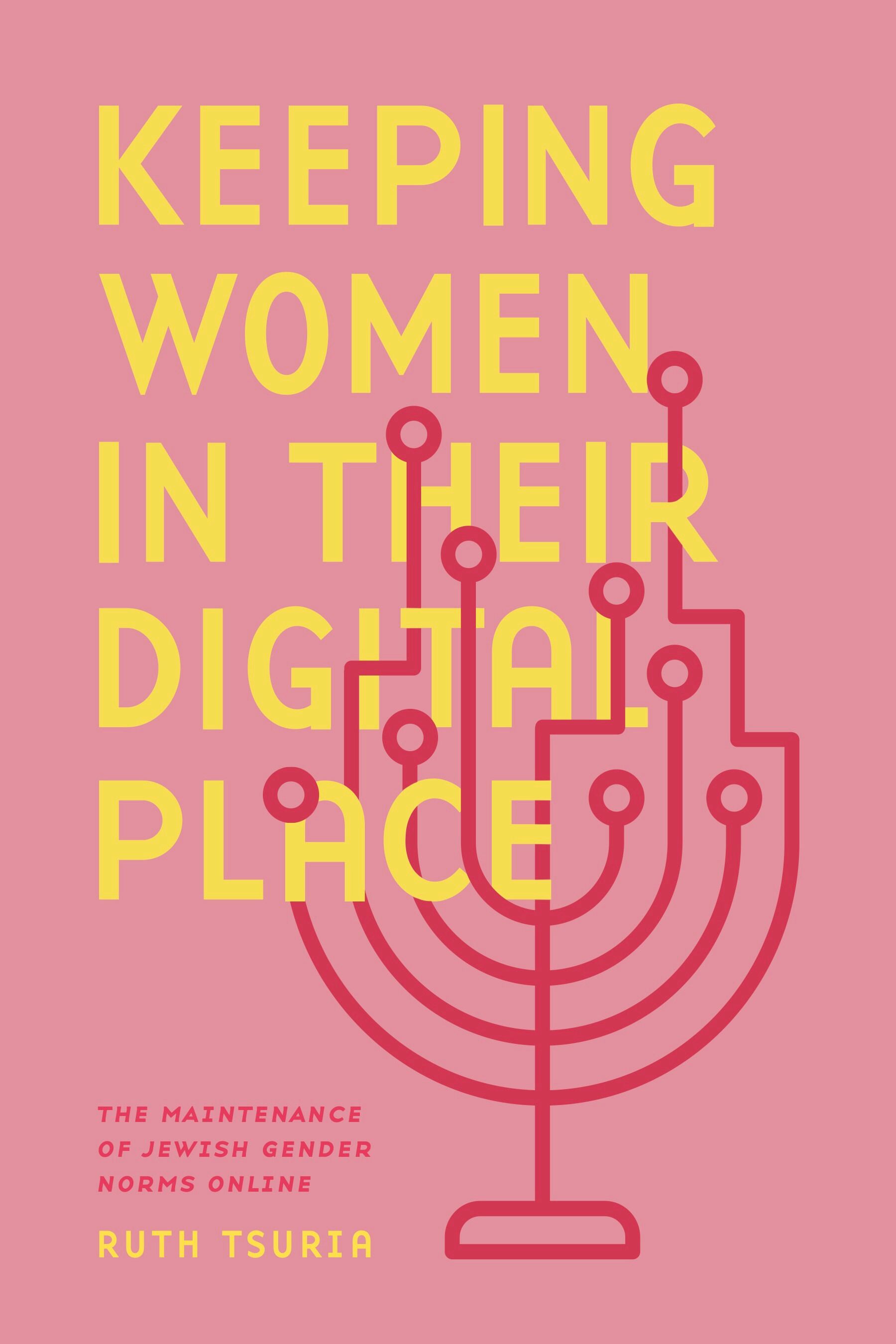
Keeping Women in Their Digital Place
A snapshot of the complexity of current religious uses of the internet.
eBook
Internet and Islamic Learning Practices in Indonesia: Social Media, Religious Populism, and Religious Authority
Like in many other developing countries, Indonesia’s population has been amongst the most enthusiastic ‘uptakers’ of the internet, especially of social media. Most Indonesians utilize the internet as an information source, including religious ones. Various groups and communities of Islamic studies have appeared on social media along with religious leaders who are also active on social media. Based on the various characteristics that have emerged, Islamic learning practices scattered across various social media platforms have increasingly illustrated the symptoms of religious populism. This is marked by the various socio-religious movements that have emerged from these practices. By using a digital religion perspective in order to observe Islamic learning practices on several social media platforms, this paper argues that social media has become a productive space for the development of religious populism in Indonesia. At first glance, religious populism on social media seems to challenge authoritative figures or religious institutions, but it can also be seen as a way for Islamic agents to convey Islamic teachings in a media-friendly culture.
Journal Article