
Catalogue Search | MBRL


Are you sure you want to remove the book from the shelf?

{{itemTitle}}
3,700
result(s) for
"distributed database"
Sort by:

Database internals : a deep dive into how distributed data systems work
\"When it comes to choosing, using, and maintaining a database, understanding its internals is essential. But with so many distributed databases and tools available today, it's often difficult to learn what each one offers and how they differ. With this practical guide, Alex Petrov guides developers through the concepts behind modern database and storage engine internals. Throughout the book, you'll explore relevant material gleaned from numerous books, papers, blog posts, and the source code of several open source databases. You'll discover that the most significant distinctions among many modern databases reside in subsystems that determine how storage is organized and how data is distributed.\"-- Provided by publisher.
Book

Blockchain Technology and Applications
Blockchain is an emerging technology that can radically improve transactions security at banking, supply chain, and other transaction networks. It's estimated that Blockchain will generate $3.1 trillion in new business value by 2030. Essentially, it provides the basis for a dynamic distributed ledger that can be applied to save time when recording transactions between parties, remove costs associated with intermediaries, and reduce risks of fraud and tampering. This book explores the fundamentals and applications of Blockchain technology. Readers will learn about the decentralized peer-to-peer network, distributed ledger, and the trust model that defines Blockchain technology. They will also be introduced to the basic components of Blockchain (transaction, block, block header, and the chain), its operations (hashing, verification, validation, and consensus model), underlying algorithms, and essentials of trust (hard fork and soft fork). Private and public Blockchain networks similar to Bitcoin and Ethereum will be introduced, as will concepts of Smart Contracts, Proof of Work and Proof of Stack, and cryptocurrency including Facebook's Libra will be elucidated. Also, the book will address the relationship between Blockchain technology, Internet of Things (IoT), Artificial Intelligence (AI), Cybersecurity, Digital Transformation and Quantum Computing. Readers will understand the inner workings and applications of this disruptive technology and its potential impact on all aspects of the business world and society. A look at the future trends of Blockchain Technology will be presented in the book.
eBook

Decentralized computing using blockchain technologies and smart contracts : emerging research and opportunities
\"This book explores how blockchain technology is a decentralized immutable data storage technology built on the concept of distributed consensus ledger. This book discusses how the distributed consensus ledger of block chain technology will have a major role in governance with its upcoming innovations in Public Notary Services, Voting Systems, Citizen Identity Services, Passport Registration, Migration Services\"-- Provided by publisher.
Book

An Architecture for Fast and General Data Processing on Large Clusters
Today, a myriad data sources, from the Internet to business operations to scientific instruments, produce large and valuable data streams. However, the processing capabilities of single machines have not kept up with the size of data. As a result, organizations increasingly need to scale out these computations to clusters of hundreds of machines. At the same time, the speed and sophistication required of data processing have grown. In addition to simple queries, complex algorithms like machine learning and graph analysis are becoming common. And in addition to batch processing, streaming analysis of real-time data is required to let organizations take timely action. Future computing platforms will need to not only scale out traditional workloads, but support these new applications too. This book, a revised version of the 2014 ACM Dissertation Award winning dissertation, proposes an architecture for cluster computing systems that can tackle emerging data processing workloads at scale. Whereas early cluster computing systems, like MapReduce, handled batch processing, our architecture also enables streaming and interactive queries, while keeping MapReduce's scalability and fault tolerance. And whereas most deployed systems only support simple one-pass computations (e.g., SQL queries), ours also extends to the multi-pass algorithms required for complex analytics like machine learning. Finally, unlike the specialized systems proposed for some of these workloads, our architecture allows these computations to be combined, enabling rich new applications that intermix, for example, streaming and batch processing. We achieve these results through a simple extension to MapReduce that adds primitives for data sharing, called Resilient Distributed Datasets (RDDs). We show that this is enough to capture a wide range of workloads. We implement RDDs in the open source Spark system, which we evaluate using synthetic and real workloads. Spark matches or exceeds the performance of specialized systems in many domains, while offering stronger fault tolerance properties and allowing these workloads to be combined. Finally, we examine the generality of RDDs from both a theoretical modeling perspective and a systems perspective. This version of the dissertation makes corrections throughout the text and adds a new section on the evolution of Apache Spark in industry since 2014. In addition, editing, formatting, drawing of illustrations, and links for the references have been added.
eBook

Oracle GoldenGate 12c implementer's guide
GoldenGate exchanges data among systems in a timely manner and meets the demand for real-time access to information regardless of volume. The new release, 12c, includes an optimized database, intelligent and integrated delivery capabilities, expanded heterogeneity, and tighter security. Perform zero downtime data migration to on-premise or public cloud with GoldenGate's feature-rich portfolio. Start with the installation and learn the design concepts and enhanced configuration of GoldenGate 12c. Exploit new 12c features to successfully implement GoldenGate on your enterprise. Dive deep into configuring GoldenGate for high availability, DDL support, and reverse processing. Build fast, secure, robust, scalable technical solutions by tuning data delivery and networks. Finally, enrich your data replication knowledge by learning the troubleshooting tips.
eBook

Getting started with Kudu : perform fast analytics on fast data
\"Begun as an internal project at [the firm] Cloudera, Kudu is an open source solution compatible with many data processing frameworks in the Hadoop environment. In this book, current and former solutions professionals from Cloudera provide use cases, examples, best practices, and sample code\"--Page 4 of cover.
Book
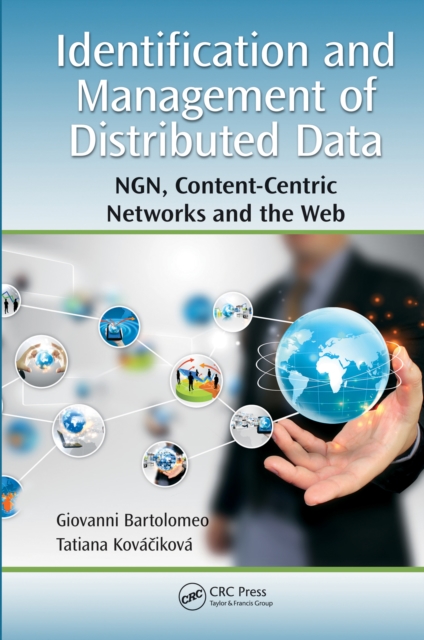
Identification and Management of Distributed Data
This book guides readers through the discovery of distributed data management on the web, in next generation networks (NGNs), and in new content-centric networking paradigms. The authors provide a novel perspective with particular emphasis on naming and identification issues, which are concepts that must be grasped in order to build and deploy more efficient data interoperability paradigms in future networks. The book covers special insights, ongoing research projects, and standardization initiatives.
eBook
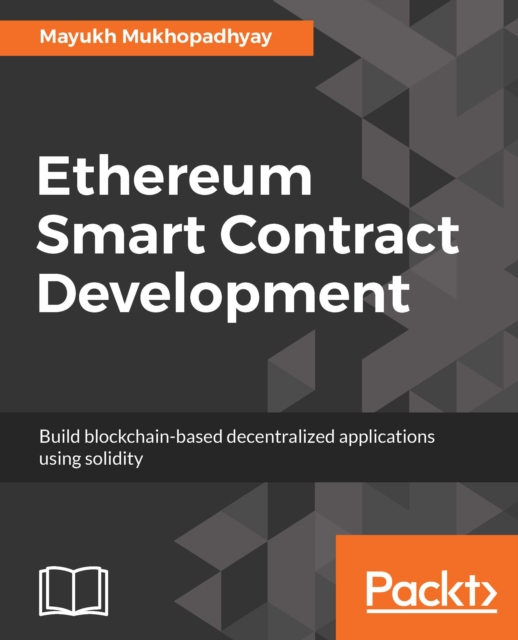
Ethereum smart contract development
Ethereum is a public, blockchain-based distributed computing platform featuring smart contract functionality. This book is your one-stop guide to blockchain and Ethereum smart contract development. We start by introducing you to the basics of blockchain. You'll learn about hash functions, Merkle trees, forking, mining, and much more. Then you'll learn about Ethereum and smart contracts, and we'll cover Ethereum virtual machine (EVM) in detail. Next, you'll get acquainted with DApps and DAOs and see how they work. We'll also delve into the mechanisms of advanced smart contracts, taking a practical approach.You'll also learn how to develop your own cryptocurrency from scratch in order to understand the business behind ICO. Further on, you'll get to know the key concepts of the Solidity programming language, enabling you to build decentralized blockchain-based applications. We'll also look at enterprise use cases, where you'll build a decentralized microblogging site.
eBook

A Cryptographic Blockchain-IPFS Framework for Secure Distributed Database Storage and Access Control
This research explores the distributed database security storage and access control scheme based on IPFS and blockchain for the privacy issues such as sensitive data leakage and account security under the rapid development of Internet technology. The research background focuses on the contradictory status quo of data value enhancement and black-market data trading in the fields of intelligent medical care and unmanned driving, etc. Although the existing database security technology has made progress in encryption algorithms, dynamic protection, etc., it is still faced with the challenges of performance bottleneck and fine-grained access control of centralized architecture. The research aims to integrate the advantages of IPFS distributed storage and the tamper-proof characteristics of blockchain to construct a new type of secure storage system. Through theoretical analysis of IPFS peer-to-peer file system architecture, blockchain six-layer model (data layer, network layer, consensus layer, etc.) and AES/SM4 encryption algorithms, a system solution integrating blockchain smart contract and IPFS storage is designed: SM4 encrypts the original data and then stores it in IPFS, and achieves traceability through the blockchain record hash, and introduces the proxy re-encryption based on the identity technology to Realize dynamic access control. Experiments comparing the performance of MongoDB and IPFS show that in 5000 transactions, the delay of IPFS mode 12 nodes is reduced by 1.71 times compared with 6 nodes, which is significantly better than that of MongoDB's by 1.22 times; in the throughput test, IPFS increases linearly with the increase of nodes, while MongoDB decreases after the peak value. The study confirms that the combination of IPFS and blockchain can effectively reduce transaction latency by 31%, improve throughput by 30%, and safeguard the security of the whole data lifecycle through cryptographic technology. The results provide a decentralized security framework for distributed databases, with both theoretical innovation and engineering application value, which is of great practical significance for highly sensitive data fields such as healthcare and finance.
Journal Article