
Catalogue Search | MBRL


Are you sure you want to remove the book from the shelf?

{{itemTitle}}
150
result(s) for
"diverse strategies"
Sort by:

A Multifaceted Strategy to Improve the Hospice Care Completeness of Intensive Care Nurses
In recent years, awareness of the need to facilitate death with dignity has advanced significantly in Taiwan. Critically ill patients admitted to intensive care units (ICUs) often endure the pain of medical interventions. Therefore, providing comprehensive end-of-life care that respects patient dignity is crucial. A situational analysis revealed that the ICUs in our hospital lacked standardized care procedures, that ICU staff were unclear about the role of the palliative care team, and that related educational training was deficient. Further investigation showed the completeness rate of ICU nurse implementation of end-of-life care to be 46.3%.
This project was developed and executed to increase the end-of-life care completeness rate to 85.0%.
Establish end-of-life care standard operating procedures; design a small portable reminder card featuring the slogan \"Physical, Mental, and Spiritual Care\" to help prompt nurses while on duty; and plan educational training and cross-team workshops that utilize a simple t
Journal Article

多元策略提升加護病房護理人員執行臨終關懷照護完整性
背景:近年來國人對於善終的概念日趨進步,重症病人入住加護病房後需承受醫療處置所帶來的痛苦,如何提供尊嚴完善的臨終關懷照護,使病人有尊嚴的善終是很重要的。現況分析發現單位因缺乏照護作業標準、人員不清楚安寧共照小組的功能及缺乏教育訓練等原因,導致加護病房護理人員執行臨終關懷照護完整性僅達46.3%,故引發此專案動機。目的:提升護理人員執行臨終關懷照護完整性達85.0%。解決方案:制定「臨終關懷照護作業標準」提供人員依循;設計臨終關懷「生心靈,哩丟安」標語小卡,方便人員隨身攜帶並達到提醒之目的;規劃教育訓練及跨團隊工作坊,運用簡易桌上遊戲輔助課程教學,增加參與感及互動性,以提升照護品質。結果:臨終關懷照護完整性由46.3%提升至88.4%。結論:專案實施後能有效提升加護病房護理人員執行臨終關懷照護完整性,減輕重症病人末期痛苦並提升尊嚴,協助家屬於悲傷中從容面對,完善重症單位臨終照護品質。
Journal Article

Vegetation Evolution with Dynamic Maturity Strategy and Diverse Mutation Strategy for Solving Optimization Problems
We introduce two new search strategies to further improve the performance of vegetation evolution (VEGE) for solving continuous optimization problems. Specifically, the first strategy, named the dynamic maturity strategy, allows individuals with better fitness to have a higher probability of generating more seed individuals. Here, all individuals will first become allocated to generate a fixed number of seeds, and then the remaining number of allocatable seeds will be distributed competitively according to their fitness. Since VEGE performs poorly in getting rid of local optima, we propose the diverse mutation strategy as the second search operator with several different mutation methods to increase the diversity of seed individuals. In other words, each generated seed individual will randomly choose one of the methods to mutate with a lower probability. To evaluate the performances of the two proposed strategies, we run our proposal (VEGE + two strategies), VEGE, and another seven advanced evolutionary algorithms (EAs) on the CEC2013 benchmark functions and seven popular engineering problems. Finally, we analyze the respective contributions of these two strategies to VEGE. The experimental and statistical results confirmed that our proposal can significantly accelerate convergence and improve the convergence accuracy of the conventional VEGE in most optimization problems.
Journal Article

Navigating challenges: supporting non-native English-speaking medical students with AI and mentorship
Language proficiency is a critical factor in the success of non-native English-speaking (NNES) medical students. This scoping review aims to explore the challenges NNES students face in English-based medical curricula. It further examines potential interventions, such as AI-driven learning platforms, language support programs, mentorship, and immersive technologies like virtual reality (VR) and augmented reality (AR). A comprehensive literature search was conducted across PubMed, Scopus, and MEDLINE, covering articles published between 2014 and 2024. A total of 354 titles were identified and 14 articles met the inclusion criteria. These studies highlighted the importance of structured interventions that address both cognitive and language barriers in NNES students. The review found that scaffolding in language support programs, adaptive AI-driven learning platforms, and mentorship significantly enhance NNES student outcomes. Furthermore, immersive environments through VR and AR enhanced learning experiences of NNES students. However, challenges in supporting NNES students include the digital divide, lack of training in AI and VR, and ethical concerns like data privacy and bias, necessitating investments in faculty training to reduce cognitive load. In conclusion, this review emphasises the crucial need for medical education institutions to integrate language support programs to create a more inclusive and supportive environment for NNES students.
Journal Article

ATMKD: adaptive temperature guided multi-teacher knowledge distillation
Knowledge distillation is a technique that aims to distill the knowledge from a large well-trained teacher model to a lightweight student model. In recent years, multi-teacher knowledge distillation has received widespread attention, exploring diverse knowledge sources from multiple teachers to provide students with more comprehensive guidance. However, existing multi-teacher distillation methods usually use a single aggregation strategy, ignoring the disparities among different types of knowledge. In addition, they usually set the temperature to a fixed value, ignoring the effect of temperature on multi-teacher knowledge distillation. To address these issues, we propose adaptive temperature guided multi-teacher knowledge distillation (ATMKD), which uses adaptive temperature and diverse aggregation strategy to improve distillation performance. Specifically, we internally leverage dynamic and learnable temperature to adaptively control the difficulty level of multi-teacher knowledge. Externally, the diverse aggregation strategy is used to fuse rich knowledge from multiple teachers. Optimizing the teacher output at both internal and external levels can provide more comprehensive guidance for the student model and achieve better distillation performance. The extensive experiments with various teacher and student architectures on multiple benchmark datasets show that the proposed approach outperforms other knowledge distillation methods. The code is available at
https://github.com/JSJ515-Group/ATMKD
.
Journal Article

Application of Diverse Teaching Strategies in Aging Education Courses to Enhance Caregiving Competence
Traditional aging education at our institution in Taiwan has primarily relied on lecture-based instruction, emphasizing teacher-centered knowledge transmission. Although effective in delivering foundational theories, this approach often overlooks active student engagement which is crucial for developing critical thinking, self-confidence, and problem-solving skills. These methods focus on transmitting theories and skills while often neglecting the cultivation of a willingness to serve older adults. This study investigates the impact of integrating diverse teaching strategies into aging education courses to enhance caregiving competence, defined as a multidimensional construct comprising critical thinking, self-confidence, problem-solving ability, and willingness to serve older adults. A quasi-experimental design was used for first-year students from the Department of Healthcare Administration at a university in Taiwan. Participants were divided into traditional (111th academic year) and diverse (112th academic year) teaching groups during gerontology courses. The traditional group employed lecture-based instruction focusing on knowledge transmission, whereas the diverse group utilized flipped teaching, case or story discussions, and expert lectures, emphasizing active learning, situated learning, and reflective practices based on constructivist learning theory. Data were collected via questionnaires at the semester’s start and end. The results showed significant improvements in critical thinking, self-confidence, problem-solving skills, and willingness to serve older adults within the diverse group (p < 0.05). However, no significant differences were found between the two groups in these measures. These findings indicate that while diverse teaching strategies effectively enhance caregiving competence, their outcomes are not significantly different from those of traditional methods.
Journal Article

Effect of Picosecond Laser Diverse Scanning Strategies in Fabrication of Broadband AntiReflection Structures on Copper
Broadband antireflective surface technology constitutes a crucial technique in optoelectronic devices, playing a key role in reducing optical losses. Ultrafast laser processing provides a flexible route for fabricating micro-nano structures on metallic surfaces because it enables efficient fabrication, high spatial resolution, and minimal chemical consumption. This study uses a variable-angle scanning strategy to texture the copper surface, produce a series of antireflection arrayed micro-nano structures, and study the spectral reflectance characteristics of the copper surface. The results exhibit that 90° orthogonal scanning favors the formation of an arrayed microcone structure, which shows lower reflectance than the non-orthogonal scanning strategies in the 200–1300 nm band, with a minimum reflectance of 0.94%. The 60° and 45° cross-scanning based on the non-orthogonal strategy favors the formation of microcavity structures, and shows low reflectance in the 1300–2500 nm band, with the maximum reflectance remaining below 5%. Laser-induced periodic surface structures (LIPSS) are observed on the structures fabricated by all strategies. This work demonstrates that the scanning angle itself can be used to switch the dominant surface morphology and thereby tailor the spectral antireflection response, and lies in establishing a clear processing–structure–spectral response relationship for copper surfaces, which provides a designable route for wavelength-selective optical absorption in photothermal conversion, infrared detection, and sensing applications.
Journal Article
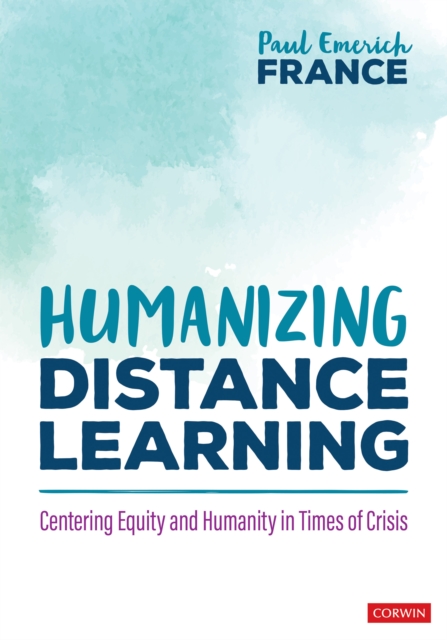
Humanizing Distance Learning
\"In some ways, shouldn′t we always be teaching from a distance?\" Paul France asks this not as pitch for distance learning. But because part of the reason distance learning has been so challenging, Paul asserts, is that we're replicating long-standing practices that promote dependent learning in our students. Why not use this unique moment of time to reconnect with the true purpose of teaching: to help our students become liberated learners and free thinkers? The next logical step in teachers' months-long distance learning \"journey,\" Humanizing Distance Learning describes how to center humanity and equity in our process of reimagining learning. Even while teaching and learning miles apart through screens, you'll discover how to Build independence within your students so they're better equipped to tackle challenges with persistence and learn how to learn Make collaboration and human connection essential components of your pedagogy, offering students the chance to socialize and learn from one another Center and unpack students' identities, helping them develop a conscious knowledge of themselves, all the while using their self-identified strengths to overcome any obstacles Plan, prepare, and implement humanized instruction while teaching for student liberation--both digitally and in person. Investigate technology integration, including the Digital Divide, as well as ways to minimize EdTech integration so that our collective sense of humanity can continue to be front and center \"The future,\" Paul writes, \"may be unclear, the road may be rocky, and the story may continue to be long and winding as we push forward through this global crisis. But the answer will always be simple: We must teach and learn in pursuit of a deeper sense of collective humanity--and for no other reason.\" \"This book is equal parts visionary and practical,
courageous and invitational. It addresses foundational needs and wrenching challenges teachers faced during the recent time when U.S. teachers abruptly found themselves teaching remotely. . . . It is a deeply humanizing book.\" ~Carol Ann Tomlinson, William Clay Parrish, Jr. Professor Emeritus, University of Virginia \"Humanizing Distance Learning is a book for our times not only because it addresses how to build a culture of thinking and teach for understanding at a distance, but also because it challenges the status quo of education by offering a more liberated and humane vision.\" ~Ron Ritchhart, Senior Research Associate, Harvard Graduate School of Education \"Paul France has produced a timely and necessary book that will help educators humanize distance learning. Recognizing incredible dimensions of complexity, this book will surely help educators traverse times of uncertainty in distance learning.\" ~H. Richard Milner IV, Cornelius Vanderbilt Chair of Education, Vanderbilt University.
eBook

Diverse and Flexible Coping Strategy for Nuclear Safety: Opportunities and Challenges
The concept and methodology of traditional Defense in Depth (DID) was challenged in the Fukushima nuclear accident. In order to fix the weakness of the traditional emergency strategies of nuclear power plants (NPPs) and to enhance the DID for nuclear safety, the U.S. Nuclear Energy Institute (NEI) put forward the concept of Diverse and Flexible Coping Strategies (FLEX) for the special purpose of beyond-design-basis external event (BDBEE) hazard mitigation and the corresponding FLEX support guidelines (FSG). The theory has been wildly spread and accepted by many countries that generate nuclear power. The research on the FLEX strategy is a new trend in nuclear engineering in the recent decade. It provides not only fixed on-site equipment/devices but also on- and off-site portable resources to strengthen the reliability of the nuclear safety system, especially for the disaster/hazards (similar to the Fukushima nuclear accident) triggered by BDBEEs. After a brief introduction of the FLEX strategy, four opportunities and ten challenges are summarized. Subsequently, in view of these challenges and technical difficulties, five suggestions for future work are recommended.
Journal Article
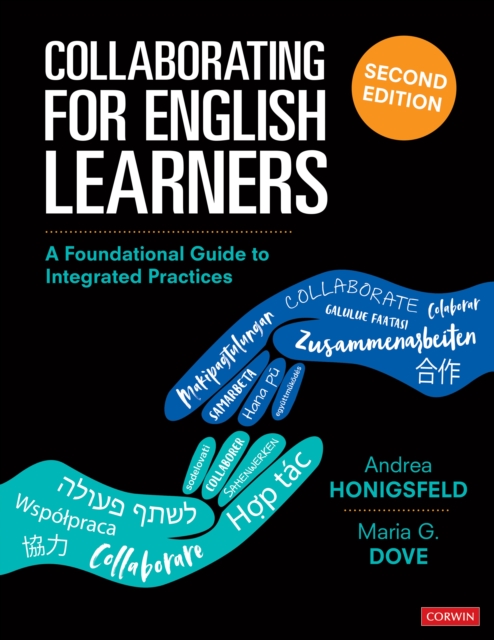
Collaborating for English Learners
Looking for a silver bullet to accelerate EL achievement? There is none. But this, we promise: when EL specialists and general ed teachers pool their expertise, your ELs’ language development and content mastery will improve exponentially. Just ask the tens of thousands of Collaboration and Co-Teaching users and now, a new generation of educators, thanks to this all-new second edition: Collaborating for English Learners. Why this new edition? Because more than a decade of implementation has generated for Andrea Honigsfeld and Maria Dove new insight into what exemplary teacher collaboration looks like, which essential frameworks must be established, and how integrated approaches to ELD services benefit all stakeholders. Essentially a roadmap to the many different ways we can all work together, this second edition of Collaborating for English Learners features: • All-new examples, case studies, illustrative video, and policy updates • In-depth coverage of the full range of strategies and configurations for determining the best model to adopt • Templates, planning guides, and other practical tools to put collaboration into practice • Guidelines, self-assessments, and questionnaires for evaluating the strategies’ effectiveness By this time, the big benefits of teacher collaboration are well documented. Where teachers and schools struggle still is determining the best way to do so, especially when working with our ELs. That’s where Andrea Honigsfeld, Maria Dove, and their second edition of Collaborating for English Learners will prove absolutely indispensable. After all, there are no two better authorities.
eBook