
Catalogue Search | MBRL


Are you sure you want to remove the book from the shelf?

{{itemTitle}}
2,812
result(s) for
"dogs in literature"
Sort by:


Jack
In a sleepy wheatbelt town, where windmills tick around and townsfolk stoop on Saturday's bowling green,...
Journal Article

You can draw dogs!
Readers will learn the basics of drawing a variety of breeds, including the long-haired Yorkshire terrier and the large German shepherd. Easy-to-follow directions with picture guides help readers sketch, shade, and add color to each dog drawing. Colorful photographs accompany interesting facts, introducing readers to details about owning a dog as well as caring for them.
Book
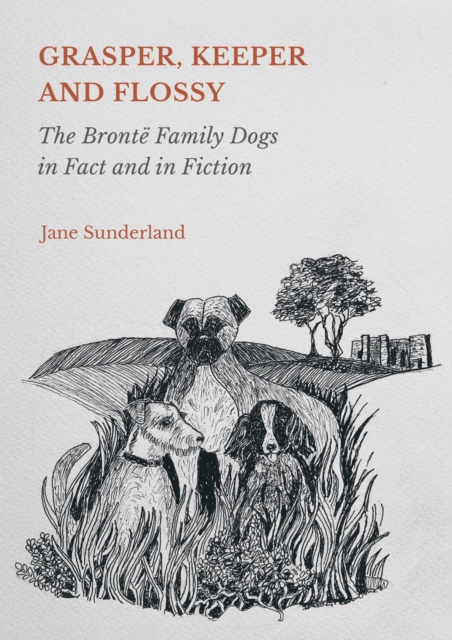
Grasper, Keeper and Flossy
Details of the lives of Charlotte, Emily and Anne Brontë at Haworth Parsonage in 19th Century Yorkshire, England, are well-known. But what about the dogs with whom they shared their home; Grasper, Keeper and Flossy? And what about the dogs in their novels? There are in fact nineteen named fictional dogs, at least one in each of the seven novels. Many of these fictional dogs can be seen as counterparts of the actual ones, in terms of breed, appearance or behaviour. This book looks at the three Brontë family dogs in three different ways. The first is what we know about these dogs from letters and other sources, sticking strictly to actual evidence - textual and visual. The second is what we can infer about the family dogs, and how Charlotte, Emily and Anne Brontë may have seen them in terms of their sentience, agency and cognition, from their many counterparts in the novels (in particular Wuthering Heights). The third is how the three family dogs, via their fictional counterparts, appear to have shaped the Brontë fiction in terms of plot, characterization and metaphor (again in particular in Wuthering Heights). This unique book's examination of the Brontë family dogs and their influence on the sisters' fiction will be of interest to scholars and students of Victorian literature worldwide, and anyone with an interest in the lives and novels of the Brontë sisters.
eBook

Political animals : representing dogs in modern Russian culture
This book is the first interdisciplinary study of the representation of dogs in Russian discourse since the nineteenth century. Focusing on the correlation between humans and dogs in traditional belief systems, in literature, film and other cultural productions, it shows that the dog as a political construct incorporates various contradictions, with different representations investing the dog with multiple, often-paradoxical meanings - moral, social and philosophical. From the peasantry's dislike of the gentry's hunting dogs and children's cruelty to dogs in Pushkin and Dostoevsky to the establishment of the Soviet dynasties of border guard and police dogs, from Pavlov's laboratory dogs to the monuments to the cosmic dog Laika and the subversive dog impersonations by the contemporary performance artist Oleg Kulik, the book explores the intersections of species-class-gender-sexuality-race-disability and, paradoxically, of Arcadian and Utopian dreams and scientific deeds. This study contributes to the unfolding cultural history of human-animal relations across cultures.
Book

Shameless
The figure of the dog is a paradox. As in so many cultures, past and present, the dog in ancient Greece was seen as the animal closest to humans, even as it elicited from them the most negative representations. Still a loaded term today, the wordbitchnot only signified shamelessness and a lack of self-control but was also exclusively figured as female. Woman and dogs in the Greek imagination were intimately intertwined, and in this careful, engaging analysis, Cristiana Franco explores the ancients' complex relationship with both. By analyzing the relationship between humans and dogs as depicted in a vast array of myths, proverbs, spontaneous metaphors, and comic jokes, Franco in particular shows how the symbolic overlap between dog and woman provided the conceptual tools to maintain feminine subordination.Intended for general readers as well as scholars,Shamelessextends the boundaries of classics and anthropology, forming a model of the sensitive work that can be done to illuminate how deeply animals are imbricated in human history. The English translation has been revised and expanded from the original Italian edition, and it includes a new methodological appendix by the author that points the way toward future work in the emerging field of human-animal studies.
eBook

Team numbers
The PAW Patrol counts from one to ten, from one fearless leader and two awesome skateboards to ten super soccer balls.
Book
Shameless
The figure of the dog is a paradox. As in so many cultures, past and present, the dog in ancient Greece was seen as the animal closest to humans, even as it elicited from them the most negative representations. Still a loaded term today, the word bitch not only signified shamelessness and a lack of self-control but was also exclusively figured as female. Woman and dogs in the Greek imagination were intimately intertwined, and in this careful, engaging analysis, Cristiana Franco explores the ancients' complex relationship with both. By analyzing the relationship between humans and dogs as depicted in a vast array of myths, proverbs, spontaneous metaphors, and comic jokes, Franco in particular shows how the symbolic overlap between dog and woman provided the conceptual tools to maintain feminine subordination. Intended for general readers as well as scholars, Shameless extends the boundaries of classics and anthropology, forming a model of the sensitive work that can be done to illuminate how deeply animals are imbricated in human history. The English translation has been revised and expanded from the original Italian edition, and it includes a new methodological appendix by the author that points the way toward future work in the emerging field of human-animal studies.
eBook

Lenore finds a friend : a true story from Bedlam Farm
Presents the story of misfit black lab Lenore, who is ignored by the unwelcoming and busy animals at Bedlam Farm until she playfully licks a grumpy ram with whom she forges an unlikely friendship.
Book

Canis in Fabula
The story of the astrologer Ascletario is introduced by Suetonius as the last item in a series of portents and predictions presaging Domitian’s violent death. This paper gives an analysis of this episode, discussed in the wider context of the catalogue of portents in Dom. 15.2-3 and, indeed, of the whole death narrative of the biography. A comparison to the parallel story in Cassius Dio (67.16.3) reveals important differences between the two authors; it is argued that Suetonius is closer to the original version of the anecdote and that Dio may have been influenced by Herodotus’ story of Croesus on the pyre. It is also argued that Suetonius expects his readers to connect the Ascletario episode with another Flavian portent, reported at Ves. 7.4 (dogs are prominent in both). Two other ‘canine’ passages of the Domitian, 10.1 and 23.1, are briefly discussed. The proposed analysis supports the view of Suetonius as an author who carefully structured his biographical rubrics and invited his readers to make connections within both a single biography and wider textual units.
Journal Article