
Catalogue Search | MBRL


Are you sure you want to remove the book from the shelf?

{{itemTitle}}
34,575
result(s) for
"ecosystem health"
Sort by:


A blue new deal : why we need a new politics for the ocean
An urgent account of the state of our oceans today-and what we must do to protect themThe ocean sustains life on our planet, from absorbing carbon to regulating temperatures, and, as we exhaust the resources to be found on land, it is becoming central to the global market. But today we are facing two urgent challenges at sea: massive environmental destruction, and spiraling inequality in the ocean economy.Chris Armstrong reveals how existing governing institutions are failing to respond to the most pressing problems of our time, arguing that we must do better. Armstrong examines these crises-from the fate of people whose lands will be submerged by sea level rise, to the exploitation of people working in fishing, to the rights of marine animals-and makes the case for a powerful World Ocean Authority capable of tackling them. A Blue New Deal presents a radical manifesto for putting equality, democracy, and sustainability at the heart of ocean politics.
eBook

Coastal ecosystems in transition : a comparative analysis of the northern Adriatic and Chesapeake Bay
\"Globally, people and ecosystem services are concentrated in the coastal zone where the health of marine ecosystems is most at risk to perturbations from a broad spectrum of convergent anthropogenic pressures. In this context, the rationale for an analysis such as this is to provide information needed to inform EBAs designed to maintain or restore coastal ecosystems services (metrics of ecosystem health). For marine ecosystems, these include provisioning services (e.g., seafood supply, pharmaceuticals), regulating services (e.g., water quality, resilience to coastal erosion and storm surge, carbon sequestration), cultural services (e.g., recreation and ecotourism) and support services, (e.g., biodiversity, viability and extent of biologically structured coastal habitats, primary production, carbon pumps). Our intent here is to advance the understanding and predictive skill of changes in the status of marine ecosystems (as indicated by changes in selected ecosystem services)\"-- Provided by publisher.
Book

Shifting Baselines in the Chesapeake Bay
This environmental history of America's largest estuary provides insight into how and why its former productivity and abundant fisheries have declined. The concept of \"shifting baselines\"—changes in historical reference points used in environmental assessments—illuminates a foundational challenge when evaluating the health of ecosystems and seeking to restore degraded wildlife populations. In this important book, Victor S. Kennedy examines the problem of shifting baselines for one of the most productive aquatic resources in the world: the Chesapeake Bay. Kennedy explains that since the 1800s, when the Bay area was celebrated for its aquatic bounty, harvest baselines have shifted downward precipitously. Over the centuries, fishers and hunters, supported by an extensive infrastructure of boats, gear, and processing facilities, overexploited the region's fish, crustaceans, terrapin, and waterfowl, squandering a profound resource. Beginning with the colonial period and continuing through the twentieth century, Kennedy gathers an unparalleled collection of scientific resources and eyewitness reports by colonists, fishers, managers, scientists, and newspaper reporters to create a comprehensive examination of the Chesapeake's environmental history. Focusing on the relative productivity and health of its fisheries and wildlife and highlighting key species such as shad, oysters, and blue crab, Shifting Baselines in the Chesapeake Bay helps readers understand the remarkable extent of the Bay's natural resources in the past so that we can begin to understand what has changed since, and why. Such knowledge can help illustrate the Bay's potential fertility and stimulate efforts to restore this pivotal maritime system's ecological health and productivity.
eBook

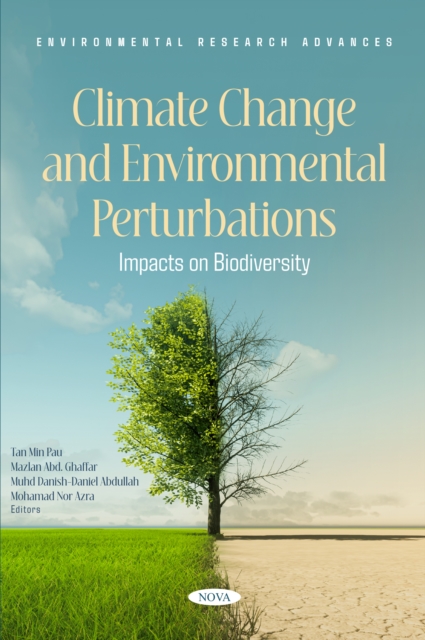
Climate Change and Environmental Perturbations: Impacts on Biodiversity
Global warming and climate change have become common and trending subjects of interest in recent decades, due to their massive influence on biodiversity and the subsequent effects on sustainable uses by human beings. In recent times, various ecosystems have been severely inundated with issues that threaten the very survival of the biodiversity that we depend on. Biodiversity is highly essential, as our health, food, and economy all depend on it. Unfortunately, the rapid change in the Earth's climatic and anthropogenic stressors are affecting all forms of life and non-life on earth, most such effects being irreversible. Climate change and environmental perturbation: Impacts on biodiversity highlights topics associated to the impacts of climate change and human-mediated environmental disturbances on biodiversity, as well as the use of micro-organisms in combating environmental pollution (including their potential as anti-biofouling agents).
eBook


A new framework for assessing ecosystem health with consideration of the sustainable supply of ecosystem services
Context
The establishment of an ecosystem health assessment framework from a human–environment view is vital to landscape sustainability. Although several studies have improved the assessment framework by integrating ecosystem services (ESs) supply or demand, consideration of the sustainable supply of ESs is lacking.
Objectives
The objective of this paper is to improve the current methodological framework by integrating ecological integrity and the sustainable supply of ESs to establish an ecosystem health assessment framework.
Methods
An improved assessment framework, including four indicators, vigor, organization, resilience, and ecosystem services supply rate, was established from the perspective of human–environment systems
.
Then, the performance of the improved assessment framework was demonstrated in a case study in China from 2000 to 2020.
Results
From 2000 to 2020, the overall spatial pattern of ecosystem health values in China was high in the southern and southeastern coastal regions, and low health values were mostly located in the western region, parts of Inner Mongolia, and metropolitan areas, with a descending trend from southeast to northwest. The imbalance between the potential and actual supply of ESs greatly contributed to the deterioration of regional ecosystem health. During the study period, the regional ecosystem in China was found to be in a more unhealthy state than in traditional Vigor-Organization-Resilience-Ecosystem services (VORES) evaluation.
Conclusions
The improved assessment framework that incorporates the ecological integrity and sustainable supply of ESs provides a new perspective for understanding the complex inherent characteristics of ecosystems and the regional human-nature connectedness in coupled human–environment systems. Our results could serve as a scientific reference for practical landscape governance in a changing world to achieve landscape sustainability.
Journal Article

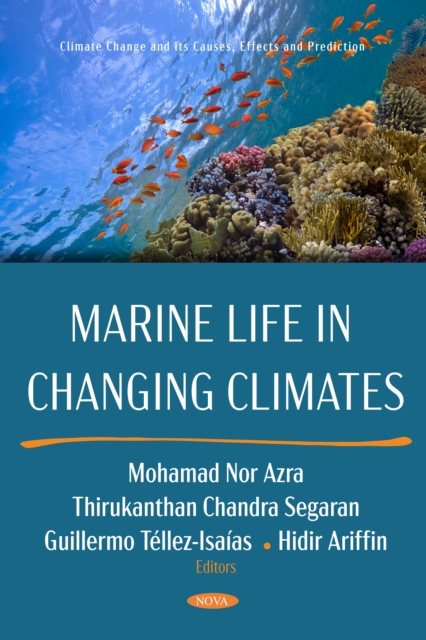
Marine Life in Changing Climates
The marine environment and coastal ecosystems are critical links in the sustainability of earth life, such as for mollusks, crustaceans, and other fisheries species, and will play an important role in ecosystem services in the future. Meanwhile, the climate change scenario is having a severe impact on these natural resources, as well as their food supply and production. Because of the vast amount of literature available on online academic databases, scientometric methodologies may benefit from identifying research gaps and potential future fields of study. This book evaluates the climate risks to various types of marine life. The authors navigate through the narratives of ocean researchers, conservationists, and communities, each of whom shares their recent research and perspectives on the challenges of climate change. The book is also a call to action, highlighting the critical importance of understanding, mitigating, and adapting to the effects of climate change on marine environmental ecosystems. From university initiatives to global collaboration, this scientific book sheds light on the current situation of climate change on marine resources, offering a glimmer of hope for ocean sustainability. This book on marine life in a changing climate is not confined to the blue horizon. The next volume of this book not only covers the literature of this book but also delves deeper into the current research and challenges of our ocean in a constantly changing climate.
eBook