
Catalogue Search | MBRL


Are you sure you want to remove the book from the shelf?

{{itemTitle}}
16
result(s) for
"effect of the first world war"
Sort by:

Changes in the Hungarian Insolvency Law in the Interwar Period
The First World War and the Trianon Treaty shocked the Hungarian economy. The Hungarian government implemented a payment moratorium from the start of the war, but after a one-year long moratorium, the government wanted to restore the working of the economy. But it desired to avoid the massive bankruptcies of the firms; therefore, a new institution, the compulsory non-bankruptcy settlement was introduced by the government in Hungary for helping the debtors. In my paper, I examine the rearrangement of the insolvency law in the interwar period which was generated by the compulsory nonbankruptcy settlement. This appeared beside the bankruptcy procedure, which regulation was passed by the National Assembly in 1881. It was the second Hungarian bankruptcy act, which remained unchanged until socialism. These two procedures were the significant elements of the insolvency law in the examined period. In my paper, I present the circumstances of the new institution’s introduction, its modification and its relation to the bankruptcy procedure.
Journal Article

A Strange and Formidable Weapon
The advent of poison gas in World War I shocked Britons at all levels of society, yet by the end of the conflict their nation was a leader in chemical warfare. Although never used on the home front, poison gas affected almost every segment of British society physically, mentally, or emotionally, proving to be an armament of total war. Through cartoons, military records, novels, treaties, and other sources, Marion Girard examines the varied ways different sectors of British society viewed chemical warfare, from the industrialists who promoted their toxic weapons while maintaining private control of production, to the politicians who used gas while balancing the need for victory with the risk of developing a reputation for barbarity. Although most Britons considered gas a vile weapon and a symptom of the enemy's inhumanity, many eventually condoned its use. The public debates about the future of gas extended to the interwar years, and evidence reveals that the taboo against poison gas was far from inevitable. emA Strange and Formidable Weapon/em uncovers the complicated history of this weapon of total war and illustrates the widening involvement of society in warfare.
eBook

Anzac Memories
What is taboo in any family or in any society is never fixed. And neither is that body of family information which everybody knows but no one talks about. Mental illness is one such subject, and it created a kind of fence around one central element of Thomson's work in the 1980s - his grandfather Hector's story. He has had the courage to take that fence down and use a range of sources to enter the no man's land of suffering and isolation which was a part of his grandfather's life, and perforce, that of his grandmother and the young child who became his father. When the first edition was in preparation, Alistair Thomson's father objected strenuously to any mention in the book of his father's (Alistair's grandfather's) mental illness; reluctantly Alistair agreed to leave out the subject. We can understand why the author's father, himself a soldier, felt so strongly. The images were too hard to bear for the man who was a young boy in the 1930s, living through very, very hard times with his disturbed father after his mother's death. Now, afflicted with Alzheimer's disease, but still able to read the text, he gave his son permission to tell the story. And it is a compelling and important one. From that story, we see the price families and in particular wives paid for the multiple wounds men brought home with them from war. What the second edition shows was the sheer force of survival in his grandmother Nell, who had not only the handful of two small boys to raise, but a damaged husband to support. And making her life harder still was that her husband's disability was very hard to define precisely...We know that the damage war does to families is generational; it doesn't stop when the shooting stops. It is passed on indirectly from father to son to grandson, and to the women with whom they live. By retelling his family's story, Alistair Thomson has
been able to fashion a moving portrait of his family: his grandmother Nell, and after her death, of their sons, Al's dad and his uncle, still children, having cold mutton for Christmas dinner, alone with their father, a soldier of the Great War. -- Jay Winter, Yale University *** Anzac Memories was first published to acclaim in 1994 (by Oxford University Press) and has achieved international renown for its pioneering contribution to the study of war memory and mythology. War historian Michael McKernan wrote that the book gave as good a picture of the impact of the Great War on individuals and Australia as we are likely to get in this generation, and historian Michael Roper concluded that an immense achievement of this book is that it so clearly illuminates the historical processes that left men like my grandfather forever struggling to fashion myths which they could live by. In this second edition, author Alistair Thomson explores how the Anzac legend has been transformed over the past quarter century, how a 'post-memory' of World War I creates new challenges and opportunities for making sense of Australia's national past, and how veterans' war memories can still challenge and complicate national mythologies. Thomson returns to a family war history that he could not write about 20 years ago because of the stigma of war and mental illness, and he uses newly-released Repatriation files to question his own earlier account of veterans' post-war lives and memories and to think afresh about war and memory. (Series: Monash Classics).
eBook

I Call to Remembrance
Toyo Suyemoto is known informally by literary scholars and the media as \"Japanese America's poet laureate.\" But Suyemoto has always described herself in much more humble terms. A first-generation Japanese American, she has identified herself as a storyteller, a teacher, a mother whose only child died from illness, and an internment camp survivor. Before Suyemoto passed away in 2003, she wrote a moving and illuminating memoir of her internment camp experiences with her family and infant son at Tanforan Race Track and, later, at the Topaz Relocation Center in Utah, from 1942 to 1945.
A uniquely poetic contribution to the small body of internment memoirs, Suyemoto's account includes information about policies and wartime decisions that are not widely known, and recounts in detail the way in which internees adjusted their notions of selfhood and citizenship, lending insight to the complicated and controversial questions of citizenship, accountability, and resistance of first- and second-generation Japanese Americans.
Suyemoto's poems, many written during internment, are interwoven throughout the text and serve as counterpoints to the contextualizing narrative. Suyemoto's poems, many written during internment, are interwoven throughout the text and serve as counterpoints to the contextualizing narrative. A small collection of poems written in the years following her incarceration further reveal the psychological effects of her experience.
eBook
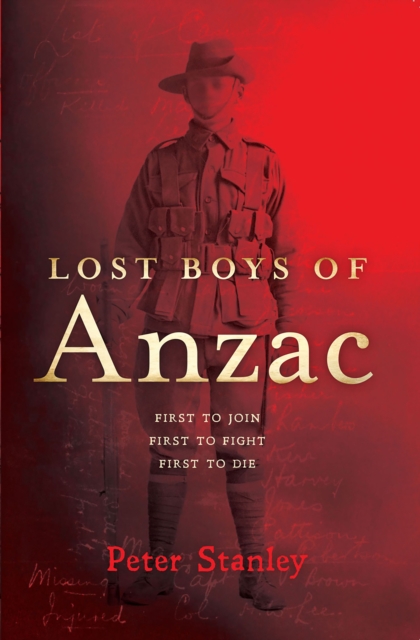
Lost Boys of Anzac
Australiansremember the dead of 25 April 1915 on Anzac Day every year. But do we know thename of a single soldier who died that day? What do we really know about themen supposedly most cherished in the national memory of war?.
eBook

Nerve agents: emergency preparedness
Nerve agents (NAs) are a highly toxic group of chemical warfare agents. NAs are organophosphorus esters with varying physical and chemical properties depending on the individual agent. The most recently developed class of NA is ‘ Novichok ’, the existence of which was first revealed in the early 1990s, just before Russia signed the Chemical Weapons Convention. In 1984, Iraq became the first nation to deploy NA on the battlefield when they used tabun against Iranian military forces in Majnoon Island near Basra. The first terrorist use of an NA is believed to be the attack in Matsumoto, Japan, on 27 June 1994 by the Aum Shinrikyo doomsday cult. Symptoms and ultimate toxicity from NA poisoning are related to the agent involved, the form and degree of exposure, and rapidity of medical treatment. The classic toxidrome of significant exposure to NA comprises bronchorrhoea, bronchospasm, bradycardia and convulsions, with an onset period of as early as a few seconds depending on the mode and extent of exposure. If medical management is not instituted rapidly, death may occur in minutes by asphyxiation and cardiac arrest. In the UK, emergency preparedness for NA poisoning includes an initial operational response programme across all blue light emergency services and key first responders. This paper describes the development, pathophysiology, clinical effects and current guidance for management of suspected NA poisoning. It also summarises the known events in which NA poisoning has been confirmed.
Journal Article

Press Freedom in the Enemy’s Language
This article examines how the federal government controlled the Japanese “enemy language” newspapers in Japanese American “relocation centers” during World War II. Camp officials were facing a dilemma: They knew Japanese news media would promote effective information dissemination, but no one understood the language. As a compromising solution, they limited Japanese contents to verbatim translations of official English releases. They also conducted thorough background examinations of translators to sort out “unquestionably loyal” bilingual Japanese. Press freedom inside the barbed wire fences was conditional at best; it was even more so in the enemy’s language.
Journal Article

I. Dünya Savaşı’nın Hong Kong’daki Son Osmanlı Tebaasına Etkileri
19. yüzyıl ortalarında İngiliz hâkimiyetine giren Hong Kong, Osmanlı Devleti’nin siyasi, askerî, coğrafi açıdan nüfuz alanında değildi. Osmanlı Devleti’nin resmen savaşa girmesiyle neredeyse
aynı günlerde adanın İngiliz valisine merkezden gönderilen yazılar çerçevesinde alınan tedbirler, savaşın devamı müddetince tıpkı Alman siviller gibi adada yaşayan Osmanlı tebaasına yönelik
kuşkuları ve ilan edilen “cihad-ı ekber”in muhtemel etkilerini ortadan kaldırmak üzerine kurulmuştu. Yapılan tahkikat neticesi hazırlanan rapora göre adada 27 yetişkin erkek vardı. Bunlardan
beşinin eşi olduğu not edilmişti ve 27 erkekten dördünün toplam 20 çocuğu vardı. Buradan hareketle bu ilk tahkikatta erkek, kadın ve çocuk olmak üzere 52 kişi “Osmanlı” tebaası olarak listelenmişti.
Kayda geçen erkeklerin isimleri ve doğum yeri kayıtlarına göre bunlardan birinin Türk ve Müslüman, birinin Suriye kökenli, ikisinin muhtemelen Rum kökenli Hristiyan olduğu anlaşılmaktadır. Listede geriye kalan 22 erkeğin Bağdat a
Journal Article

Charles Townshend's Advance on Baghdad: The British Offensive in Mesopotamia, September–November 1915
This article examines Major General Charles Townshend's offensive against Ottoman forces in Mesopotamia during the autumn of 1915. It challenges the prevailing view that the offensive was destined for failure due to the numerical superiority of Ottoman forces in the region. Examining Townshend's role in the battle of Kut-al-Amara in late September 1915, and focusing in particular on his conduct of the battle of Ctesiphon in late November, the article argues that Townshend was confident that his 6 Indian Division could defeat the Ottomans at Ctesiphon, and he devised a feasible plan to do so. Townshend's decisions under fire, however, undermined the success of his force and contributed to the heavy casualties that led to its withdrawal from the battlefield and its subsequent retreat to Kut-al-Amara, where the division was besieged until its surrender in April 1916.
Journal Article

HISTORIES OF MODERN MIGRATION IN EAST ASIA: STUDIES OF THE FIRST HALF OF THE TWENTIETH CENTURY
In recent historical studies of modern East Asia, the issue of migration has received increased scholarly attention. This article traces recent historiographical and methodological trends by analyzing influential English-language works on modern East Asian migrations in the first half of the twentieth century. Modern East Asian migrations during this period present dynamic and heterogeneous features as results of modern social transformations, such as the development of global capitalism, national and global economic integration, the emergence of new transportation and communication technology, and the expansion and collapse of the Japanese empire. Accordingly, the historical works on modern East Asian migrations we examine display a variety of historiographical and theoretical approaches. Specifically, this article underscores important trends or comparable emphases in these studies, including the growing scholarly interest in transnational/regional border crossing movements, migrants’ subject formations in the new environments, and the methodological interest in the role of culture, political economy, and the environment. Thus this article offers a reflective overview of the ongoing development of migration studies centering on modern East Asia.
Journal Article