
Catalogue Search | MBRL


Are you sure you want to remove the book from the shelf?

{{itemTitle}}
58,771
result(s) for
"elementary school programmes"
Sort by:
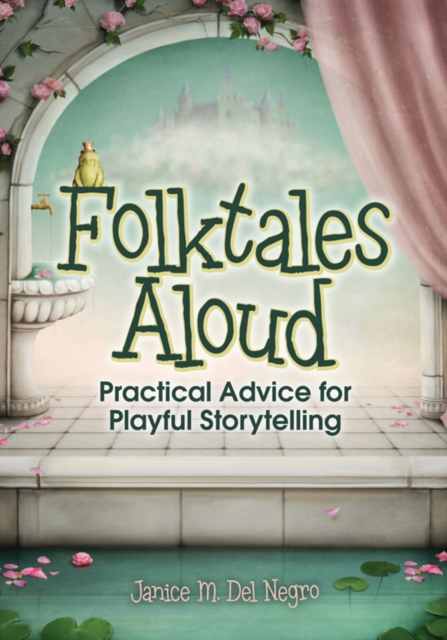
Folktales aloud
Storytelling in the library and school setting can take many forms. Del Negro encourages you to explore the folktales on your shelves and tailor them for the various age groups, involving the children in the storytelling as a way to learn through play, and letting them express the tales in their own words and ways.
eBook
Il libro di lettura non sia un centone di trite nozioni
The paper examines the guidelines dedicated to Italian teaching and, above all, to the ideal thematic, language and stylistic features of school reading books in the programmes for primary school and in the related instructions for teachers issued by the Ministry of Education from 1860 to 1905: a decisive period for the arrangement of the Italian school system, the literacy processes and the spread of the national language. It can be seen how these official documents significantly shaped the writing of school books. The paper also explores the complex relationship between the institutional attempts to regulate textbook production, as evidenced by relevant ministerial documentation parallel to the programmes, and the rich publishing activity in this field. To complete the overview of the dialectic between school-educational publishing and the regulatory will of the Ministry and of the boards connected to it, responsible for the evaluation of textbooks, the witnesses of two prominent school female authors of the 2nd half of the 19th century are commented on: Ida Baccini and Felicita Morandi.
Journal Article


Chemical industrial production and applied chemistry of metals and nonmetals in educational program of chemistry in elementary school
In this paper a part of the model of the curriculum, which should improve chemical education in primary schools is presented. The implemented module refers to metals and non-metals in the fields of applied chemistry and chemical industry. Contents of the curriculum from 1974 to 2004 are considered. The quantity and quality of the pupils' knowledge are analyzed. The research showed that the pupils' knowledge is low. The module is implemented for the sake of overcoming the observed drawbacks in the curriculum, which should facilitate further chemical education, especially in the field of chemical technology. Contents of the curriculum, ways of implementation of the contents, and methods for evaluation of the pupils' knowledge are proposed considering the results of the research. For this purpose the method of descriptive analysis and statistical methods are used. Cilj ovog rada je kreiranje modula koji bi se uklopio u postojeci nastavni program predmeta Hemije u osmom razredu, kako bi se znanje ucenika iz hemijske proizvodnje i primenjene hemije metala i nemetala, posle zavrsetka osnovne skole unapredilo. Analizirana su znanja ucenika posle zavrsetka osnovne skole iz oblasti hemijske proizvodnje i primenjene hemije, na osnovu kojih su predlozeni sadrzaji modula, kao i nacini njegove realizacije i vrednovanja. U radu je koriscena istorijska, deskriptivna i analiticka metoda. Tehnika istrazivanja je testiranje, a instrument konstruisani test, na osnovu postavljenih ciljeva i zadataka istrazivanja. U radu su analizirani nastavni sadrzaji iz oblasti metala i nemetala, sa posebnim akcentom na hemijsku proizvodnju i primenu, u nastavnim programima osnovne skole od 1974. do danas.
Journal Article
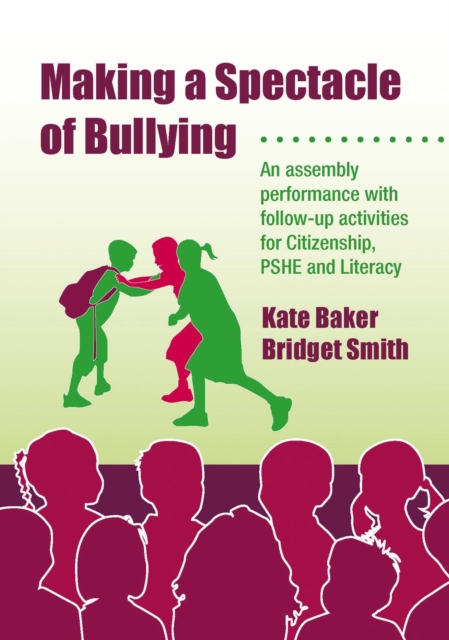
Making a spectacle of bullying: an assembly peformance with follow-up activities for citizenship, PSHE and literacy, art and music
Includes CD-Rom `A highly practical resource' - Times Educational Supplement `This approach could be very usefully employed to tackle the very complex and difficult issue of bullying' - Educational Psychology in Practice `The how, when, where and what of preparing for a performance is spelled out in considerable detail. If you do accept the challenge at the core of the book you will certainly not want for help' - Junior Education This is the first in a series of creative and practical resources to link the school assembly with the Personal, Social, Citizenship and Health Education (PSCHE) curriculum and the national literacy objectives for children aged five to 11. Using the theme of bullying, this scheme of work starts with a lively and dramatic student performance by older pupils in the primary school, including every member of the class. Full scripts, music and dance scores are provided. The bullying scenes involve the audience by focusing on the role of the bystanders. Comprehensive teacher notes, activities and resources are also included for follow-up work with each year group. This comprehensive pack, produced by two experienced teachers, is useful for anyone running an anti-bullying initiative in their primary school. Bridget Smith has worked for many years as a specialist in deafness within the health service, as part of a Cambridge University research group, and in the voluntary sector. She has taught as a general practitioner in primary and middle schools with specific responsibilities for music and IT. As well as having tutored children who are excluded from school she is regularly involved in coaching music and sport and in the development of local facilities for youth. Kate Baker has created and developed effective assemblies with children over many years, as class teacher, literacy and drama co-ordinator and Deputy Head. She has also devised and directed productions in schools, at children's drama and music courses and for the theatre. Kate still teaches in primary and middle schools and is currently developing more ideas and materials to enrich the curriculum for Key Stages 1 to 3.
eBook

Learning support pedagogy for children who struggle to develop the concepts underlying the operations of addition and subtraction of numbers: the ‘Calculia’ programme
This paper argues for teaching pre-service teachers about remediation strategies for learners who encounter problems in mathematics in the early grades. The premise is that all teachers should be equipped with theory-based practical knowledge to support learning. A few teaching sessions to develop the concepts that underlie the mathematical operations of addition and subtraction are introduced in this paper. An empirically validated, comprehensive model of cumulative arithmetic competence development from the ages of four to eight years forms the basis for the construction of the suggested teaching unit. The model distinguishes five competence levels of arithmetical conceptual development, and proposes that concepts build on one another hierarchically. A ‘part plus part is equivalent to whole’ model was constructed based on this hierarchical structure and the understanding that the concept of addition is a dynamic process. The teaching examples include exercises for all children, not only ones who struggle. Possibilities for adapting the exercises to the individual development level of slower or faster learners are also included. All exercises are accompanied by a reflection on the procedure and strategies applied in order to support meaningful and sustainable learning and to give student teachers the opportunity to use knowledge of mathematical cognition theory during their pre-service years.
Journal Article

National Principal Mentor Program
A highly structured professional development platform, which integrates a mentor program, can make the critical difference in sustainability of skilled leaders. The National Association of Elementary School Principals (NAESP) training program includes individual contributions to assess the connection between sustained, effective mentoring, principal leadership, and high quality coach training with improved student achievement in schools being led by novice, newly assigned, or turnaround principals. The NAESP Mentor Program has been a strategic partner as part of The Wallace Foundation Principal Pipeline Initiative with preparation, support, and supervision of school principals. The NAESP Mentor Program training components, which prepare mentors to advance the evolution of leadership skills in new principals, leverage the local principal standards and national benchmarks incorporating them into the learning activities. Professional observations shared by NAESP national mentors are focused on the critical areas that would enhance new principals' opportunities for success.
Book Chapter

一所技術型高中數位學習精進方案的關鍵因素──教練式領導的應用與省思
This study aimed to explore the process of student participation in \"Digital Learning Enhancement Program for Primary and Secondary Schools\" in Meiguang Vocational High School (a pseudonym), a remote school of Hualien County. The semi-structured interview is the main data collection method that involves asking four participants, including the principal and teachers. The study reached the following conclusions: 1. The case school established a concrete model for bridging the digital divide by implementing the principles of the Digital Learning Enhancement Program. 2. By employing coaching leadership techniques to drive digital teaching reforms, the case school facilitated teachers' professional growth and improved teaching quality. 3. The findings revealed that remote schools faced challenges in digital transformation while implementing the Digital Learning Enhancement Program. To achieve the program's objectives, schools need to strengthen their hardware resources and adopt the coaching leadership techniques
Journal Article

