
Catalogue Search | MBRL


Are you sure you want to remove the book from the shelf?

{{itemTitle}}
786,210
result(s) for
"engines"
Sort by:

How do fire trucks work?
\"Young readers will love this exciting, in-depth yet accessible look at fire trucks, including how they work, the special equipment they need, and how they help firefighters battle blazes to keep people and property safe\"--Provided by publisher.
Book
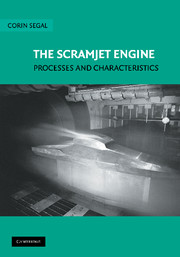
The Scramjet Engine
The renewed interest in high-speed propulsion has led to increased activity in the development of the supersonic combustion ramjet engine for hypersonic flight applications. In the hypersonic regime the scramjet engine's specific thrust exceeds that of other propulsion systems. This book, written by a leading researcher, describes the processes and characteristics of the scramjet engine in a unified manner, reviewing both theoretical and experimental research. The focus is on the phenomena that dictate the thermo-aerodynamic processes encountered in the scramjet engine, including component analyses and flowpath considerations; fundamental theoretical topics related to internal flow with chemical reactions and non-equilibrium effects, high-temperature gas dynamics, and hypersonic effects are included. Cycle and component analyses are further described, followed by flowpath examination. Finally, the book reviews experimental and theoretical capabilities and describes ground testing facilities and computational fluid dynamics facilities developed for the study of time-accurate, high-temperature aerodynamics.
eBook

All aboard fire trucks
Text and labeled pictures present trucks and other equipment used by the fire department.
Book

Algorithms of Oppression
A revealing look at how negative biases against women of color are embedded in search engine results and algorithms Run a Google search for \"black girls\"—what will you find? \"Big Booty\" and other sexually explicit terms are likely to come up as top search terms. But, if you type in \"white girls,\" the results are radically different. The suggested porn sites and un-moderated discussions about \"why black women are so sassy\" or \"why black women are so angry\" presents a disturbing portrait of black womanhood in modern society. In Algorithms of Oppression, Safiya Umoja Noble challenges the idea that search engines like Google offer an equal playing field for all forms of ideas, identities, and activities. Data discrimination is a real social problem; Noble argues that the combination of private interests in promoting certain sites, along with the monopoly status of a relatively small number of Internet search engines, leads to a biased set of search algorithms that privilege whiteness and discriminate against people of color, specifically women of color. Through an analysis of textual and media searches as well as extensive research on paid online advertising, Noble exposes a culture of racism and sexism in the way discoverability is created online. As search engines and their related companies grow in importance—operating as a source for email, a major vehicle for primary and secondary school learning, and beyond—understanding and reversing these disquieting trends and discriminatory practices is of utmost importance. An original, surprising and, at times, disturbing account of bias on the internet, Algorithms of Oppression contributes to our understanding of how racism is created, maintained, and disseminated in the 21st century.
eBook


An Introduction to Thermodynamic Cycle Simulations for Internal Combustion Engines
This book provides an introduction to basic thermodynamic engine cycle simulations, and provides a substantial set of results. Key features includes comprehensive and detailed documentation of the mathematical foundations and solutions required for thermodynamic engine cycle simulations. The book includes a thorough presentation of results based on the second law of thermodynamics as well as results for advanced, high efficiency engines. Case studies that illustrate the use of engine cycle simulations are also provided.
eBook


Internal Combustion Engine Heat Transfer and Wall Temperature Modeling: An Overview
Internal combustion engines are now extremely optimized, in such ways improving their performance is a costly task. Traditional engine improvement by experimental means is aided by engine thermodynamic models, reducing experimental and total project costs. For those models, accuracy is mandatory in order to offer good prediction of engine performance. Modelling of the heat transfer and wall temperature is an important task concerning the accuracy and the predictions of any engine thermodynamic model, although it is many times an overcome task. In order to perform good prediction of engine heat transfer and wall temperature, models are required for accomplish heat transfer from hot gases to engine parts, heat transfer inside each engine part, and also heat transfer to coolant and lubricating oil. This paper presents an overview about engine heat transfer and wall temperature modelling, with main purpose to aid engine thermodynamic modelling and offer more accurate predictions of engine performance, consumption and emission parameters. The most important correlation are reviewed for three engine heat transfer approaches: gas to wall, wall to wall and wall to liquid heat transfer models. In order to obtain good prediction of wall temperature, those three approaches must be coupled, which may imply convection-conduction-convection problems, although for some applications in diesel engines, radiation problems must be considered.
Journal Article


Frontier development and prospect trend of HCCI engine
Nowadays, with the rapid development of information technology, the level of science and technology is constantly improving. All fields are developing rapidly. In recent years, the development of the automotive engine industry has been particularly rapid. To cope with increasingly strict environmental requirements and the impact of electric motors on the market, a new engine model is gradually being valued. Homogeneous Charge Compression Ignition (HCCI) internal combustion engine is a new type of engine. It has the technical advantages of traditional diesel and gasoline engines. This combustion mode greatly improves the emission of pollutants and the engine’s overall efficiency. However, there are still certain challenges to this technology at present. But with the continuous improvement and optimization of related technologies. HCCI engines are bound to have broad development prospects. This article elaborates on the current status and development trends of HCCI engines from four perspectives: basic principles, combustion characteristics, emission characteristics, and the latest developments.
Journal Article