Catalogue Search | MBRL
Search Results Heading
Explore the vast range of titles available.
MBRLSearchResults
-
DisciplineDiscipline
-
Is Peer ReviewedIs Peer Reviewed
-
Series TitleSeries Title
-
Reading LevelReading Level
-
YearFrom:-To:
-
More FiltersMore FiltersContent TypeItem TypeIs Full-Text AvailableSubjectCountry Of PublicationPublisherSourceTarget AudienceDonorLanguagePlace of PublicationContributorsLocation
Done
Filters
Reset
1,211,257
result(s) for
"environment"
Sort by:
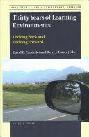
Thirty years of Learning Environments : looking back and looking forward
This volume is a commemorative book celebrating the 30th Anniversary of the Special Interest Group (SIG) on Learning Environments of the American Educational Researchers' Association. It includes a historical perspective starting with the formation of the SIG in 1984 and the first program space at the AERA annual meeting in 1985 in Chicago. This retrospective notes other landmarks in the development of the SIG such as the creation of the international journal Learning Environments Research. The study of learning environments was first conceptualized around the need to develop perceptual and psychosocial measures for describing students' individual or shared educational experiences (e.g. 'feel of the class' or 'classroom climate'). Over the ensuing decades, the field expanded considerably from its early roots in science education to describe other phenomenon such as teacher-student interpersonal relationships, or applications in pre-service teacher education and action research. The book also describes several new areas of promise for the expanding field of learning environments research that in the future will include more diverse contexts and applications. These will include new contexts but established research programs in areas such as information and communications technology and environmental education, but also in emerging research contexts such as the physical classroom environment and links among learning environment contexts and students' emotional health and well-being.-- Source other than the Library of Congress.
Long-distance electron transport occurs globally in marine sediments
by
Meysman, Filip J. R.
,
Hidalgo-Martinez, Silvia
,
Tramper, Anton
in
Bacteria
,
basin
,
Biogeochemistry
2017
Recently, long filamentous bacteria have been reported conducting electrons over centimetre distances in marine sediments. These so-called cable bacteria perform an electrogenic form of sulfur oxidation, whereby long-distance electron transport links sulfide oxidation in deeper sediment horizons to oxygen reduction in the upper millimetres of the sediment. Electrogenic sulfur oxidation exerts a strong impact on the local sediment biogeochemistry, but it is currently unknown how prevalent the process is within the seafloor. Here we provide a state-of-the-art assessment of its global distribution by combining new field observations with previous reports from the literature. This synthesis demonstrates that electrogenic sulfur oxidation, and hence microbial long-distance electron transport, is a widespread phenomenon in the present-day seafloor. The process is found in coastal sediments within different climate zones (off the Netherlands, Greenland, the USA, Australia) and thrives on a range of different coastal habitats (estuaries, salt marshes, mangroves, coastal hypoxic basins, intertidal flats). The combination of a widespread occurrence and a strong local geochemical imprint suggests that electrogenic sulfur oxidation could be an important, and hitherto overlooked, component of the marine cycle of carbon, sulfur and other elements.
Journal Article
Benthic perspective on Earth’s oldest evidence for oxygenic photosynthesis
2015
The Great Oxidation Event (GOE) is currently viewed as a protracted process during which atmospheric oxygen increased above ∼10 ⁻⁵ times the present atmospheric level (PAL). This threshold represents an estimated upper limit for sulfur isotope mass-independent fractionation (S-MIF), an Archean signature of atmospheric anoxia that begins to disappear from the rock record at 2.45 Ga. However, an increasing number of papers have suggested that the timing for oxidative continental weathering, and by conventional thinking the onset of atmospheric oxygenation, was hundreds of million years earlier than previously thought despite the presence of S-MIF. We suggest that this apparent discrepancy can be resolved by the earliest oxidative-weathering reactions occurring in benthic and soil environments at profound redox disequilibrium with the atmosphere, such as biological soil crusts and freshwater microbial mats covering riverbed, lacustrine, and estuarine sediments. We calculate that oxygenic photosynthesis in these millimeter-thick ecosystems provides sufficient oxidizing equivalents to mobilize sulfate and redox-sensitive trace metals from land to the oceans while the atmosphere itself remained anoxic with its attendant S-MIF signature. As continental freeboard increased significantly between 3.0 and 2.5 Ga, the chemical and isotopic signatures of benthic oxidative weathering would have become more globally significant from a mass-balance perspective. These observations help reconcile evidence for pre-GOE oxidative weathering with the history of atmospheric chemistry, and support the plausible antiquity of a terrestrial biosphere populated by cyanobacteria well before the GOE.
Significance The history of oxygen at Earth’s surface is intimately tied to its production by oxygenic photosynthesis, whereby plants, algae, and cyanobacteria release O ₂ as a waste product. Despite this metabolism’s profound importance, its evolutionary timing is poorly understood. Studies have increasingly revealed a temporal disconnect between evidence for the presence of O ₂ during weathering as early as 3.0 billion years ago and its atmospheric accumulation 500 million years later. We review this problem and numerically demonstrate that local O ₂ production and immediate consumption in surface-bound (benthic) microbial ecosystems at profound disequilibrium conditions is the most parsimonious explanation for this delay. Thus, emergence of continental landmass was likely a crucial factor in the earliest oxygenation of Earth’s surface environment.
Journal Article
Comparative phylogeography of the ocean planet
by
DiBattista, Joseph D.
,
Grant, W. Stewart
,
Iacchei, Matthew
in
Animals
,
Aquatic Organisms - classification
,
Biodiversity
2016
Understanding how geography, oceanography, and climate have ultimately shaped marine biodiversity requires aligning the distributions of genetic diversity across multiple taxa. Here, we examine phylogeographic partitions in the sea against a backdrop of biogeographic provinces defined by taxonomy, endemism, and species composition. The taxonomic identities used to define biogeographic provinces are routinely accompanied by diagnostic genetic differences between sister species, indicating interspecific concordance between biogeography and phylogeography. In cases where individual species are distributed across two or more biogeographic provinces, shifts in genotype frequencies often align with biogeographic boundaries, providing intraspecific concordance between biogeography and phylogeography. Here, we provide examples of comparative phylogeography from (i) tropical seas that host the highest marine biodiversity, (ii) temperate seas with high productivity but volatile coastlines, (iii) migratory marine fauna, and (iv) plankton that are the most abundant eukaryotes on earth. Tropical and temperate zones both show impacts of glacial cycles, the former primarily through changing sea levels, and the latter through coastal habitat disruption. The general concordance between biogeography and phylogeography indicates that the population-level genetic divergences observed between provinces are a starting point for macroevolutionary divergences between species. However, isolation between provinces does not account for all marine biodiversity; the remainder arises through alternative pathways, such as ecological speciation and parapatric (semiisolated) divergences within provinces and biodiversity hotspots.
Journal Article
The nearshore cradle of early vertebrate diversification
by
Friedman, Matt
,
Sansom, Robert S.
,
Sallan, Lauren
in
Animals
,
Aquatic environment
,
Aquatic habitats
2018
Most of what we know about the relationship between diversification and environment in ancient marine environments has come from invertebrates. The influence of habitat on vertebrate diversification thus remains a persistent question. Sallan
et al.
studied fossil vertebrates spanning the mid-Paleozoic, including both jawed and jawless fish (see the Perspective by Pimiento). They found that diversification occurred primarily in nearshore environments, with diversified forms later colonizing deeper marine or freshwater habitats. Furthermore, more robust forms remained in the nearshore, whereas more gracile forms moved to deeper waters. This split is similar to current relationships between form and environment in aquatic habitats.
Science
, this issue p.
460
; see also p.
402
Nearshore environments hosted diversification among mid-Paleozoic vertebrates.
Ancestral vertebrate habitats are subject to controversy and obscured by limited, often contradictory paleontological data. We assembled fossil vertebrate occurrence and habitat datasets spanning the middle Paleozoic (480 million to 360 million years ago) and found that early vertebrate clades, both jawed and jawless, originated in restricted, shallow intertidal-subtidal environments. Nearshore divergences gave rise to body plans with different dispersal abilities: Robust fishes shifted shoreward, whereas gracile groups moved seaward. Fresh waters were invaded repeatedly, but movement to deeper waters was contingent upon form and short-lived until the later Devonian. Our results contrast with the onshore-offshore trends, reef-centered diversification, and mid-shelf clustering observed for benthic invertebrates. Nearshore origins for vertebrates may be linked to the demands of their mobility and may have influenced the structure of their early fossil record and diversification.
Journal Article