
Catalogue Search | MBRL


Are you sure you want to remove the book from the shelf?

{{itemTitle}}
833,400
result(s) for
"environmental analysis"
Sort by:

Advanced introduction to environmental impact assessment
Explores the unifying and universal principles at the heart of Environmental Impact Assessment (EIA) wherever it may be practiced worldwide. This overview of the field by Angus Morrison-Saunders emphasizes the big ideas upon which EIA was founded and which remain central to theory and practice today. In a nutshell, EIA is essentially about thinking before acting.
Book

Public participation in environmental assessment and decision making
Federal agencies have taken steps to include the public in a wide range of environmental decisions. Although some form of public participation is often required by law, agencies usually have broad discretion about the extent of that involvement. Approaches vary widely, from holding public information-gathering meetings to forming advisory groups to actively including citizens in making and implementing decisions.
Proponents of public participation argue that those who must live with the outcome of an environmental decision should have some influence on it. Critics maintain that public participation slows decision making and can lower its quality by including people unfamiliar with the science involved.
This book concludes that, when done correctly, public participation improves the quality of federal agencies' decisions about the environment. Well-managed public involvement also increases the legitimacy of decisions in the eyes of those affected by them, which makes it more likely that the decisions will be implemented effectively. This book recommends that agencies recognize public participation as valuable to their objectives, not just as a formality required by the law. It details principles and approaches agencies can use to successfully involve the public.
eBook


Evaluation of Levels, Sources and Health Hazards of Road-Dust Associated Toxic Metals in Jalalabad and Kabul Cities, Afghanistan
This study was designed to investigate selected road-dust associated heavy metals, their relations with natural and anthropogenic sources, and potential human and environmental health risks. For this purpose, 42 and 36 road-dusts samples were collected from Jalalabad and Kabul cities (Afghanistan), respectively. The following elements were found in descending concentrations: Mn, Zn, Pb, Ni, Cu, Cr, Co, and Cd in Jalalabad; and Mn, Zn, Ni, Cu, Cr, Pb, Co, and Cd in Kabul. Except for Ni, all the elemental contents were less than the Canadian permissible limits in residential/parkland soils. Principle Component Analysis and enrichment of Cd, Cu, Ni, Pb, and Zn pointed to anthropogenic sources, whereas Co, Cr, and Mn indicated crustal inputs. Broadly, Cd monomial risk index (Eri) was considerable; however, one site each in both cities showed high risk (Eri ≥ 350). The potential ecological risk (RI) is mostly low; however, at some sites, the risk was considerable. Ingestion appeared to be the main exposure route (99%) for heavy metals and contributed > 90% to noncancerous (all residents), as well as 92% (children) and 75–89% (adults) cancerous risks. The noncancerous risks of all metals and their integrated risks for all residents were within acceptable levels. Moreover, potential cancer risks in children from Ni and Cr were slightly higher than the US-EPA safe levels but were within acceptable levels for adults. This study found higher risks to children and therefore recommends proper management and ways to control metals pollution load in these areas to decrease human health and RIs.
Journal Article

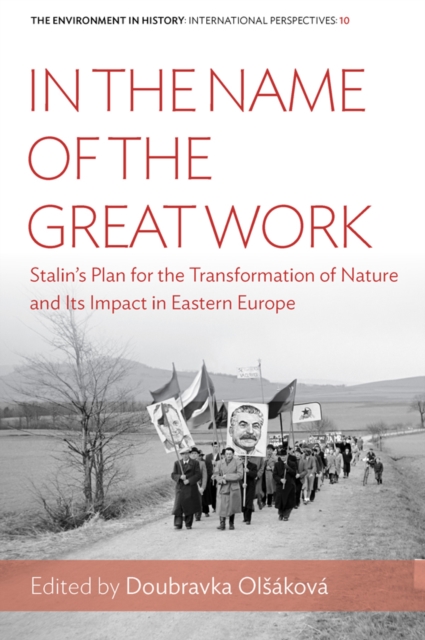
In the name of the great work
Beginning in 1948, the Soviet Union launched a series of wildly ambitious projects to implement Joseph Stalin's vision of a total \"transformation of nature.\" Intended to increase agricultural yields dramatically, this utopian impulse quickly spread to the newly communist states of Eastern Europe, captivating political elites and war-fatigued publics alike. By the time of Stalin's death, however, these attempts at \"transformation\"-which relied upon ideologically corrupted and pseudoscientific theories-had proven a spectacular failure. This richly detailed volume follows the history of such projects in three communist states-Poland, Hungary, and Czechoslovakia-and explores their varied, but largely disastrous, consequences.
eBook

Methods of environmental impact assessment
\"Methods of environmental impact assessment is a practical, up-to-date explanation and guide to how EIAS are, and should be, carried out for specific environmental components (e.g. air, water, ecological systems, socio-economic systems). For each component, it includes a discussion of relevant regulations and standards, how baseline surveys are conducted, how impact predictions are made, what mitigation measures can be used, how the effectiveness of such measures should be monitored, and the limitations of the methods.\" \"Very few books exist on how EIA should be carried out for specific environmental components. Whereas its sister volume, Introduction to environmental impact assessment, concentrates on the EIA principles, procedures and prospects, Methods of environmental impact assessment concentrates on the methods applied for the environmental components. It does not attempt to make specialists of its readers, but aims to foster better communication between experts, a better understanding of how EIAs should be carried out, and better EIA-related decisions. Taken together, the two books provide a comprehensive coverage of the theory and practice of EIA.\" \"Written by practising specialists who teach a highly regarded MSc course in environmental assessment and management, and by experts from a major environmental consultancy, Methods of environmental impact assessment is invaluable for: people who organize, review, and make decisions about EIA; environmental planners and managers; students taking first degrees in planning, ecology, geography, environmental studies and related subjects with an EIA content; and postgraduate students taking courses in EIA or environmental management.\"--Jacket.

Pollution evaluation, human health effect and tracing source of trace elements on road dust of Dhanbad, a highly polluted industrial coal belt of India
Dust samples were collected from roads of five distinct types of land use zones (National Highway, residential areas, sensitive areas, mining areas, and busy traffic areas) of Dhanbad to determine the pollution characteristics, health risk, and identifying the source of trace elements. The dust samples were segregated into ≤ 60 µm and trace elements like Cd, Cr, Cu, Fe, Mn, Ni, Pb, and Zn were analysed. Concentrations of Cd, Cr, Cu, Fe, and Mn were observed highest in the mining areas, whereas Ni, Pb, and Zn presented higher concentration values at National Highway and busy traffic zones. Cd showed highest geo-accumulation index (Igeo), contamination factor (Cf), and ecological risk (ER) among all the trace elements. The health risk assessment model was performed to assess the health effects of carcinogenic and non-carcinogenic pollutants caused due to multi-elemental exposure on adults and children. The significantly higher HQ (Hazard Quotient) and HI (Hazard Index) values posed by Cr, Fe, and Mn indicated potential non-carcinogenic risks to the people of Dhanbad. Similarly, values of CR (Cancer Risk) for Cd, Cr and Ni were within the range of 10–6–10–4, which indicated to cause carcinogenic risk to the population by the exposure of road dust. Principal Component Analysis (PCA) and Pearson correlation showed that coal mining activities in Jharia coalfield, coal-based industries like coke-oven plants, coal washeries and heavy vehicular load in the roads of Dhanbad were the major causes of emission of these trace elements.Graphic abstract
Journal Article


Airborne microplastics: a review study on method for analysis, occurrence, movement and risks
Microplastics (of size < 5 mm) pollution in our environment is of current concern by researchers, public media and non-governmental organizations. Implications by their presence in aquatic and soil ecosystems have been well studied and documented, but less attention has been paid on airborne microplastics (MPs). Studies concerning airborne microplastics started from 2016 and only a few (
n
= 13) have been published to date. Although, studies may increase in the following years, since air is very important for human survival. Microplastics have been observed in atmospheric fallouts in indoor and outdoor environments using a sampling or vacuum pump, rain sampler, and/or particulate fallout collector. Identification and quantification have been carried out by visual, spectroscopic, and spectrometric techniques. Factors such as meteorological, climatic, and anthropogenic influence the distribution and movement of airborne MP. Human exposure may be through inhalation, dermal, and open meal during fallout, with their potential biopersistence and translocation. Ingestion may cause localized inflammation and cancer due to responses by the immune cells, especially in individuals with compromised metabolism and poor clearance mechanisms. Ecological risks involve possible contamination of the ecosystem through a dynamic relationship of MPs in soil, water, and air forming a MP contamination cycle. The present review aimed at providing a comprehensive overview of current knowledge or information regarding microplastics in air, identifying gap in knowledge, and giving suggestions for future research.
Journal Article