
Catalogue Search | MBRL


Are you sure you want to remove the book from the shelf?

{{itemTitle}}
2,305
result(s) for
"european colonies"
Sort by:


Dynamics of change in multiethnic societies: An archaeological perspective from colonial North America
This Perspective presents an overview of the archaeology of pluralistic colonies (approximately late 1500sâ1800s) in North America. It complements the other special feature papers in this issue on ancient societies in Mesoamerica, the Near East, the Armenian Highlands, Peru, and China by presenting another body of literature for examining the dynamics of change in multiethnic societies from a different time and place. In synthesizing archaeological investigations of mercantile, plantation, and missionary colonies, this Perspective shows how this research is relevant to the study of pluralism in both historic and ancient societies in three ways. (i) It enhances our understanding of interethnic relationships that took place in complex societies with imposing political hierarchies and labor structures. (ii) It helps us to refine the methods used by archaeologists to define and analyze multiethnic communities that were spatially delimited by ethnic neighborhoods. Finally, (iii) it presents more than a half century of experimentation with various models (e.g., acculturation, creolization, ethnogenesis, and hybridity) that have been used to study the dynamics of culture change in multiethnic societies.
Journal Article

Social Aspects of Health, Medicine and Disease in the Colonial and Post-colonial Era
From the 1600s, enslaved people, and after abolition of slavery, indentured labourers were transported to work on plantations in distant European colonies. Inhuman conditions and new pathogens often resulted in disease and death. Central to this book is the encounter between introduced and local understanding of disease and the therapeutic responses in the Caribbean, Indian and Pacific contexts.
European response to diseases, focussed on protecting the white minority. Enslaved labourers from Africa and indentured labourers from India, China and Java provided interpretations and answers to health challenges based on their own cultures and medicinal understanding of the plants they had brought with them or which they found in the natural habitat of their new homes. Colonizers, enslaved and indentured labourers learned from each other and from the indigenous peoples who were marginalized by the expansion of plantations. This volume explores the medical, cultural and personal implications of these encounters, with the broad concept of medical pluralism linking the diversity of regional and cultural focus offered in each chapter.
Please note: Taylor & Francis does not sell or distribute the Hardback in India, Pakistan, Nepal, Bhutan, Bangladesh and Sri Lanka.
Inhuman conditions in distant European colonies where enslaved and indentured labourers were transported and new pathogens often resulted in disease and death. This book explores the encounter between introduced and local understanding of disease and the therapeutic responses in the Caribbean, Indian and Pacific contexts.
eBook

Race, empire and First World War writing
\"This volume brings together an international cast of scholars from a variety of fields to examine the racial and colonial aspects of the First World War and show how issues of race and empire shaped its literature and culture. The global nature of the First World War is fast becoming the focus of intense enquiry. This book analyses European discourses about colonial participation and recovers the war experience of different racial, ethnic and national groups, including the Chinese, Vietnamese, Indians, Maori, West Africans and Jamaicans. It also investigates testimonial and literary writings - from war diaries and nursing memoirs to Irish, New Zealand and African American literature - and analyses processes of memory and commemoration in the former colonies and dominions. Drawing upon archival, literary and visual material, the book provides a compelling account of the conflict's reverberations in Europe and its empires and reclaims the multiracial dimensions of war memory\"-- Provided by publisher.
Book

Tensions of empire
Starting with the premise that Europe was made by its imperial projects as much as colonial encounters were shaped by events and conflicts in Europe, the contributors to Tensions of Empire investigate metropolitan-colonial relationships from a new perspective. The fifteen essays demonstrate various ways in which \"civilizing missions\" in both metropolis and colony provided new sites for clarifying a bourgeois order. Focusing on the eighteenth, nineteenth, and early twentieth centuries, they show how new definitions of modernity and welfare were developed and how new discourses and practices of inclusion and exclusion were contested and worked out. The contributors argue that colonial studies can no longer be confined to the units of analysis on which it once relied; instead of being the study of \"the colonized,\" it must account for the shifting political terrain on which the very categories of colonized and colonizer have been shaped and patterned at different times.
eBook

Images of the tropics : environment and visual culture in colonial Indonesia
\"This book critically examines Dutch colonial culture in the Netherlands Indies trough the prism of landscape art. Susie Protschky contends that visual representations of nature and landscape were core elements of how Europeans understood the tropics, justified their territorial claims in the region, and understood their place both in imperial Europe and in colonized Asia during the nineteenth and early twentieth centuries. Her book thus makes a significant contribution to studies of empire, art and environment, as well as to histories of Indonesia and Europe\"--P. [4] of cover.
Book
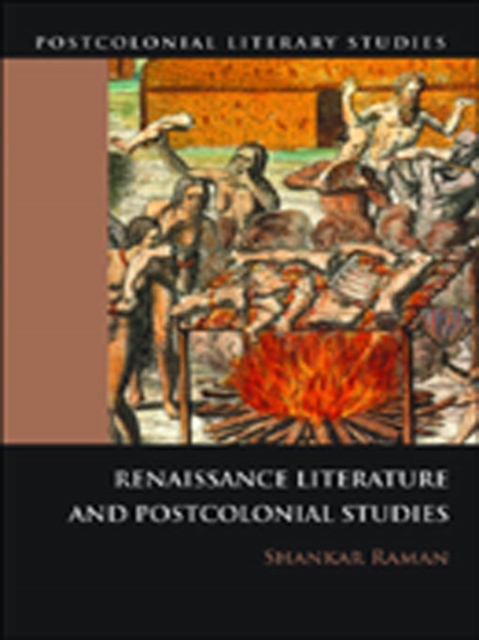
Renaissance literature and postcolonial studies
This book focuses on the interplay between the discovery of new lands and the rediscovery of old texts, describing the parallel emergence of colonialism and its critique.
eBook

Colonial girlhood in literature, culture and history, 1840-1950
\"Colonial Girlhood in Literature, Culture and History, 1840-1950 explores a range of real and fictional colonial girlhood experiences from Jamaica, Mauritius, South Africa, India, New Zealand, Australia, England, Ireland, and Canada to reflect on the transitional state of girlhood between childhood and adulthood. The interconnected themes of colonialism, empire, gender, race, and class show how colonial girls occupy ambivalent positions in British and settler societies between 1840 and 1950. Although girlhood is often linked to freedom, independence, novelty, and modernity, it may also represent an idea that needs to be contained and controlled to serve the needs of the nation. Across national boundaries, the malleability of colonial girlhoods is evident. Drawing on a range of approaches including history, anthropology, and literary and cultural studies, this book reflects on the complexities of girlhood during the colonial era. \"-- Provided by publisher.
Book

Policy Response
This chapter first establishes that tariffs were much higher in the autonomous periphery than in the European industrial core, and that the tariffs there rose steeply across the late nineteenth century. Furthermore, the rise in tariff rates even took place in Asia, where European colonies were so common. It then asks why tariffs were so high (and rising) in the periphery. Was this anti-trade policy backlash motivated by industrialization targets, by compensation of the losers from trade, by government revenue needs, or by other goals?
Book Chapter