
Catalogue Search | MBRL


Are you sure you want to remove the book from the shelf?

{{itemTitle}}
21,430
result(s) for
"evidence-based education"
Sort by:


Fostering Evidence-Based Education with Learning Analytics: Capturing Teaching-Learning Cases from Log Data
Evidence-based education has become more relevant in the current technology-enhanced teaching-learning era. This paper introduces how Educational BIG data has the potential to generate such evidence. As evidence-based education traditionally hooks on the meta-analysis of the literature, so there are existing platforms that support manual input of evidence as structured information. However, such platforms often focus on researchers as end-users and its design is not aligned to the practitioners' workflow. In our work, we propose a technology-mediated process of capturing teaching-learning cases (TLCs) using a learning analytics framework. Each case is primarily a single data point regarding the result of an intervention and multiple such cases would generate an evidence of intervention effectiveness. To capture TLCs in our current context, our system automatically conducts statistical modelling of learning logs captured from Learning Management Systems (LMS) and an e-book reader. Indicators from those learning logs are evaluated by the Linear Mixed Effects model to compute whether an intervention had a positive learning effect. We present two case studies to illustrate our approach of extracting case effectiveness from two different learning contexts-one at a junior-high math class where email messages were sent as intervention and another in a blended learning context in a higher education physics class where an active learning strategy was implemented. Our novelty lies in the proposed automated approach of data aggregation, analysis, and case storing using a Learning Analytics framework for supporting evidence-based practice more accessible for practitioners.
Journal Article

The design, fate and impact of a hospital-wide training program in evidence-based medicine for physicians – an observational study
Background
Many doctors fail to practice Evidence-Based Medicine (EBM) effectively, in part due to insufficient training. We report on the design, fate and impact of a short learner-centered EBM train-the-trainer program aimed at all 2400 doctors at the Karolinska University Hospital in Sweden on the heels of a tumultuous merger, focusing particularly on whether it affected the doctors’ knowledge, attitudes and skills regarding EBM.
Methods
We used a validated EBM instrument in a before-and-after design to assess the impact of the training. Changes in responses were analyzed at the individual level using the Wilcoxon matched pairs test. We also reviewed documentation from the program – including the modular EBM training schedule and the template for participants’ Critically Appraised Topic reports – to describe the training’s content, design, conduct, and fate.
Results
The training, designed to be delivered in modules of 45 min totaling 1.5 days, failed to reach most doctors at the hospital, due to cost cutting pressures and competing demands. Among study participants (
n
= 174), many reported suboptimal EBM knowledge and skills before the training. Respondents’ strategies for solving clinical problems changed after the training: the proportion of respondents reporting to use (or intend to use) secondary sources “Often/very often” changed from 5 % before the training to 76 % after the training; in parallel, reliance on textbooks and on colleagues fell (48 to 23 % and 79 to 65 %, respectively). Participants’ confidence in assessing scientific articles increased and their attitudes toward EBM became more positive. The proportion of correct answers in the EBM knowledge test increased from 52 to 71 %. All these changes were statistically significant at
p
< 0.05.
Conclusions
Many study participants, despite working at a university hospital, lacked basic EBM knowledge and skills and used the scientific literature suboptimally. The kind of short learner-centered EBM training evaluated here brought significant improvements among the minority of hospital doctors who were able to participate and, if applied widely, could contribute to better, safer and more cost-effective care.
Journal Article

Differentiation and Integration of Research, Evidence-Based Practice, and Quality Improvement
Background
Substantial discrepancies exist in how research, evidence-based practice (EBP), and quality improvement (QI) are taught to nursing students across academic levels. As nursing education programs adopt the new The Essentials: Core Competencies for Professional Nursing Education and move toward competency-based education, prelicensure and advanced nursing students will need to demonstrate research, EBP, and QI competencies; therefore, faculty must possess the knowledge and skills to teach these paradigms' differences and integration.
Method
An evidence-based approach that builds on the literature and our experience as nurses and educators was used to develop this educational innovation.
Results
An innovative representation in table and figure format of the differences and interdependence of research, EBP, and QI is presented herein.
Conclusion
These documents clarify the evolving differences, similarities, and synergies as a framework for faculty development. [J Nurs Educ. 2025;64(6):e44–e47.]
Journal Article

A Cost-Effectiveness Analysis of Blended Versus Face-to-Face Delivery of Evidence-Based Medicine to Medical Students
Blended learning describes a combination of teaching methods, often utilizing digital technologies. Research suggests that learner outcomes can be improved through some blended learning formats. However, the cost-effectiveness of delivering blended learning is unclear.
This study aimed to determine the cost-effectiveness of a face-to-face learning and blended learning approach for evidence-based medicine training within a medical program.
The economic evaluation was conducted as part of a randomized controlled trial (RCT) comparing the evidence-based medicine (EBM) competency of medical students who participated in two different modes of education delivery. In the traditional face-to-face method, students received ten 2-hour classes. In the blended learning approach, students received the same total face-to-face hours but with different activities and additional online and mobile learning. Online activities utilized YouTube and a library guide indexing electronic databases, guides, and books. Mobile learning involved self-directed interactions with patients in their regular clinical placements. The attribution and differentiation of costs between the interventions within the RCT was measured in conjunction with measured outcomes of effectiveness. An incremental cost-effectiveness ratio was calculated comparing the ongoing operation costs of each method with the level of EBM proficiency achieved. Present value analysis was used to calculate the break-even point considering the transition cost and the difference in ongoing operation cost.
The incremental cost-effectiveness ratio indicated that it costs 24% less to educate a student to the same level of EBM competency via the blended learning approach used in the study, when excluding transition costs. The sunk cost of approximately AUD $40,000 to transition to the blended model exceeds any savings from using the approach within the first year of its implementation; however, a break-even point is achieved within its third iteration and relative savings in the subsequent years. The sensitivity analysis indicates that approaches with higher transition costs, or staffing requirements over that of a traditional method, are likely to result in negative value propositions.
Under the study conditions, a blended learning approach was more cost-effective to operate and resulted in improved value for the institution after the third year iteration, when compared to the traditional face-to-face model. The wider applicability of the findings are dependent on the type of blended learning utilized, staffing expertise, and educational context.
Journal Article

The Effectiveness of an Evidence-Based Practice (EBP) Educational Program on Undergraduate Nursing Students’ EBP Knowledge and Skills: A Cluster Randomized Control Trial
Evidence-based practice (EBP) prevents unsafe/inefficient practices and improves healthcare quality, but its implementation is challenging due to research and practice gaps. A focused educational program can assist future nurses to minimize these gaps. This study aims to assess the effectiveness of an EBP educational program on undergraduate nursing students’ EBP knowledge and skills. A cluster randomized controlled trial was undertaken. Six optional courses in the Bachelor of Nursing final year were randomly assigned to the experimental (EBP educational program) or control group. Nursing students’ EBP knowledge and skills were measured at baseline and post-intervention. A qualitative analysis of 18 students’ final written work was also performed. Results show a statistically significant interaction between the intervention and time on EBP knowledge and skills (p = 0.002). From pre- to post-intervention, students’ knowledge and skills on EBP improved in both groups (intervention group: p < 0.001; control group: p < 0.001). At the post-intervention, there was a statistically significant difference in EBP knowledge and skills between intervention and control groups (p = 0.011). Students in the intervention group presented monographs with clearer review questions, inclusion/exclusion criteria, and methodology compared to students in the control group. The EBP educational program showed a potential to promote the EBP knowledge and skills of future nurses.
Journal Article
Incorporating Evidence-Based Practice Learning Activities Throughout Family Nurse Practitioner Clinical Practicum Courses
Background
Evidence-based practice (EBP) is crucial to high-quality health care, yet nurse practitioner graduates report low levels of confidence in their EBP abilities. This may be because of limited incorporation of EBP learning opportunities outside of foundational course-work.
Method
Family nurse practitioner (FNP) program faculty incorporated EBP learning activities across the three-semester clinical year curriculum, and the activities scaffolded in complexity. Initial activities included appraisal and application of clinical practice guidelines to patient case scenarios. Later, students used the seven steps of EBP to present frequently asked patient questions and EBP clinical challenges in their clinical rotations to their peers.
Results
This innovative way to thread EBP across the clinical year allowed faculty to continue to evaluate and guide students toward EBP competency.
Conclusion
The integration of EBP learning activities across the clinical year is a feasible strategy to further expand FNP student competency in EBP. [J Nurs Educ. 2025;64(7):454–457.]
Journal Article

Evidence-based Teaching
This book provides a critical overview of evidence-based teaching, with balanced and reflective consideration given to arguments supporting various approaches to increasing the use of evidence in teaching and arguments that raise doubts about, or problems with, these approaches. It offers practical advice on how to implement evidence-based teaching and help with reflectively evaluating its success.
eBook

Practitioner Adherence and Competence in MEYA, a Free Online Self-Instruction Program in Modular Psychotherapy and Counseling for Children’s Autism-Related Clinical Needs
The quality of care in public schools and other community settings for school-aged youths on the autism spectrum is variable and often not evidence-based. Training practitioners in these settings to deliver evidence-based practices (EBPs) may improve the quality of care. We developed a free internet-based training and clinical guidance system synthesizing multiple EBPs for youth on the autism spectrum addressing a range of mental health needs and autism-related behaviors, entitled
Modular EBPs for Youth on the Autism Spectrum
(MEYA; meya.ucla.edu). A multiple baseline study was conducted with seven practitioners recruited from mental health practice settings across the United States who were providing services to children on the autism spectrum (aged 6 to 17 years). Practitioners were randomly assigned to undergo baseline conditions of 2 to 8 weeks. Once online training in MEYA commenced, practitioners engaged in algorithm-guided self-instruction in EBPs for autism. Participants video-recorded sessions. Independent coders used the MEYA Fidelity Scale (MEYA-FS) to rate adherence and competence in EBPs for autism. Practitioners also completed measures pertaining to implementation outcomes and parents rated youth outcomes on personalized target behaviors. Five of seven practitioners increased their adherence to MEYA practices (i.e., MEYA-FS scores) following MEYA training. Findings for competence were similar, though somewhat less robust. Practitioners generally viewed MEYA as feasible, understandable, and acceptable. Most youth outcomes improved during MEYA. A randomized, controlled trial of MEYA would be helpful in characterizing its effectiveness for supporting practitioner EBP implementation and youth outcomes in school and community service settings.
Journal Article
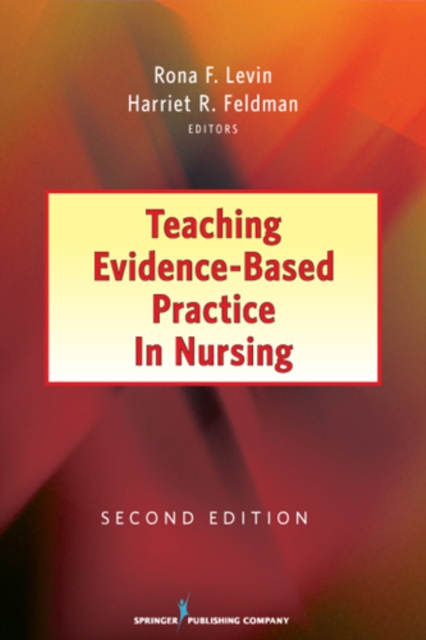
Teaching evidence-based practice in nursing
Awarded second place in the 2013 AJN Book of the Year Awards in the Nursing Education/Continuing Education category This AJN award-winning text is the only book to teach evidence-based practice (EBP) content grounded in a tested philosophy of teaching and learning. It provides the tools, perspective and context for health educators and practitioners to implement evidence-based care practices and evaluate their efficacy. Reflecting four years of successful experiences in helping academic agencies understand and implement EBP, this new edition has been reorganized to include updated information and five new chapters. It stresses the importance of mentorship in creating EBP and illustrates how mentorship can be designed and implemented to promote EBP. The text clarifies three principal values: -How to integrate EBP into academic curricula -How to implement an EBP model in clinical settings (for graduate, second career, and CE students) -How to address teaching and learning strategies for specific user groups Teaching Evidence-Based Practice in Nursing will be of value to clinical and academic educators, educational and clinical administrators, unit managers, students attending CE programs, and students in nursing education graduate programs.
eBook