
Catalogue Search | MBRL


Are you sure you want to remove the book from the shelf?

{{itemTitle}}
47,316
result(s) for
"fairytales"
Sort by:

Speaking With Spectres: Towards a Feminist Hauntological Framework
This article proposes a new, critical methodological framework aiming to unearth hidden, forgotten or banished issues in research using feminist theory, such as criminology and sociology, synthesising feminist theory and hauntology. By developing a framework for “speaking with ghosts”, we provide concrete tools to theoretically interrogate feminist issues of the past, present and future using a lens of archetypical imagery in order to prompt ethical as well as political critique. The framework is illustrated by unearthing gendered and feminist spectres of three photographs taken by young women in a recent photovoice study exploring everyday violence among youth. By applying the framework on the photographs, drawing on conceptual metaphors of both the spectral and of fairytales, which are always and already important sites of feminism, the study unpacks how spectres relating to heteropatriarchy and gendered power orders still haunt the everyday lives of young people and how the use of a feminist hauntology can provide potential for ethical, social and political change. Unlike previous consolidations of feminism and hauntology, this methodological framework is designed to promote political, ethical and social change as well as critique by delineating concrete ways of teasing out the feminist spectral in late modern texts, thus going beyond previous engagements with the spectral.
Journal Article

“You Have to Set the Story You Know Aside”: Constructions of Youth, Adulthood and Senescence in Cinderella Is Dead
As with other twenty-first-century rewritings of fairytales, Cinderella is Dead by Kalynn Bayron complicates the classic ‘Cinderella’ fairytale narrative popularized by Charles Perrault and the Brothers Grimm for new audiences, queering and race-bending the tale in its decidedly feminist revision of the story. However, as we argue here, the novel also provides an interesting intervention in the construction of age as related to gender for its female protagonists. Drawing on Sylvia Henneberg’s examination of ageist stereotypes in fairytale classics and Susan Pickard’s construction of the figure of the hag, we explore the dialogic between the fairytale revision, traditional fairytale age ideology and the intersection of age and gender in this reinvention of the classic narrative. By focusing on constructions of age, particularly senescence, we demonstrate how complex constructions of older characters might aid in overall depictions of intergenerational relationships, and how these intergenerational relationships in turn reflect historical and cultural impetuses of retelling fairytale narratives.
Journal Article
Good People Do Not Eat Others?! Moral Ambiguity in Japanese Fairytales from the Late Nineteenth Century
In 2015, the Japanese public broadcaster NHK aired an educational series that re-examined traditional fairy tales by putting their characters on trial for their immoral behavior, such as revenge, violence, and dishonesty. These tales, rooted in premodern Japanese folklore, were widely available in various book formats by the late nineteenth century and, unlike modern adaptations, they did not sanitize violence or evil. This study analyzes four miniature picture books from the late nineteenth century that recount the story, Kachikachi yama (The Crackling Mountain). This analysis focuses on both verbal and visual representations of good and evil, with attention to themes of loyalty, filial piety, and virtuous revenge. The findings reveal that these picture books presented young readers with complex moral lessons, where the boundaries between good and evil were blurred. Additionally, they illuminate the prevailing image of children during that era, depicting them as “little adults” expected to be educated and prepared for the practical realities of the adult world.
Journal Article

Social Dreaming
Dickens was known for his incredible imagination and fiery social protest.In Social Dreaming , Elaine Ostry examines how these two qualities are linked through Dickens's use of the fairy tale, a genre that infuses his work.
eBook

Mixed Magic
Mixed Magic: Global-local dialogues in fairy tales for young readers considers retellings and adaptations from a 'glocal' context; that is, from a framework focused on the reciprocal and cross-cultural exchange between global processes and local practices and their potential transformative effects.
eBook
Tales of Their Times
The aim of the article is to examine how the fairytales of storytellers from different times agree with the idea that their attitudes towards life appear in the fairytales that they tell and to consider whether they construct their fairytales so that they reflect the tensions and conflicts in their own times. This is achieved by looking into the tales of a woman storyteller in the nineteenth century when organized collecting began in Iceland, and three storytellers‘ repertoires from the twentieth century, when fairytales still belonged to the living oral tradition were tape-recorded. The survey is concluded by examining three recent plays involving fairytales which the author herself attended.
Journal Article

In Search of a Cultural Code
From the plethora of big and small achievements that the author celebrates in the book, my essay addresses such subjects as the continuity of cultural creativity in the 19th and 20th centuries, children’s literature, the sociology of reading, and the place of goodness in literature and life under Stalinism – all within the span of the 20th century. Sharing with the author my admiration of accomplishments of Russian and Soviet culture, I try here to historicize the themes and expand slightly on some of them, like perceptions of the cultural products.
Journal Article

When Princesses Become Dragons
In this article we offer curricular suggestions for teaching Elana K. Arnold’s young adult title Damsel , a subverted fairytale rewrite, using a critical literacy framework. In doing so, we outline how English curriculum has often upheld oppressive systems that harm women, and how our teaching can challenge such systems. We situate this work through the retelling of a fairytale trope given the ubiquity of such stories in secondary students’ lives. Our writings have teaching implications for both secondary English language arts classrooms and higher education fields such as English, folklore, mythology, and gender studies. We end by noting the limitations of such teaching.
Journal Article
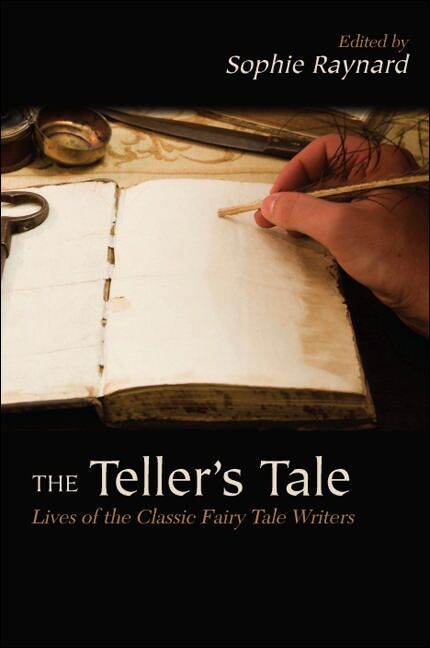
The Teller's Tale
This book offers new, often unexpected, but always intriguing portraits of the writers of classic fairy tales. For years these authors, who wrote from the sixteenth to the nineteenth centuries, have been either little known or known through skewed, frequently sentimentalized biographical information. Jacob and Wilhelm Grimm were cast as exemplars of national virtues; Hans Christian Andersen's life became—with his participation—a fairy tale in itself. Jeanne-Marie Leprince de Beaumont, the prim governess who wrote moral tales for girls, had a more colorful past than her readers would have imagined, and few people knew that nineteen-year-old Marie-Catherine d'Aulnoy conspired to kill her much-older husband. Important figures about whom little is known, such as Giovan Francesco Straparola and Giambattista Basile, are rendered more completely than ever before. Uncovering what was obscured for years and with newly discovered evidence, contributors to this fascinating and much-needed volume provide a historical context for Europe's fairy tales.
eBook
Restoring Realism to the Fairytale, or, the Banal Optimism of Tahar Ben Jelloun’s Mes Contes de Perrault
This article examines Tahar Ben Jelloun’s Mes Contes de Perrault (2014) as a multilayered instance of literary appropriation. Ben Jelloun’s stories, which relocate Charles Perrault’s classic French fairytales to the Arab world, represent not only a subversive challenge to French cultural hegemony (as has been argued) but can also be read as a complex engagement with the history of French folktales and their literary adaptations. This study posits that Ben Jelloun’s project restores elements of realism to Perrault’s tales that were lost when the author adapted folk stories for the French court. By reintroducing themes of bodily suffering, desire, and quotidian struggles, Ben Jelloun reconnects these tales with their folk origins. Examining Ben Jelloun’s “appropriation”—his word—in the context of Perrault’s own adaptations, this study offers new insights into the circulation and transformation of folktales across cultures and literary traditions. It contributes to ongoing discussions about literary and cultural appropriation and the place of the fairytale genre in today’s world.
Journal Article