
Catalogue Search | MBRL


Are you sure you want to remove the book from the shelf?

{{itemTitle}}
11,169
result(s) for
"faith and science"
Sort by:
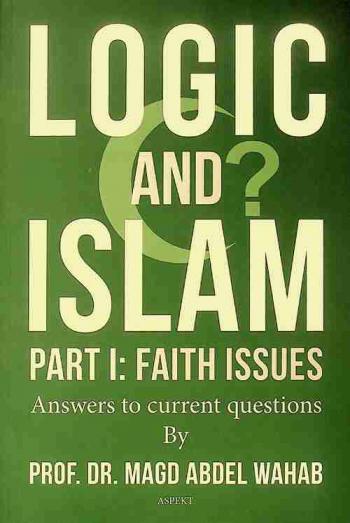
Logic and Islam : answers to current questions
Throughout history, a believer did not need logical proof to believe in Almighty God. This is because the spiritual proof was always enough to admit the existence of Almighty God and to submit to Him. Finding Almighty God is not a mathematical equation that needs to be proven. Rather, it is a spiritual feeling due to a call from inside a human being. The relationship between Almighty God and humans is spiritual rather logical.However, with the advances in science and technology, this spiritual relationship decreases. Nowadays, modern man is looking for logic and scientific answers to many questions relating to Almighty God and religions. In fact, nonbelievers or atheists are not the only ones looking for answers to these types of questions; believers also want to increase their faith and remove doubts from their hearts. The main objective of this book is to provide logical answers to questions relating to belief in Almighty God, creations and Islam as the last heavenly religion. These questions are grouped under several topics, namely: 1) Almighty God, 2) the creation, 3) the soul, 4) the hereafter, 5) the destiny and freedom in choices, 6) the holy Quran and 7) the Islam.0The main feature of this book is that the author provides logic flowcharts with each presented question relating to the different topics. Each logic flowchart has three phases: a start, a process and an end.0Prof. Dr. Magd Abdel Wahab is a full-time Professor of Applied Mechanics in the Faculty of Engineering and Architecture at Ghent University, Belgium.Beside his interest in engineering, Prof. Wahab has a strong interest in research in Islamic religion. During the last 15 years, he has served as an Associate Imam, and has delivered Friday ceremony speeches and Islamic talks in several mosques in the UK and Belgium. This book, Logic and Islam, summarises his experiences and provides logical answers to questions related to Almighty God, creations and Islam.

The unchanging gospel in a changing world: A theological framework for divine healing today
Divine healing remains a vital yet contested theme in Christian theology, particularly amid rapid technological advances and increasing secularisation. This study employs a qualitative literature review, using hermeneutical and comparative approaches, to explore divine healing from a Gospel perspective. The findings indicate that divine healing is not only a spiritual phenomenon but also a response to the existential needs of believers in contemporary society. Despite scepticism and marginalisation, it continues to shape religious identity, foster community solidarity and nurture spiritual resilience, especially in Pentecostal contexts, which emerged in the early 20th century with an emphasis on the Holy Spirit’s power, and Charismatic contexts, which later developed with a similar focus on spiritual gifts. Challenges posed by scientific rationalism and secular worldviews are addressed through responsible pastoral care, contextual theological education and integration with medical science and digital technology. The study is limited to a literature review without empirical data, thereby encouraging future interdisciplinary research that bridges faith and science to deepen understanding of divine healing today.Intradisciplinary and/or interdisciplinary implicationsThis study highlights the need to integrate theological reflection with pastoral practice to address challenges in divine healing. It calls for dialogue between theology, medical science and digital technology to promote a holistic healing approach. By adopting interdisciplinary perspectives, it deepens understanding of faith healing, especially in Pentecostal and Charismatic contexts. The study urges contextual theological education to help believers engage scepticism and secularisation critically. It also encourages empirical research and interfaith dialogue to enhance spiritual resilience and ethical healing ministry, supporting the church’s mission in a pluralistic, technological world.
Journal Article
Christian faith and science: Efforts to encounter the Christian faith and science in the work of Alister E. McGrath
This study aims to present an effort for an encounter between Christian faith and science in Alister E. McGrath’s thinking. The process of encountering both Christian faith and science is mediated by Christian natural theology. Christian natural theology is the result of rethinking conventional natural theology by McGrath. This is carried out because the meaning of conventional natural theology as an interface of Christian faith and science is not in accordance with Christian faith. The efforts to encounter Christian faith and science through conventional natural theology are something that is not possible, because conventional natural theology is denoted as pure theology centred on the rationality of scientific thought alone. In this article, we will show how Christian natural theology as a result of thinking by McGrath can be a medium for an encounter between Christian faith and science. The analysis of this article is generally based on the writings of McGrath, which are only partially reconciled with the views of several other theologies. Data collection was carried out through a literature study and described descriptively. The result of the research is a description of the encounter between Christian faith and science mediated by Christian natural theology. McGrath established Christian natural theology on observations in critical reality, Christian history and the word of God (Gn 1 and 2), allowing the human intellect to have a strong relationship with the order and beauty of nature that God created. This is the reason why the encounter between Christian faith and science based on McGrath’s concept of thought is more likely to reveal the truth in the reality of the Christian faith’s life.Intradisciplinary and/or interdisciplinary implicationsThis study recommends that efforts be made to identify faith, science and natural theology in the work of Alister E. McGrath. This article has contributed to highlighting natural theology, which is still under long discussion, especially in the context of the Christian faith and the ambiguity of nature, which is also important in various disciplines, including theology, natural science and science.
Journal Article


Fraternity as Natural Being
In a scientifically understood world, making sense of natural being is a challenge. This is particularly acute when knowledge of nature impinges on human autonomy. I present two examples: The legitimacy of opposing abortion on account of “potential life”, and the legitimacy of mandatory vaccination during a pandemic. I then explore the concept of fraternity in the writings of St. Francis at the example of the Rule of 1221 and the Canticle of Creatures. In conclusion, I show how the concept of fraternity as applied in Franciscan life allows us to reconcile the relationship between natural being and human autonomy through relationships of mutual care.
Journal Article

The God problem
The United States is one of the most highly educated societies on earth, and also one of the most religious. In The God Problem, Robert Wuthnow examines how middle class Americans juggle the seemingly paradoxical relationship between faith and reason. Based on exceptionally rich and candid interviews with approximately two hundred people from various faiths, this book dispels the most common explanations: that Americans are adept at keeping religion and intellect separate, or that they are a nation of \"joiners.\" Instead, Wuthnow argues, we do this—not by coming up with rational proofs for the existence of God—but by adopting subtle usages of language that keep us from making unreasonable claims about God. In an illuminating narrative that reveals the complex negotiations many undertake in order to be religious in the modern world, Wuthnow probes the ways of talking that occur in prayers, in discussions about God, in views of heaven, in understandings of natural catastrophes and personal tragedies, and in attempts to reconcile faith with science.
eBook
Faith and the Fear of Death
The making of a priest takes many years. A calling must be discerned, not only by the individual but by the Church also, who will test him repeatedly by observation and interview. The candidate must be trained and formed in sanctuaries and seminaries and soup kitchens. He must be examined and found — in the words of the ordinal — “to be of godly life and sound learning.” Some of us wonder how we got through; many of us wonder how other people did too. At the end of this process, the act of ordination itself takes no time at all. In the parish church of a medieval Oxford village one mild English summer’s afternoon a few months before my thirtieth birthday, the bishop, his hands like a veil upon my head, his voice grave and tender in equal measure, invokes the Holy Spirit to come down upon this servant of God for the office and work of a priest in the Church. Done. Priest made.
Journal Article

The Qur′ān and the development of rational thinking
In this study, the means utilized by the Qur′ān in actualizing the possibilities of all intellect to face the problem of blind imitation of ancestors were elaborated. Rationality as meant by the Qur′ān and embodied in its unique style is presented. Furthermore, the Qur′ānic documentation of the role of practical demonstration on the individual′s mind as well as the societies′ collective mind is pointed out. In addition, the study shows how the Qur′ān guides people to the proper use of reason within a scientific framework of mind.
Journal Article

Die einde van die wêreld: Die uitdaging van die moderne natuurwetenskappe aan die tradisionele eskatologie
The end of the world: The challenge of modern science to traditional eschatology. In biblical times the ‘Word of God’ indicated God’s creative and redemptive response to changing human predicaments and depravations. Redemptive events became traditions that were applied to new situations. Many biblical future expectations lost their relevance and plausibility already within canonical history. Modern science has rendered a literal interpretation of the most recent and radical biblical future expectations – resurrection and a ‘new heaven and earth’ – problematic. Apocalyptic deliberately employed enigmatic symbols and metaphors to indicate God’s miraculous intervention to change an evil world into a new and authentic reality. This motif can be reconceptualised as God’s vision for the comprehensive optimal well-being of humanity within the well-being of creation as a whole, which translates into God’s concern for any deficiency in well-being in any dimension of life. The emergence of the notion of resurrection to face judgement was rooted in concern about God’s justice (theodicy) rather than the longing for never-ending life. The resurrection of Jesus was deemed God’s affirmation of his messianic authority to proclaim and enact God’s redeeming love, thus its validity for all times and places – which opened up participation in the new life of Christ in fellowship with God for all people.
Journal Article