
Catalogue Search | MBRL


Are you sure you want to remove the book from the shelf?

{{itemTitle}}
19,511
result(s) for
"feminist theory"
Sort by:


Not my mother's sister : generational conflict and third-wave feminism
\"No matter how wise a mother's advice is, we listen to our peers.\" At least that's writer Naomi Wolf's take on the differences between her generation of feminists -- the third wave -- and the feminists who came before her and developed in the late '60s and '70s -- the second wave. In Not My Mother's Sister, Astrid Henry agrees with Wolf that this has been the case with American feminism, but says there are problems inherent in drawing generational lines. Henry begins by examining texts written by women in the second wave, and illustrates how that generation identified with, yet also disassociated itself from, its feminist \"foremothers.\" Younger feminists now claim the movement as their own by distancing themselves from the past. By focusing on feminism's debates about sexuality, they are able to reject the so-called victim feminism of Catherine MacKinnon and Andrea Dworkin. Rejecting the orthodoxies of the second wave, younger feminists celebrate a woman's right to pleasure. Henry asserts, however, that by ignoring diverse older voices, the new generation has oversimplified generational conflict and has underestimated the contributions of earlier feminists to women's rights. They have focused on issues relating to personal identity at the expense of collective political action. Just as writers like Wolf, Katie Roiphe, and Rene Denfeld celebrate a \"new\" feminist (hetero)sexuality posited in generational terms, queer and lesbian feminists of the third wave similarly distance themselves from those who came before. Henry shows how 1970s lesbian feminism is represented in ways that are remarkably similar to the puritanical portrait of feminism offered by straight third-wavers. She concludes by examining the central role played by feminists of color in the development of third-wave feminism. Indeed, the term \"third wave\" itself was coined by Rebecca
Walker, daughter of Alice Walker. Not My Mother's Sister is an important contribution to the exchange of ideas among feminists of all ages and persuasions.
eBook


Feminist Studies
In this book, feminist scholar Nina Lykke highlights current issues in feminist theory, epistemology and methodology. Combining introductory overviews with cutting-edge reflections, Lykke focuses on analytical approaches to gendered power differentials intersecting with other processes of social in/exclusion based on race, class, and sexuality. Lykke confronts and contrasts classical stances in feminist epistemology with poststructuralist and postconstructionist feminisms, and also brings bodily materiality into dialogue with theories of the performativity of gender and sex. This thorough and needed analysis of the state of Feminist Studies will be a welcome addition to scholars and students in Gender and Women’s Studies and Sociology.
Part I: What is Feminist Studies? 1. A Guide’s Introduction 2. A Postdisciplinary Discipline 3. Undoing Proper Research Objects Part II: To Theorize Intersectional Gender/Sex 4. Intersectional Gender/Sex: A Conflictual and Power-Laden Issue 5. Theorizing Intersectionalities: Genealogies and Blind Spots 6. Genealogies of Doing 7. Making Corporealities Matter: Intersections of Gender and Sex Revisited Part III: To Re-tool the Thinking Technologies 8. Rethinking Epistemologies 9. Methodologies, Methods and Ethics 10. Shifting Boundaries between Academic and Creative Writing Practices Part IV: To Use a Feminist Hermeneutics 11. Doing and Undoing the God-Trick: Analytical Examples
Nina Lykke is professor of Gender Studies at Linköping University, Sweden. She is also the author of Between Monsters, Goddesses and Cyborgs: Feminist Confrontations with Science, Medicine and Cyberspace (with Rosi Braidotti) (ZED, London 1996), Cosmodolphins. Feminist Cultural Studies of Technology, Animals and the Sacred (with Mette Bryld) (ZED, London 2000) and Bits of Life. Feminism at the Intersections of Media, Bioscience, and Technology (with Anneke Smelik) (Washington University Press, 2008).
eBook


Intersectionality
Intersectionalityintervenes in the field of intersectionality studies: the integrative examination of the effects of racial, gendered, and class power on people's lives. While \"intersectionality\" circulates as a buzzword, Anna Carastathis joins other critical voices to urge a more careful reading. Challenging the narratives of arrival that surround it, Carastathis argues that intersectionality is a horizon, illuminating ways of thinking that have yet to be realized; consequently, calls to \"go beyond\" intersectionality are premature. A provisional interpretation of intersectionality can disorient habits of essentialism, categorial purity, and prototypicality and overcome dynamics of segregation and subordination in political movements.Through a close reading of critical race theorist Kimberlé Williams Crenshaw's germinal texts, published more than twenty-five years ago, Carastathis urges analytic clarity, contextual rigor, and a politicized, historicized understanding of this widely traveling concept. Intersectionality's roots in social justice movements and critical intellectual projects-specifically Black feminism-must be retraced and synthesized with a decolonial analysis so its radical potential to actualize coalitions can be enacted.
eBook

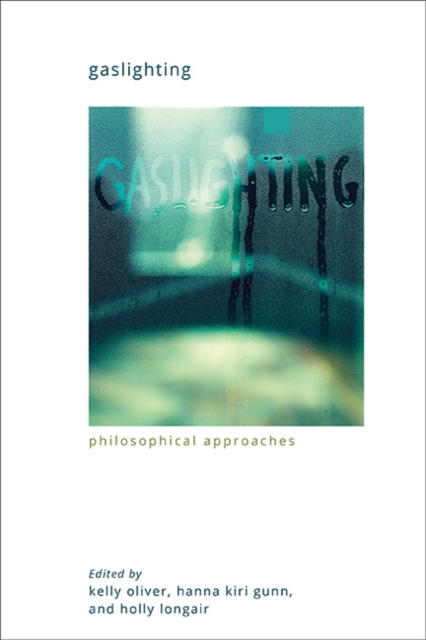
Gaslighting
A feminist introduction to emerging philosophical understandings of gaslighting.Originating in a 1938 play, the term gaslighting has become part of our everyday vocabulary. But do we truly know what it means? This collection of new and foundational essays explores concepts and experiences of gaslighting from philosophical perspectives. Contributors build on longstanding feminist analyses of the relations among knowledge, affect, and power to consider how gaslighting can work at not only individual but also structural levels to undermine its targets. In examining racial, epistemological, medical, affective, political, and other forms of gaslighting, the book helps illuminate contemporary power relations and provides urgently needed tools for further research in and beyond the field of philosophy.
eBook


Muddying the Waters
In Muddying the Waters , Richa Nagar uses stories, encounters, and anecdotes as well as methodological reflections, to grapple with the complexity of working through solidarities, responsibility, and ethics while involved in politically engaged scholarship. Experiences that range from the streets of Dar es Salaaam to farms and development offices in North India inform discussion of the labor and politics of co-authorship, translation and genre blending in research and writing that cross multiple--and often difficult--borders, Nagar links the implicit assumptions, issues, and questions involved with scholarship and political action, and explores the epistemological risks and possibilities of creative research that brings these into intimate dialogue. Daringly self-conscious, Muddying the Waters reveals a politically engaged research and writer working to become \"radically vulnerable,\" and on the ways a focus on such radical vulnerability could allow a re-imagining of collaboration that opens new avenues to collective dreaming and laboring across sociopolitical, geographical, linguistic, and institutional borders.
eBook