
Catalogue Search | MBRL


Are you sure you want to remove the book from the shelf?

{{itemTitle}}
329
result(s) for
"gendered politics"
Sort by:

American Catholic Hospitals
InAmerican Catholic Hospitals, Barbra Mann Wall chronicles changes in Catholic hospitals during the twentieth century, many of which are emblematic of trends in the American healthcare system.
Wall explores the Church's struggle to safeguard its religious values. As hospital leaders reacted to increased political, economic, and societal secularization, they extended their religious principles in the areas of universal health care and adherence to the Ethical and Religious Values in Catholic Hospitals, leading to tensions between the Church, government, and society. The book also examines the power of women--as administrators, Catholic sisters wielded significant authority--as well as the gender disparity in these institutions which came to be run, for the most part, by men. Wall also situates these critical transformations within the context of the changing Church policy during the 1960s. She undertakes unprecedented analyses of the gendered politics of post-Second Vatican Council Catholic hospitals, as well as the effect of social movements on the practice of medicine.
eBook
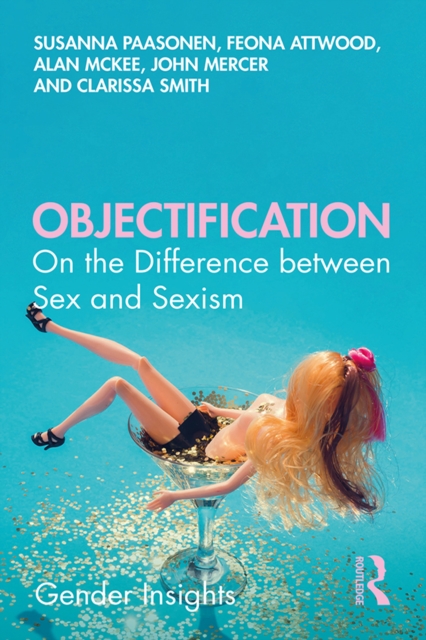
Objectification
This is a concise and accessible introduction into the concept of objectification, one of the most frequently recurring terms in both academic and media debates on the gendered politics of contemporary culture, and core to critiquing the social positions of sex and sexism.
Objectification is an issue of media representation and everyday experiences alike. Central to theories of film spectatorship, beauty fashion and sex, objectification is connected to the harassment and discrimination of women, to the sexualization of culture and the pressing presence of body norms within media. This concise guidebook traces the history of the term’s emergence and its use in a variety of contexts such as debates about sexualization and the male gaze, and its mobilization in connection with the body, selfies and pornography, as well as in feminist activism.
It will be an essential introduction for undergraduate and postgraduate students in Gender Studies, Media Studies, Sociology, Cultural Studies or Visual Arts.
eBook

A Lovely, Nasty Difficulty
Abstract Anthropologists have criticized thought experiments for the lack of context and depth that they provide. But are they context-free? In this article, I take an ethnographic approach to the development of trolley problems in the 1960s and 1970s, examining the culture of humor in which they were crafted and the gendered political contexts in which they were employed. I argue that, for female philosophers writing about abortion, macabre humor provided a way of cutting through the overblown and the sentimental. Historical and cultural contextualization of trolley problems reveals the work that stylized ethical dilemmas performed. In a highly politicized and gendered context, the “thinness” of examples of “fat” men was methodologically and rhetorically powerful.
Journal Article

Women’s political participation and performance as local government authorities under Ghana’s decentralization system
Although there is considerable research on women’s political representation, not much is known within local government and sub-national political spaces. This article, therefore, investigates the nature of women’s political representation and their performance as assemblywomen under Ghana’s district assembly system of local government and development. In doing so, we address two important questions. First, how have assemblywomen performed in the delivery of democratic representation, in terms of responsiveness and downward accountability? Second, why have women’s political representation and performance as local authorities remained relatively lower compared to men? Our findings show that assemblywomen perform better in community engagement, delivery of community-driven development projects, awareness of decentralized roles and effectiveness of project delivery. However, we found that, lack of self-confidence, low educational levels, lack of affirmative policies, the cultural context, fear of losing elections and religious beliefs regarding men as household heads explain relatively lower women’s representation and performance in local government in Ghana. We recommend public education and capacity building interventions to support transformative participation of women in local governance and development in Ghana.
Journal Article

Gendered ethnography of the parliament of Serbia
Ethnographic analysis is aimed to present the Parliament of Serbia as institutional, political, spatial and cultural ambience in which (un)written rules, rituals and regulations are designed to facilitate or inhibit bridging of the gender gap between female and male MPs. This paper explores the different microstrategies of women MPs of their initiation, accommodation, mitigation and challenging of established parliamentary gender binary hierarchical settings and in/ formal rules and norms. At all levels of the analysis, an interpretive dialogue was introduced to present the testimonies of women who served as MPs in the Serbian parliament with the aim to present the comparative genesis of their gender and political emancipation. Ethnographic analysis shows that the main focal points of the power of women MPs in parliamentary hierarchy settings are evaluated as inadequate in comparison to high level of their descriptive representation. Electoral engineering of increasing women quotas results, paradoxically, in greater exposure and vulnerability of women parliamentarians to various gender-related forms of verbal, psychological, sexual harassment and violence. The affirmative model of women?s empowerment is limited by strong gravitation field of loyalty to their political parties.
Journal Article

Revolutionary Mothers: Women in the North Korean Revolution, 1945–1950
Women today are struggling with all their passion and all their strength day and night for the creation of a new history of a democratic country. Today in the streets, men, women, the old, the young, everyone stops to listen to the women.———Nam Hyǒn-sǒ, “Women of a New Country,” January 1947In Korea from ancient times, the master of the home was thought to refer to the husband … we now realize that the master of the home must be the woman, that is, the wife or mother.———Chang Chǒng-suk, “The New Home and Housewife,” October 1947
All social revolutions in modern history, from the Russian Revolution of 1917 to the Cuban one of 1959, have attempted to address the status of women as a critical element of social change.1 North Korea was no different. With Japan's defeat in World War II, Korea was liberated from its thirty-five-year colonial rule, and as in many postcolonial nations after the war, revolution was in the air.2 When the Cold War came early to the peninsula, Korea took two divergent paths. Divided at the 38th parallel into separate occupation zones, with the United States in the south and the USSR in the north, social reforms were carried out swiftly in the north, aided and abetted by the Soviets, while in the south, the American occupiers saw most Korean political movements as too radical and suppressed them. In what follows, I focus on the formative years of early North Korean history, the five-year period between the end of Japanese colonial rule in 1945 and the start of the Korean War in 1950. I show how North Korea from the outset attempted to meld the old and the new through the figure of the revolutionary mother as a uniquely feminine revolutionary subjectivity. This sets the North Korean case apart from other historical examples of social revolutions and their handling of “the woman question.”
Journal Article
Narrative Dispossession: Tibet and the Gendered Logics of Historical Possibility
To possess something is an unpredictable combination of the following: to have, to own, to know, or to control. Land, stories, resources, equanimity, and loyalty are all examples of materially incommensurate things a person might possess. Even without material wealth, for example, one might be said to be in possession of a wicked sense of humor or a good memory or despite all else, one's own life story. Possessing one's own life story, however, is not a given. Thinking of one's life as a story, as something that can be narrated, involves social processes and conventions operative well beyond individual processes of reflection or experience. Narrating one's life, then, is to situate oneself and to be situated in dialogue with society.1 As such, whether one's narrative is consensual with or contradictory to social norms, such narration signals possession of shared structures of possibility, including normative understandings of history, memory, knowledge, and truth. To narrate one's life is not just an issue of how, but also a matter of if.
Journal Article
Women's Suffrage in Thailand: A Southeast Asian Historiographical Challenge
Although much of the history of women's suffrage has focused on the American and British struggles of the early twentieth century, a newer generation of interdisciplinary scholars is exploring its global trajectory. Fundamental to these cross-cultural comparisons is the establishment of an international timeline of women's suffrage; its order at once shapes and is shaped by its historiography. According to the currently dominant chronology, “Female suffrage began with the 1893 legislation in New Zealand” (Ramirez, Soysal, and Shanahan 1997: 738; see also Grimshaw 1987 [1972]: xiv). In this timeline, “Australia was next to act, in 1902” (ibid.). Despite the geographical location of New Zealand and Australia in greater Southeast Asia, the narrative that accompanies this timeline portrays “first world” women as leading the struggle for suffrage and “third world” women as following their example.1 As Ramirez, Soysal, and Shanahan write, “A smaller early wave of suffrage extensions between 1900 and 1930 occurred mostly in European states. A second, more dramatic wave occurred after 1930” (ibid.). Similarly, Patricia Grimshaw writes, “It was principally in the English-speaking world, in the United States, in Britain and its colonial dependencies, and in the Scandinavian countries that sustained activity for women's political enfranchisement occurred. Other countries eventually followed suit” (1987: xiv).
Journal Article

The Politics of Food and Women's Neighborhood Activism in First World War Britain
In 1917 and 1918 violent cost-of-living protests, largely peopled by poor urban housewives, erupted across the world. Although Britain did not experience such dramatic events, a women's politics of food can be found in local neighborhoods that touched the lives of unorganized housewives on the wartime home front. The new local committees created to defend consumer interests in the face of food shortages proved to be permeable to some women, particularly those who already had some experience with women's politics. However, limits were placed on this participation and on the self-organization of housewives by the ambiguous understanding of who constituted a consumer and thus who could speak for the ordinary housewife as she battled the food queues. By exploring the women's politics of food at a local level, it is argued that working-class women's participation in Food Vigilance Committees or in local boycotts may have had longer lasting effects in Britain than the more dramatic cost-of-living actions elsewhere.
Journal Article
