
Catalogue Search | MBRL


Are you sure you want to remove the book from the shelf?

{{itemTitle}}
340,428
result(s) for
"global changes"
Sort by:

Climate change
Describes the factors involved in climate change, that the world is warming up, that farming and deforestation play a role in the process, and that it could change ecosystems.
Book

Past and future global transformation of terrestrial ecosystems under climate change
Impacts of global climate change on terrestrial ecosystems are imperfectly constrained by ecosystem models and direct observations. Pervasive ecosystem transformations occurred in response to warming and associated climatic changes during the last glacial-to-interglacial transition, which was comparable in magnitude to warming projected for the next century under high-emission scenarios. We reviewed 594 published paleoecological records to examine compositional and structural changes in terrestrial vegetation since the last glacial period and to project the magnitudes of ecosystem transformations under alternative future emission scenarios. Our results indicate that terrestrial ecosystems are highly sensitive to temperature change and suggest that, without major reductions in greenhouse gas emissions to the atmosphere, terrestrial ecosystems worldwide are at risk of major transformation, with accompanying disruption of ecosystem services and impacts on biodiversity.
Journal Article


Governing the Climate
Despite a growing interest in critical social and political studies of climate change, the field remains fragmented and diffuse. This is the first volume to collect this body of scholarship, providing a key reference point in the growing debate about climate change across the social sciences. The book provides a new set of insights into the ways in which climate change is creating new forms of social order, and the ways in which they are structured through the workings of rationality, power and politics. Governing the Climate is invaluable for three main audiences: social science researchers and advanced students in the field of climate change; the wider research community interested in global environmental politics and global environmental governance; and policy makers and researchers concerned more broadly with environmental politics at international, national and local levels.
eBook

A warmer world : from polar bears to butterflies, how climate change affects wildllife
Over the past several decades, our world has been warming at a faster rate than ever before. Winters are shorter. Sea levels have risen. Territories of predators and prey have shifted. To survive in this new environment, animals everywhere have had to adapt, or face extinction. Complemented by Jamie Hogan's rich collage illustrations, A Warmer World offers young readers a clear-eyed look at the effects of climate change on animals around the world-- Source other than Library of Congress.
Book

Global change effects on plant communities are magnified by time and the number of global change factors imposed
Global change drivers (GCDs) are expected to alter community structure and consequently, the services that ecosystems provide. Yet, few experimental investigations have examined effects of GCDs on plant community structure across multiple ecosystem types, and those that do exist present conflicting patterns. In an unprecedented global synthesis of over 100 experiments that manipulated factors linked to GCDs, we show that herbaceous plant community responses depend on experimental manipulation length and number of factors manipulated. We found that plant communities are fairly resistant to experimentally manipulated GCDs in the short term (10 y). In contrast, long-term (<10 y) experiments show increasing community divergence of treatments from control conditions. Surprisingly, these community responses occurred with similar frequency across the GCD types manipulated in our database. However, community responses were more common when 3 or more GCDs were simultaneously manipulated, suggesting the emergence of additive or synergistic effects of multiple drivers, particularly over long time periods. In half of the cases, GCD manipulations caused a difference in community composition without a corresponding species richness difference, indicating that species reordering or replacement is an important mechanism of community responses to GCDs and should be given greater consideration when examining consequences of GCDs for the biodiversity–ecosystem function relationship. Human activities are currently driving unparalleled global changes worldwide. Our analyses provide the most comprehensive evidence to date that these human activities may have widespread impacts on plant community composition globally, which will increase in frequency over time and be greater in areas where communities face multiple GCDs simultaneously.
Journal Article


Mourning in the Anthropocene
Enormous ecological losses and profound planetary transformations mean that ours is a time to grieve beyond the human. Yet, Joshua Trey Barnett argues in this eloquent and urgent book, our capacity to grieve for more-than-human others is neither natural nor inevitable. Weaving together personal narratives, theoretical meditations, and insightful readings of cultural artifacts, he suggests that ecological grief is best understood as a rhetorical achievement. As a collection of worldmaking practices, rhetoric makes things matter, bestows value, directs attention, generates knowledge, and foments feelings. By dwelling on three rhetorical practices—naming, archiving, and making visible—Barnett shows how they prepare us to grieve past, present, and future ecological losses. Simultaneously diagnostic and prescriptive, this book reveals rhetorical practices that set our ecological grief into motion and illuminates pathways to more connected, caring earthly coexistence.
eBook
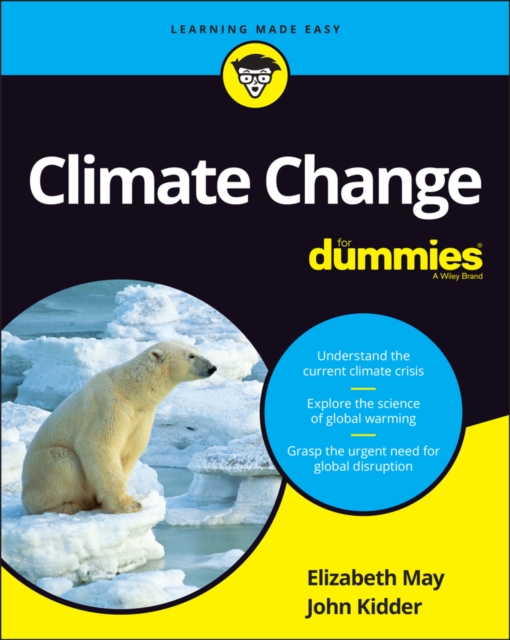
Climate change for dummies
Get clear about why climate change is so complicated and discover how you can help reverse it
More and more frequent extreme weather events occur each year, and planet Earth is in danger of developing more climates where life — whether animal, vegetable, or human — is unsustainable. Climate Change For Dummies explains how rising temperatures, shrinking lakes, rising oceans, and shifting weather patterns affect your life on a daily basis. And of course the book goes a step further and offers suggestions about how you can take steps to limit your impact on the environment and help to reverse climate change.
This straightforward guide demystifies the impact of climate's No. 1 enemy — carbon dioxide — and breaks down the many sources of this damaging but inescapable gas. From there, the book reveals how rising CO 2 levels affect the weather, water levels, plant and animal species around the world, the food you eat, and your health. But the situation isn't hopeless! Climate Change For Dummies outlines actions governments, industries, and you can take to fight global warming and turn the tide to live in a cooler world. Discover details about
* Short- and long-term effects of climate change
* How some actions contribute to climate change and others reduce it
* The many options for renewable energy and the pros and cons of nuclear energy
* Actions nongovernmental organizations (NGOs) are taking to draw attention to the climate crisis
* The debate around whether climate change even needs to be addressed
Climate change won't be easy to overcome, but when you're armed with the facts, you can do your best to make a difference. Let Climate Change For Dummies point you in the right direction.
eBook