
Catalogue Search | MBRL


Are you sure you want to remove the book from the shelf?

{{itemTitle}}
7
result(s) for
"gloria arellanes"
Sort by:

The Chicano generation : testimonios of the movement
\"This is the story of the historic Chicano Movement in Los Angeles during the late 1960s and 1970s. The Chicano Movement was the largest civil rights and empowerment movement in the history of Mexican Americans in the United States. The movement was led by a new generation of political activists calling themselves Chicanos, a countercultural barrio term. This book is the story of three key activists, Raul Ruiz, Gloria Arellanes, and Rosalio Muنnoz, who through oral history related their experiences as movement activist to historian Mario T. Garcâia. As first-person autobiographical narratives, these stories put a human face to this profound social movement and provide a life-story perspective as to why these individuals became activists\"--Provided by publisher.
Book
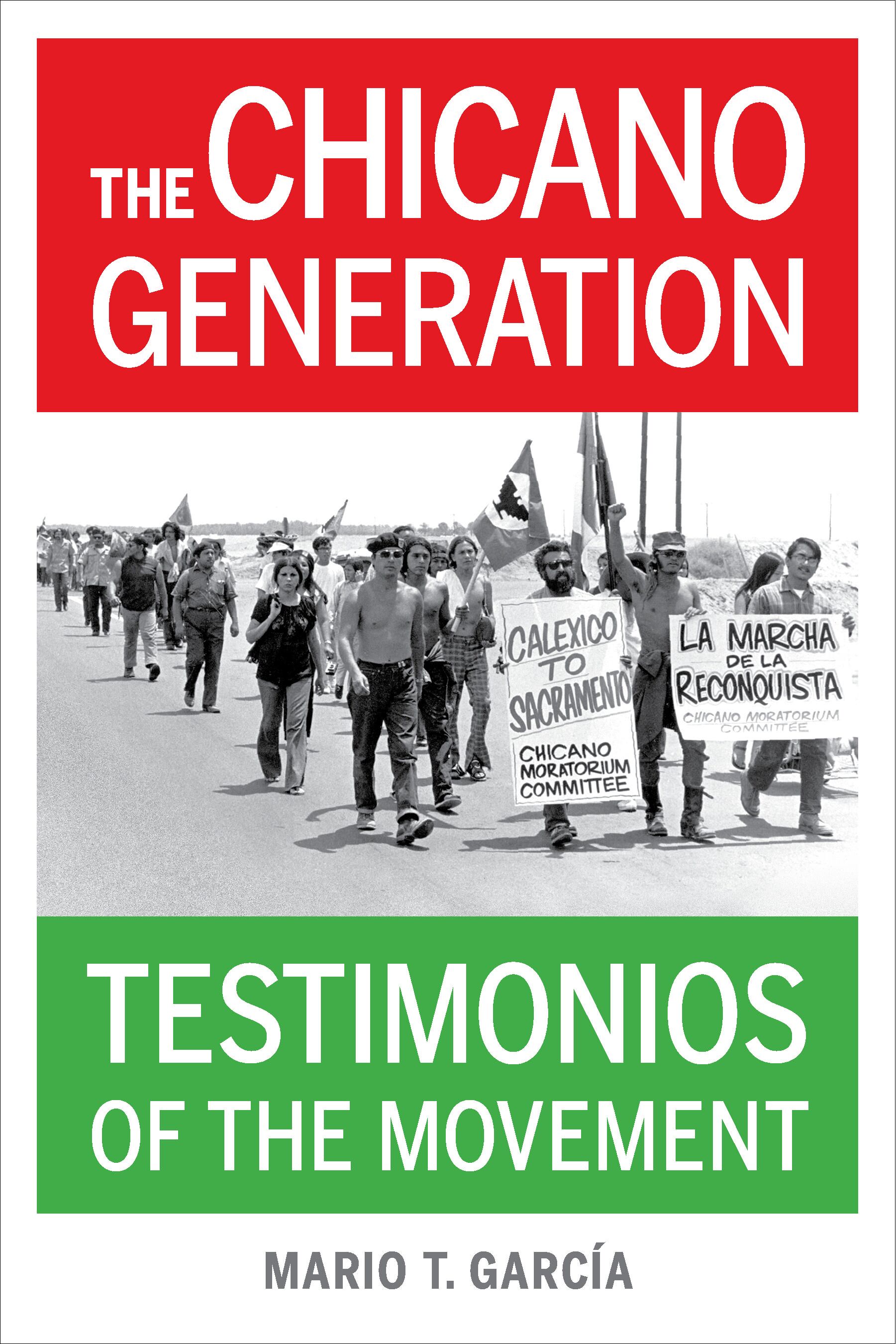
The Chicano generation
In The Chicano Generation, veteran Chicano civil rights scholar Mario T. García provides a rare look inside the struggles of the 1960s and 1970s as they unfolded in Los Angeles. Based on in-depth interviews conducted with three key activists, this book illuminates the lives of Raul Ruiz, Gloria Arellanes, and Rosalio Muñoz—their family histories and widely divergent backgrounds; the events surrounding their growing consciousness as Chicanos; the sexism encountered by Arellanes; and the aftermath of their political histories. In his substantial introduction, García situates the Chicano movement in Los Angeles and contextualizes activism within the largest civil rights and empowerment struggle by Mexican Americans in US history—a struggle that featured César Chávez and the farm workers, the student movement highlighted by the 1968 LA school blowouts, the Chicano antiwar movement, the organization of La Raza Unida Party, the Chicana feminist movement, the organizing of undocumented workers, and the Chicano Renaissance. Weaving this revolution against a backdrop of historic Mexican American activism from the 1930s to the 1960s and the contemporary black power and black civil rights movements, García gives readers the best representations of the Chicano generation in Los Angeles.
eBook

El Monte woman's historical collection brings to life Chicano rights movement
\"To us, women's lib was all about anglo women burning bras. That didn't relate to us Chicanas struggling day to day,\" she said. \"It took me 40 years to realize it was Chicana feminism.\" [Gloria Arellanes]' participation in the movement culminated in the Chicano Moratorium, an anti-Vietnam war and civil rights protest that drew 30,000 people to East L.A. on Aug. 29, 1970. The protest ended violently with numerous people injured and three people killed. Arellanes, who was on the rally's stage when the violence erupted, was tear-gassed and eventually fled in a bus. Former Chicano civil rights movement activist Gloria Arellanes, an El Monte resident, stands before a case of materials she donated to a new archive at Cal state LA that chronicles the movement's history.; (CLICK TO ENLARGE) A flyer from 1970 calls for women who felt marginalized by the Brown Berets and other male-dominated groups that were part of the Chicano civil rights movement to join a new women's group, Las Adelitas de Aztlan.
Newspaper Article

The Chicano Generation: Testimonios of the Movement
The Chicano Generation: Testimonios of the Movement, by Mario T. Garcia, is reviewed.
Book Review

The Chicano Generation
\"I hope the oral histories - or 'testimonios' - of these three activists will inspire and educate a younger generation today to pick up the challenge of improving conditions and opportunities for Chicanos and Latinos - both men and women - and other Americans who wish to expand democracy,\" said [Mario T. Garc]ía. \"The struggle continues.\" \"[Raul Ruiz] represents a type of Renaissance activist in that he was involved in many of the community struggles of that era,\" said García, a professor of Chicana and Chicano studies and of history. Among those struggles were the 1968 blowouts, or walkouts, in the East Los Angeles schools; the Chicano anti-war movement; political campaigns for La Raza Unida Party; and Ruiz's role as publisher and editor of La Raza magazine, which García described as the most influential publication of the movement.
Book Review

Angustioso amanecer
La madrugada del sabado no fue la excepcion, [Gloria Arellano] velo armas esperando impaciente que sonara el timbre del telefono. El corazon le dio un vuelco cuando a las 05:00 horas sono, pero no era su esposo, sino la madre de Gloria, quien preguntaba si habia noticias.
Newspaper Article
Las caras de la reforma laboral
\"Los jovenes estan mas preocupados porque los politicos piensen verdaderamente en ellos. Por ejemplo; hay una poco mas de condiciones favorables en esta ley para que se creen empleos, pero no hay garantia de mejor remuneracion\", afirma Raymundo Tenorio Aguilar Cargo, director de las carreras de Economia de la Escuela de Negocios del Tecnologico de Monterrey, campus Santa Fe. ?Como te impacta? Respecto a la modalidad de pago de salario por unidad de tiempo, conocida como pago por horas, la ley senala que en ningun momento esa retribucion debe ser inferior a lo que corresponda por una jornada. Quien trabaje por horas tendria que recibir los 62.33 pesos del salario minimo (en el Distrito Federal), asi como prestaciones establecidas en la ley, como seguridad social. Raymundo Tenorio pone el caso de la banca, donde la mayoria de sus trabajadores estan contratados por outsourcing: \"No se podra seguir contratando cajeros en esa modalidad porque se indica que los empleados no podran desempenar la actividad sustantiva que tenga definida el contratante. En cambio, si puedes contratar a quien haga labores de limpieza\".
Newspaper Article