
Catalogue Search | MBRL


Are you sure you want to remove the book from the shelf?

{{itemTitle}}
154
result(s) for
"gregory of nyssa"
Sort by:

Basil of Caesarea, Gregory of Nyssa, and the transformation of divine simplicity
Divine simplicity is the idea that, as the ultimate principle of the universe, God must be a non‐composite unity not made up of parts or diverse attributes. The idea was appropriated by early Christian theologians from non‐Christian philosophy and played a pivotal role in the development of Christian thought. Andrew Radde‐Gallwitz charts the progress of the idea of divine simplicity from the second through the fourth centuries, with particular attention to Basil of Caesarea and Gregory of Nyssa, two of the most subtle writers on this topic, both instrumental in the construction of the Trinitarian doctrine proclaimed as orthodox at the Council of Constantinople in 381. He demonstrates that divine simplicity was not a philosophical appendage awkwardly attached to the early Christian doctrine of God, but a notion that enabled Christians to articulate the consistency of God as portrayed in their scriptures. Basil and Gregory offered a unique construal of simplicity in responding to their principal doctrinal opponent, Eunomius of Cyzicus. Challenging accepted interpretations of Cappadocian brothers and the standard account of divine simplicity in recent philosophical literature, Radde‐Gallwitz argues that Basil and Gregory's achievement in transforming ideas inherited from the non‐Christian philosophy of their time has an ongoing relevance for Christian theological epistemology today.
eBook

Genealogy of Marion's Philosophy of Religion
Tamsin Jones believes that locating Jean-Luc Marion solely within theological or phenomenological discourse undermines the coherence of his intellectual and philosophical enterprise. Through a comparative examination of Marion's interpretation and use of Dionysius the Areopagite and Gregory of Nyssa, Jones evaluates the interplay of the manifestation and hiddenness of phenomena. By placing Marion against the backdrop of these Greek fathers, Jones sharpens the tension between Marion's rigorous method and its intended purpose: a safeguard against idolatry. At once situated at the crossroads of the debate over the turn to religion in French phenomenology and an inquiry into the retrieval of early Christian writings within this discourse, A Genealogy of Marion's Philosophy of Religion opens up a new view of the phenomenology of religious experience.
eBook

Classical Echoes in Gregory of Nyssa’s Εἰς Πουλχερίαν: Literary Parallels and Rhetorical Strategies
This paper aims to analyze the reception and rephrasing of illustrious Classical literary quotes and five references in Gregory of Nyssa’s παραμυθητικὸς λόγος for the Princess Pulcheria (Pulch. 461.3–472.18). Composed specifically for the firstborn daughter of the Roman Emperor Theodosius the Great, this speech represents a significant case study, as it offers the opportunity to investigate how the Cappadocian bishop, in the rhetorical construction of this oratio consolatoria, incorporated nine passages from Classical literature to enhance both his theological content and political message. Since this is the first study of this kind on Gregory’s Εἰς Πουλχερίαν, it will go through a philological analysis and a careful examination of intertextual references, casting light upon literary allusions and rhetorical strategies within the text, which reveal Gregory’s familiarity with Classical authors, both Latin (e.g., Catullus, Ovid, Seneca) and Greek (e.g., Herodotus, Thucydides).
Journal Article
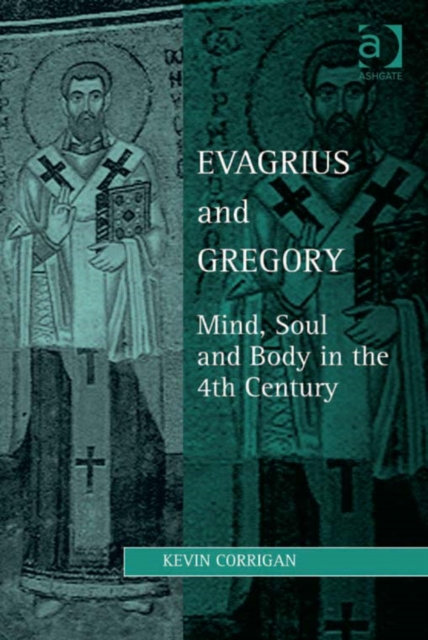
Evagrius and Gregory
Evagrius of Pontus and Gregory of Nyssa have either been overlooked by philosophers and theologians in modern times, or overshadowed by their prominent friend and brother (respectively), Gregory Nazianzus and Basil the Great. Yet they are major figures in the development of Christian thought in late antiquity and their works express a unique combination of desert and urban spiritualities in the lived and somewhat turbulent experience of an entire age. They also provide a significant link between the great ancient thinkers of the past - Plato, Aristotle, the Stoics, Clement and others - and the birth and transmission of the early Medieval period - associated with Boethius, Cassian and Augustine. This book makes accessible, to a wide audience, the thought of Evagrius and Gregory on the mind, soul and body, in the context of ancient philosophy/theology and the Cappadocians generally. Corrigan argues that in these two figures we witness the birth of new forms of thought and science. Evagrius and Gregory are no mere receivers of a monolithic pagan and Christian tradition, but innovative, critical interpreters of the range and limits of cognitive psychology, the soul-body relation, reflexive self-knowledge, personal and human identity and the soul's practical relation to goodness in the context of human experience and divine self-disclosure. This book provides a critical evaluation of their thought on these major issues and argues that in Evagrius and Gregory we see the important integration of many different concerns that later Christian thought was not always able to balance including: mysticism, asceticism, cognitive science, philosophy, and theology.
eBook
Gregory of Nyssa’s Treatment of Ancient Beliefs in his Homilies
In his many homilies, Gregory of Nyssa contrasts Christian belief to earlier forms of belief that were still very present in the Roman empire during the fourth century, namely the classical polytheistic faith and Judaism, with the explicit intention of showing its superiority over them. Even though Gregory is clearly against any belief that is not Christian orthodoxy, he presents these other beliefs from two different perspectives: at times, he presents them as the enemies of Christianity, showing clearly how they seek to harm the true faith; at other times, he also seeks to show how, in a way, they are of benefit to Christianity because their very presence and the behaviour of their followers help to show how much the Christian way of life outshines any other. This discussion on other faiths in relation to Christian belief is present in many contexts; however, attacks on paganism are more evident in the sermons in honour of martyrs, while invectives addressed to Jews are present mainly in his sermons on biblical books. In this paper, an attempt will be made to present in detail what Gregory has to say about these other faiths and their relation to Christianity (desired and factual), concluding with how his attitude towards other faiths can be classified and described.
Journal Article
Responding to a Crisis of Hope: Gregory of Nyssa in Dialogue with Contemporary Psychology
This paper explores the potential of patristic theology to offer therapeutic resources for evangelical Christians who experience a crisis of hope: affirming hope doctrinally while struggling to feel hopeful in daily life. Drawing on recent psychological research, we use a tripartite model of hope—cognitive, agentic, and affective—to describe how hopeful experience can be sustained or undermined. We suggest that some theological frameworks, shaped by individualistic and goal-oriented assumptions, can unintentionally constrict believers’ capacity to experience hope. In dialogue with this psychological model, we read Gregory of Nyssa as a resource for each dimension of hope: his account of epektasis reframes the content of hope; his expansive understanding of divine agency widens the horizon of hope; and his use of imagery supports the affective experience of hope. The paper illustrates how patristic ressourcement can enrich theological imagination and can play a role in renewing believers’ capacity to hope.
Journal Article
Teaching Moral Ethics through Sermons: A Case Study on Gregory of Nyssa
This article studies six sermons related to proper social behavior from a Christian perspective by fourth-century theologian Gregory of Nyssa. A brief comment on the dating and the context of the sermons is given before the different themes discussed in the different liturgical seasons are analyzed, and then the content of each of these sermons is explored in some depth. Following this, an analysis of the persuasive and instructive styles in these sermons is made, underlining the different ways the bishop exhorts his people according to the matters at hand. When discussing issues that set a bad example, such as the practice of usury and the rejection of correction, the language used is very harsh; in other cases, the tone is softer, such as when it comes to deciding whether one should postpone his baptism or not or how one should behave vis-à-vis the more needy in society; when dealing with sensitive issues like fornication, given the natural human weakness in this aspect, the language is much more pastoral. Finally, a comment on the narratives used concludes the study.
Journal Article

Exegetical Puzzles and the Mystical Theologies of Gregory of Nyssa and Dionysius the Areopagite
Abstract
Gregory of Nyssa and Dionysius the Areopagite both contemplate the Exodus narrative of Moses' experiences on Sinai. That narrative is complex, with Moses ascending and descending the mountain several times, sometimes in company, sometimes alone. Gregory follows the biblical twists and turns in Life of Moses; the relevant paragraph in Dionysius' Mystical Theology tells of just one ascent. This article re-examines their dependence on the details of the biblical text, arguing that its exegetical puzzles proved fertile ground for their apophatic insights. Both seize on Exodus 20:21 as symbolising the utter incomprehensibility of God. But they resolve the enigmas of Exodus 33-34 differently. Gregory uses Exodus 33:18-23 as a springboard to his articulation of a never-ending journey into the infinite divine, while Exodus 34:29-35 provides the biblical impetus behind Dionysius' concept of \"union.\"
Journal Article
Trinity and Man
Trinity and Man contributes to the actual discussion on the interpretation of Gregory of Nyssa's thought and particularly on the Ad Ablabium: it constitutes the first monograph devoted entirely to this tract, analyzed here from the theological point of view.
eBook
