
Catalogue Search | MBRL


Are you sure you want to remove the book from the shelf?

{{itemTitle}}
2,965
result(s) for
"grief counseling"
Sort by:

Working with bereavement : a practical guide
\"A practical guide for those who work with the bereaved in a variety of settings, from nurses and social workers to volunteers. Covering ethics, cultural issues and support networks, an essential text for those seeking to build understanding and skills in order to offer better support to the dying and the bereaved\"--Provided by publisher.
Book

Development of a Scale of Nurses’ Competency in Anticipatory Grief Counseling for Caregivers of Patients with Terminal Cancer
Anticipatory grief leads to a highly stressful and conflicting experience among caregivers of patients with terminal cancer. Nurses lack the competency to assess and manage the caregivers’ psychological problems, which in turn affects the caregivers’ quality of life. A scale assessing the anticipatory grief counseling competency among nurses is unavailable. In this study, an Anticipatory Grief Counseling Competency Scale (AGCCS) was developed for nurses. The Scale (AGCCS) was translated into Chinese and then revised. Psychometric testing of the scale was conducted on 252 nurses who participated in the care of patients with terminal cancer at a regional teaching hospital in Southern Taiwan. The data were analyzed using descriptive statistics, reliability, and Pearson’s correlation, and principal component analysis and analysis of variance were performed. Item- and scale-content validity indexes were 0.99 and 0.93, respectively. The Cronbach α of internal consistency was 0.981. The final 53-item AGCCS had five factors, which accounted for 70.81% of the total variance. The Pearson correlation coefficients of these factors ranged between 0.406 and 0.880 (p < 0.001). The AGCCS can be used to evaluate the aforementioned competency for improving caregivers’ quality of care. It can also facilitate in-service education planning and evaluation.
Journal Article


Superhero Grief
Superhero Grief uses modern superhero narratives to teach the principles of grief theories and concepts and provide practical ideas for promoting healing.
Chapters offer clinical strategies, approaches, and interventions, including strategies based in expressive arts and complementary therapies. Leading researchers, clinicians, and professionals address major topics in death, dying, and bereavement, using superhero narratives to explore loss in the context of bereavement and to promote a contextual view of issues and relationship types that can improve coping skills.
This volume provides support and psychoeducation to students, clinicians, educators, researchers, and the bereaved while contributing significantly to the literature on the intersection of death, grief, and trauma.
eBook


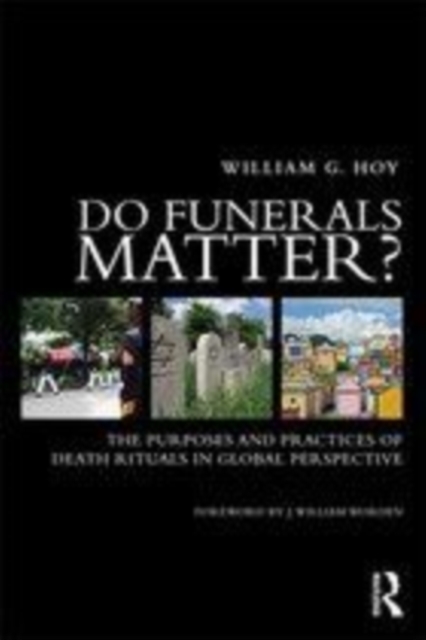
Do Funerals Matter?
Do Funerals Matter? is a creative interweaving of historical, sociocultural, and research-based perspectives on death rituals, drawing from myriad sources to create a picture of what death rituals have been; and where, especially in the Western world, they are going. Death educators, researchers, counselors, clergy, funeral-service professionals, and others will appreciate the book's theory- and research-based approach to the ways in which different cultural groups memorialize their dead. They will also find clear clinical and practical applications in the author's exploration of the five ritual anchors of death-related ceremonial practice and help for professionals counseling the bereaved surrounding funerals. Based on nearly three decades of research and teaching on funeral rites, this volume promises to fill an important gap in the cross-cultural literature on bereavement, while answering an important question for our generation: Do funerals matter?
eBook


From Loss to Healing: Navigating Perinatal Grief with Enhanced Psychological Care
IntroductionSeveral factors can influence the journey of perinatal grief in mothers, including the quality of care during this experience. The objective of our study was to investigate the factors influencing the perception of grieving women during the perinatal period and identify the role of medical and paramedical healthcare professionals in psychological support.ObjectivesTo determine the factors influencing the perception of fetal loss in grieving mothers.MethodsThis was a descriptive, longitudinal, retrospective study conducted between july 2021 and march 2022 at the Fetal Pathology Department of the Center for Maternity and Neonatology in Tunis, Tunisia. The study included women who experienced perinatal loss and underwent fetal pathology examination.The study was conducted in two stages: Initial consultation at the Fetal Pathology Department, five weeks after the date of expulsion, for perinatal grief counseling. Follow-up interview one year after the date of expulsion: The participants were contacted via telephone for an average duration of twenty minutes .The assessment of perinatal grief during both interviews was conducted using the shortened version of the Perinatal Grief Scale (PGS)ResultsThe mean age of the patients was 31.41 years (± 5.15). The average gravidity was 2.47 (± 1.43). More than half of the patients had no living children (n=41). The majority of patients had no notable pathological history. Six patients had been followed in psychiatry, and five had a history of subfertility. The majority of patients (n=61) reported having good marital relationships.Among the participants, 20% (n=14) had a high Perinatal Grief Scale (PGS) score (PGS >= 91) at five weeks post-loss and were subsequently referred for psychiatric consultation.At one year, all participants had a PGS score > 91, demonstrating the effectiveness of psychiatric management. Multivariate analysis identified four independent factors associated with a high PGS score at five weeks: absence of living children (OR=0.59; 95% CI [0.36-0.98]; p=0.04), quality of marital relationship (OR=1.2; 95% CI [1.1-3.9]; p=0.02), family support (OR=2.52; 95% CI [1.55-4.12]; p<0.001), and quality of loss disclosure (OR=2.52; 95% CI [1.32-3.77]; p=0.003).ConclusionsTo identify patients at high risk of developing complicated grief and improve the quality of psychological care, it is necessary to implement appropriate protocols, provide training to healthcare personnel, and establish well-equipped healthcare facilities.Disclosure of InterestNone Declared
Journal Article