
Catalogue Search | MBRL


Are you sure you want to remove the book from the shelf?

{{itemTitle}}
35,613
result(s) for
"gun control"
Sort by:

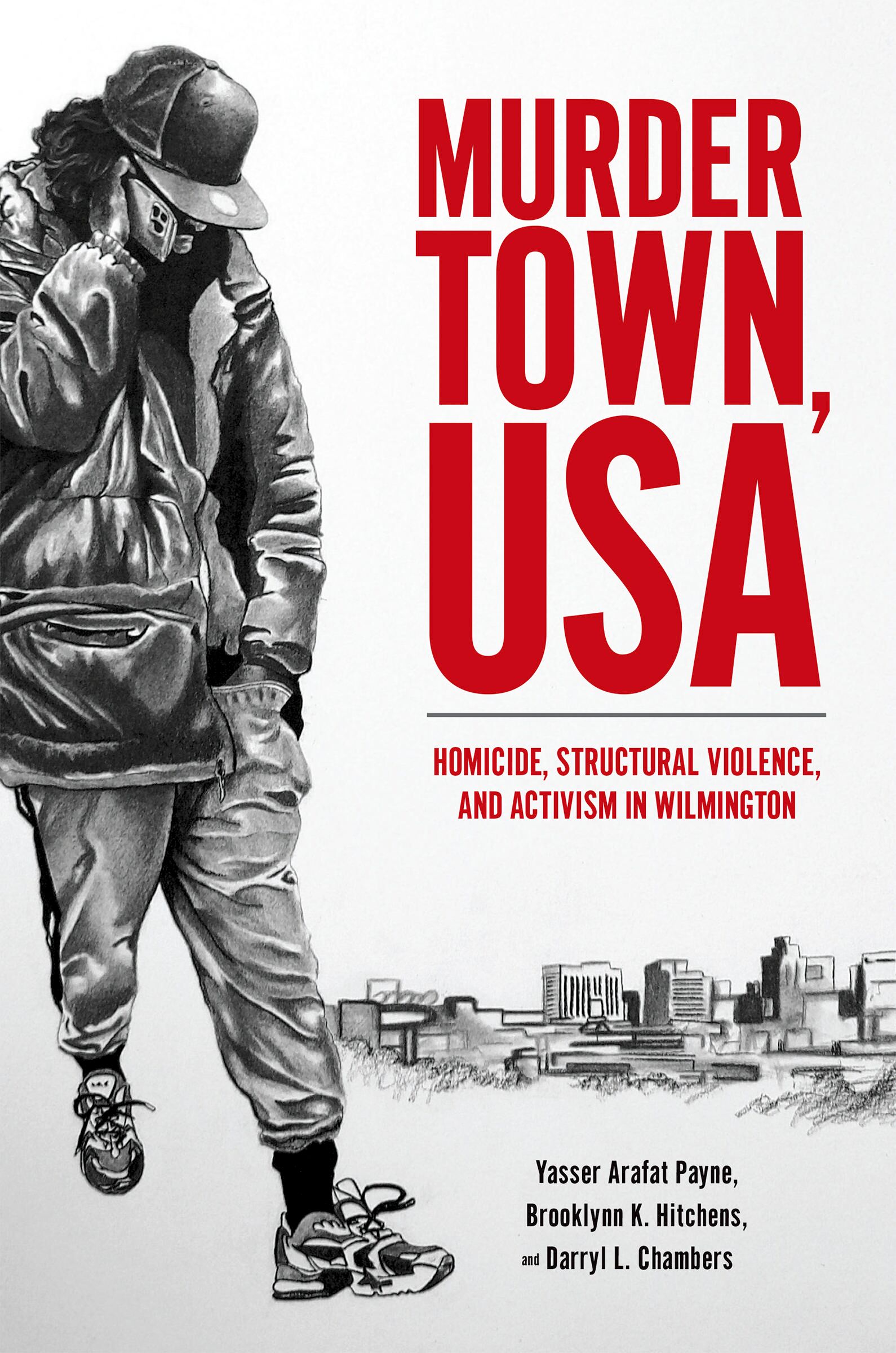
Murder Town, USA
Far too many poor Black communities struggle with gun violence and homicide. The result has been the unnatural contortion of Black families and the inter-generational perpetuation of social chaos and untimely death. Young people are repeatedly ripped away from life by violence, while many men are locked away in prisons. In neighborhoods like those of Wilmington, Delaware, residents routinely face the pressures of violence, death, and incarceration. Murder Town, USA is thus a timely ethnography with an innovative structure: the authors helped organize fifteen residents formerly involved with the streets and/or the criminal justice system to document the relationship between structural opportunity and experiences with violence in Wilmington's Eastside and Southbridge neighborhoods. Earlier scholars offered rich cultural analysis of violence in low-income Black communities, and yet this literature has mostly conceptualized violence through frameworks of personal responsibility or individual accountability. And even if acknowledging the pressure of structural inequality, most earlier researchers describe violence as the ultimate result of some moral failing, a propensity for crime, and the notion of helplessness. Instead, in Murder Town USA, Payne, Hitchens, and Chamber, along with their collaborative team of street ethnographers, instead offer a radical re-conceptualization of violence in low-income Black communities by describing the penchant for violence and involvement in crime overall to be a logical, \"resilient\" response to the perverse context of structural inequality.
eBook


Controlling Gun Violence: Assessing the Impact of Australia’s Gun Buyback Program Using a Synthetic Control Group Experiment
Gun Buyback programs have been implemented in various forms in countries such as the UK, USA, Brazil, Australia, and Argentina. Whether or not these programs are an effective approach for reducing national violent crime and homicides, however, remains unclear. Much of the uncertainty is due to the different ways in which Gun Buyback programs have been implemented. The Australian Gun Buyback program is distinguished from Gun Buyback programs in other countries by its abrupt implementation, its narrow focus on a particular class of firearms, and its broad application across the entire population. We assess the impact of Australia’s 1996 Gun Buyback program on national homicide rates using a synthetic control group quasi-experimental design, comparing the results to suicide and motor vehicle fatality trends to test for plausible alternative hypotheses. Results suggest that the Gun Buyback program significantly reduced Australia’s homicide rate in the decade following the intervention (1997–2007).
Journal Article

A right to bear arms? : the contested role of history in contemporary debates on the Second Amendment
\"The history of firearm use and possession is a topic of considerable contemporary debate. Yet, what do we actually know about firearms in the Anglo-American tradition? How is the history of firearms taught and remembered? In recent years historians and legal scholars have examined different threads of the densely interwoven relationships between firearms and American culture and society. This history stretches back to 14th-century England and includes locations as diverse as Puritan Massachusetts and 19th-century Dodge City. Rather than assume a static, unchanging relationship to firearms, historians and legal scholars have shown that this history has been closely related to the broader processes of social change that transformed American society from an early modern pre-industrial culture governed by a powerful monarch to a multi-cultural industrial democracy. The book addresses aspects of the current state of historical scholarship on firearms; offers a rare, bipartisan view of the significant breadth of the current state of historical scholarship on firearms history; and includes views of legal practitioners with divergent interpretations of the current meaning of the Second Amendment.\"--Provided by publisher.
Book

From a Taller Tower
We, as a nation, have become desensitized to the shock and pain
in the wake of mass shootings. In the bottomless silence between
gunshots, as political stalemate ensures inaction, the killing
continues; the dying continues. From a Taller Tower
attends to the silence that has left us empty in the aftermath of
these atrocities. Veteran journalist Seamus McGraw chronicles the
rise of the mass shooter to dismantle the myths we have constructed
around the murderers and ourselves.
In 1966, America's first mass shooter, from atop the University
of Texas tower, unleashed a new reality: the fear that any of us
may be targeted by a killer, and the complicity we bear in granting
these murderers the fame or infamy they crave. Addressing
individual cases in the epidemic that began in Austin, From a
Taller Tower bluntly confronts our obsession with the
shooters-and explores the isolation, narcissism, and sense of
victimhood that fan their obsessions. Drawing on the experiences of
survivors and first responders as well as the knowledge of mental
health experts, McGraw challenges the notion of the \"good guy with
a gun,\" the idolization of guns (including his own), and the
reliability of traumatized memory. Yet in this terrible history,
McGraw reminds us of the humanity that can stop the killing and the
dying.
eBook

One nation under guns : how gun culture distorts our history and threatens our democracy
\"This takedown of American gun culture argues that the nation's fathers did not intend the Second Amendment to guarantee an individual right to bear arms--and that this intentional distortion of the record is an urgent threat to democracy. Hundreds of lives are lost to firearms every day in America. The cost is more than the numbers--it is also the fear, the anxiety, the dread of public spaces that an armed society has created under the tortured rubric of freedom. But the norms of today are not the norms of American history or the values of its Founders. They are the product of a gun culture that has imposed its vision on a sleeping nation. Historian Dominic Erdozain argues that we have wrongly ceded the big-picture argument on guns--as we parse legislation on background checks and automatic weapons bans, we fail to ask: Do individual gun rights have any place at all in American democracy? Taking readers on a brilliant historical journey, Erdozain shows how the Founders feared the tyranny of individuals as much as the tyranny of kings--the idea that any person had a right to walk around armed was anathema to their notion of freedom and the enduring republic they hoped to build. They baked these ideas into the Constitution and the Bill of Rights, ideas that were subsequently affirmed as bedrock by two centuries of jurisprudence. And yet: the twin scourges of America's sickness on race and its near-religious nationalism would work in tandem to create an alternate, darker vision of American freedom. This vision was defined by a mystic conception of good guys and bad guys, underpinned by a host of assumptions about innocence and guilt, power and entitlement. By the time the US Supreme Court essentially invented an individual gun right in 2008 by torturing the words of the Second Amendment in Heller--a decision that Erdozain convincingly eviscerates--many Americans had already acceded to gun activists' perverse unfreedom. To save our democracy, he argues, we must fight for the Founders' true idea of what it means to be free\"-- Provided by publisher.
Book

Disarmed
More than any other advanced industrial democracy, the United States is besieged by firearms violence. Each year, some 30,000 people die by gunfire. Over the course of its history, the nation has witnessed the murders of beloved public figures; massacres in workplaces and schools; and epidemics of gun violence that terrorize neighborhoods and claim tens of thousands of lives. Commanding majorities of Americans voice support for stricter controls on firearms. Yet they have never mounted a true national movement for gun control. Why?Disarmedunravels this paradox.
Based on historical archives, interviews, and original survey evidence, Kristin Goss suggests that the gun control campaign has been stymied by a combination of factors, including the inability to secure patronage resources, the difficulties in articulating a message that would resonate with supporters, and strategic decisions made in the name of effective policy. The power of the so-called gun lobby has played an important role in hobbling the gun-control campaign, but that is not the entire story. Instead of pursuing a strategy of incremental change on the local and state levels, gun control advocates have sought national policies. Some 40% of state gun control laws predate the 1970s, and the gun lobby has systematically weakened even these longstanding restrictions.
A compelling and engagingly written look at one of America's most divisive political issues,Disarmedilluminates the organizational, historical, and policy-related factors that constrain mass mobilization, and brings into sharp relief the agonizing dilemmas faced by advocates of gun control and other issues in the United States.
eBook


Gun Policy in the United States and Canada
The shooting at Virginia Tech in 2007 was one of the worst mass murders in the U.S., but it did not lead to any new federal gun control policy. In contrast, following a similar event in Montreal in 1989, Canada created new comprehensive gun policy. Such different outcomes are the focus of this survey, which sets out to explore the gun policymaking process in the U.S. and Canada in the aftermath of major events. It explores the many factors that lead to the drastically different reactions of the federal governments in each state if the aftermath of a mass shooting or assassination. To do so, it examines such elements as institutional arrangements, interest groups pressures (NRA, e.g.), and the party in power, studying the impact of such key events as the assassinations of J.F. Kennedy, Martin Luther King, Jr., Georgina Leimonis and shootings that occurred at Columbine, Stockton, and Vernon. A unique comparative study, Gun Policy in the United States and Canada will be an essential resource to anyone researching gun policy issues and comparative policymaking.
eBook