
Catalogue Search | MBRL


Are you sure you want to remove the book from the shelf?

{{itemTitle}}
1,534
result(s) for
"hate conduct"
Sort by:

Mapping the scientific knowledge and approaches to defining and measuring hate crime, hate speech, and hate incidents: A systematic review
Background The difficulties in defining hate crime, hate incidents and hate speech, and in finding a common conceptual basis constitute a key barrier toward operationalisation in research, policy and programming. Definitions disagree about issues such as the identities that should be protected, the types of behaviours that should be referred to as hateful, and how the ‘hate element’ should be assessed. The lack of solid conceptual foundations is reflected in the absence of sound data. These issues have been raised since the early 1990s (Berk, 1990; Byers & Venturelli, 1994) but they proved to be an intractable problem that continues to affect this research and policy domain. Objectives Our systematic review has two objectives that are fundamentally connected: mapping (1) original definitions and (2) original measurement tools of hate crime, hate speech, hate incidents and surrogate terms, that is, alternative terms used for these concepts (e.g., prejudice‐motivated crime, bias crime, among many others). Search Methods We systematically searched over 19 databases to retrieve academic and grey literature, as well as legislation. In addition, we contacted 26 country experts and searched 211 websites, as well as bibliographies of published reviews of related literature, and scrutiny of annotated bibliographies of related literature. Inclusion Criteria This review included documents published after 1990 found in academic literature, grey literature and legislation. We included academic empirical articles with any study design, as well as theoretical articles that focused specifically on defining hate crime, hate speech, hate incidents or surrogate terms. We also reviewed current criminal or civil legislation that is intended to regulate forms of hate speech, hate incidents and hate crimes. Eligible countries included Canada, USA, UK, Ireland, Germany, France, Italy, Spain, Australia and New Zealand. For documents to be included in relation to research objective (1), they had to contain at least one original definition of hate speech, hate incidents or hate crimes, or any surrogate term. For documents to be included in relation to research objective (2), they had to contain at least one original measurement tool of hate speech, hate incidents or hate crimes, or any surrogate term. Documents could be included in relation to both research objectives. Data Collection and Analysis The systematic search covered 1 January 1990 to 31 December 2021, with searches of academic databases conducted between 8th March and 12th April 2022 yielding 35,191 references. We carried out country‐specific searches for grey literature published in the same time period between 27th August and 2nd December 2021. These searches yielded a total of 2748 results. We coded characteristics of the definitions and measurement tools, including the protected characteristics, the approaches to categorise the ‘hate element’ and other variables. We used univariate and bivariate statistical methods for data analysis. We also carried out a social network analysis. Main Results We provide as annex complete lists of the original definitions and measurement tools that met our inclusion criteria, for the use of researchers and policy makers worldwide. We included 423 definitions and 168 measurement tools in academic and grey literature, and 83 definitions found in legislation. To support future research and policy work in this area, we included a synthetic assessment of the (1) the operationalisability of each definition and (2) the theoretical robustness and transparency of each measurement tool. Our mapping of the definitions and measurement tools revealed numerous significant trends, clusters and differences between and within definitions and measurement tools focusing on hate crime, hate speech and hate incidents. For example, definitions and measurement tools tend to focus more on ethnic and religious identities (e.g., racism, antisemitism, Islamophobia) compared to sexual, gender and disability‐related identities. This gap is greater in the definitions and measurement tools of hate speech than hate crime. Our analysis showed geographical patterns: hate crime definitions and measurement tools are more likely to originate from Anglophonic countries, especially the USA, but hate speech definitions and measurement tools are more likely to originate from continental Europe. In terms of disciplinary fragmentation, our social network analysis revealed that the collaboration and exchange of conceptual frameworks and methodological tools between social sciences and computer science is limited, with most definitions and measurement tools clustering along disciplinary lines. More detailed findings are presented in the results section of the report. Authors' Conclusions There is an urgent need to close the research and policy gap between the protections of ‘ethnic and religious identities’ and other (less) protected characteristics such as gender and sexual identities, age and disability. There is also an urgent need to improve the quality of methodological and reporting standards in research examining hate behaviours, including transparency in methodology and data reporting, and discussion of limitations (e.g., bias in data). Many of the measurement tools found in the academic literature were excluded because they did not report transparently how they collected and analysed the data. Further, 41% of documents presenting research on hate behaviours did not provide a definition of what they were looking at. Given the importance of this policy domain, it is vital to raise the quality and trustworthiness of research in this area. This review found that researchers in different disciplinary areas (e.g., social sciences and computer science) rarely collaborate. Future research should attempt to build on existing definitions and measurement tools (instead of duplicating efforts), and engage in more interdisciplinary collaborations. It is our hope that that this review can provide a solid foundation for researchers, government, and other bodies to build cumulative knowledge and collaboration in this important field.
Journal Article

The Fight Against Digital Hate Speech: Disentangling the EU’s Regulatory Approach and Hurdles
Digital platforms and social media have expanded the ways in which individuals can exercise their right to freedom of expression and obtain and diffuse information. At the same time, they have become a principal means for haters to express and spread their hate in ways that would have been unthinkable some years ago. Responsive to the challenge, the EU has progressively developed a broad range of instruments and tools to counter online hate speech. This chapter discusses the key characteristics of the EU arrangements made to fight digital hate speech, shedding light on what is a multi-faceted and daunting regulatory task.
Journal Article

Corporate social responsibility and public diplomacy as formulas to reduce hate speech on social media in the fake news era
PurposeAnalyse the presence of hate speech in society, placing special emphasis on social media. In this sense, the authors strive to build a formula to moderate this type of content, in which platforms and public institutions cooperate, from the fields of corporate social responsibility and public diplomacy, respectively.Design/methodology/approachTo this aim, it is important to focus efforts on the creation of counter-narratives; the establishment of content moderation guidelines, which are not necessarily imposed by unilateral legislation; the promotion of suitable scenarios for the involvement of civil society; transparency on the part of social media companies; and supranational cooperation that is as transnational as possible. To exemplify the implementation of initiatives against hate speech, two cases are analysed that are paradigmatic for assuming two effective approaches to the formula indicated by the authors.FindingsThe authors analyse, in the case of the European Union, its “Code of conduct to counteract illegal online hate speech”, which included the involvement of different social media companies. And in the case of Canada, the authors discuss the implementation of the bill to include a definition of hate speech and the establishment of specific sanctions for this in the Canadian Human Rights Act and the Canadian Penal Code.Originality/valueThe case of the European Union was a way of seeking consensus with social media companies without legislation, while the case of Canada involved greater legislative and penalisation. Two ways of seeking the same goal: curbing hate speech.
Journal Article

Digital Authoritarianism and The Global Assault on Human Rights
Across the world, governments and state-aligned actors increasingly target human rights defenders online using techniques such as surveillance, censorship, harassment, and incitement, which together have been termed “digital authoritarianism.” We currently know little about the concrete effects on human rights defenders of digital authoritarianism as researchers have focused primarily on hate speech targeting religious, national, and ethnic minority groups. This article analyzes the effects of digital authoritarianism in two countries with among the highest rates of killings of human rights defenders in the world; Colombia and Guatemala. Anti-human rights speech in these countries portrays defenders as Marxist terrorists who are anti-patriotic and corrupt criminals. Evidence for a direct causal link to offline violence and killing is limited, however, and this empirical study documents the non-lethal and conditioning effects of speech. Human rights defenders who are targeted online report negative psychological and health outcomes and identify a nexus between online harassment and the criminalization of human rights work. Many take protective measures, engage in self-censorship, abandon human rights work, and leave the country. To prevent these harms, social media companies must implement stronger human rights-protective measures in at-risk countries, including expediting urgent requests for physical protection, adopting context-specific content moderation policies, and publicly documenting state abuses. The article concludes by advocating for a new United Nations-sponsored Digital Code of Conduct that would require states to adopt transparent digital policies, refrain from inciting attacks, and cease illegally surveilling human rights defenders.
Journal Article

Justice, Rights, and Toleration
The political theory of Richard Vernon has been a guiding light for students of politics for over five decades. From the situated ethics of shared citizenship to the normative character of individuals' connections to members of other societies and generations, Vernon has cleared a distinctive course in his contributions to the many complex dimensions of political morality.
Justice, Rights, and Toleration centres on the core ideas that animate Vernon's approcach to political theory. Contributors to this volume – all former students and colleagues of Vernon – offer critical engagement with the fundamental themes threaded throughout the thinker's work on the perennial political challenges in liberal democratic societies, including the understanding of citizenship and political membership, justice within and between nations and generations, the rights of children and parents, and the idea of toleration. Vernon articulated a clear vision of the nature of these problems as well as a nuanced approach to addressing them, one rooted in the ideas of democratic dialogue and justice. The essays in this volume are a testament to the breadth of the pressing issues on which Vernon's work continues to advance critical insights.
Justice, Rights, and Toleration provides a worthy tribute to the wide range of Richard Vernon's interests and the inspiration still to be found in his deep yet subtle body of work in political theory.
eBook

Eating Bitterness
[...]I have learned to keep away from the edge of the subway platform, to dress boyishly when I am out alone, to keep quiet, so I do not stir the pot. \"Text me when you get home\" has another layer of concern to it. Mackenzie earned a M Phi I in Social Anthropology from the University of Cambridge (2019), and a BA in American Studies and Folklore from the University of North Carolina at Chapel Hill (2018).
Journal Article
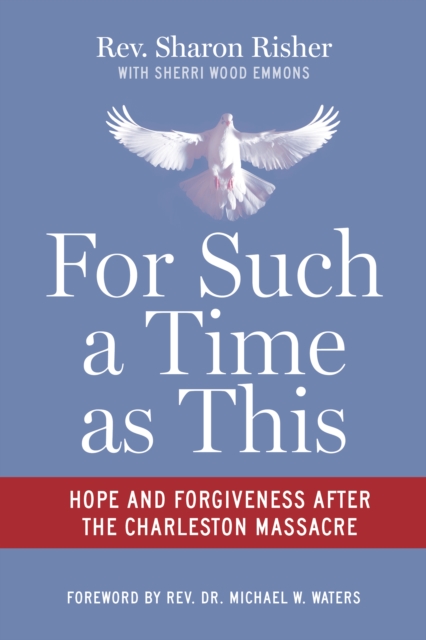
For Such a Time as This
The instant her phone rang, Reverend Sharon Risher sensed something was horribly wrong. Something had happened at Emanuel AME Church, the church of her youth in Charleston, South Carolina, and she knew her mother was likely in the church at Bible study. Even before she heard the news, her chaplain's instinct told her the awful truth: her mother was dead, along with two cousins. What she couldn't imagine was that they had been murdered by a white supremacist. Plunged into the depths of mourning and anger and shock, Sharon could have wallowed in the pain. Instead, she chose the path of forgiveness and hope - eventually forgiving the convicted killer for his crime. In this powerful memoir of faith, family, and loss, Sharon begins the story with her mother, Ethel Lee Lance, seeking refuge in the church from poverty and scorn and raising her family despite unfathomable violence that rattled Sharon to her core years later; how Sharon overcame her own struggles and answered the call to ministry; and how, in the loss of her dear mother, Sharon has become a nationally known speaker as she shares her raw, riveting, story of losing loved ones to gun violence and racism. Sharon's story is a story of transformation: How an anonymous hospital chaplain was thrust into the national spotlight, joining survivors of other gun-related horrors as reluctant speakers for a heartbroken social-justice movement. As she recounts her grief and the struggle to forgive the killer, Risher learns to trust God's timing and lean on God's loving presence to guide her steps. Where her faith journey leads her is surprising and inspiring, as she finds a renewed purpose to her life in the company of other survivors. Risher has been interviewed by Time Magazine, Marie-Claire, Essence, Guardian-BCC Radio, CNN, and other media sources. She regularly shares her story on American college campuses and racial-reconciliation events. \"To Forgive a Killer,\" her essay as told to Abigail Pesta published in Notre Dame Magazine, won the 2018 Front Page Award for Essay published in a Magazine, awarded by the Newswomen's Club of New York.
eBook

The moral arc of the library: what are our duties and limitations after 45?
Purpose
This study aims to explore the question of whether or not librarians can ethically remain politically neutral in the wake of the 45th administration. The authors take a critical look at the American Library Association’s Code of Ethics, as well as the concept of vocational awe, and recommend challenging the “sacredness” of neutrality as a core tenet of the profession. Additionally, the authors describe the history of white privilege within libraries and argue that it is time to actively fight white supremacy and disavow the profession’s history of replicating racist social structures.
Design/methodology/approach
This study is a researched think piece designed to encourage critical thought about long-held idealistic beliefs in the profession.
Findings
This study suggests that despite the profession’s history of outwardly valuing “neutrality,” libraries are not and have never been neutral. Libraries have chosen, time and again, to value white privilege and a white frame of reference to the detriment of librarians and patrons of color. Because many librarians also see the profession as upholding “sacred” ideals like neutrality, we fall into the trap of being unable to criticize our own profession and practices and, therefore, are unable to make much needed changes.
Research limitations/implications
This study is based on the opinions of the authors and on the opinions of authors they have cited. It contains no original quantitative or qualitative research.
Originality/value
This study challenges the long-held assumptions that the profession has taken for granted over the past century. The authors argue that it is good and necessary to question the Code of Ethics, vocational awe and neutrality with the goal of improving the profession in light of the current cultural and political climate.
Journal Article

Hate Speech and Self-Restraint
In this article, my aim is to consider under what circumstances, and for what reasons, individuals may freely choose not to speak hatefully about others. Even if not threatened with legal sanction, why might they decide not to say something which they think they have good reason to say? My suggestion will be that there are various pro tanto reasons for individuals to restrain themselves from saying what they wanted to say. To be specific, I shall argue that such reasons fall into three analytically distinct categories, which I shall describe as normative codes of civility, ethics and morality. Thus each of these codes may provide different sorts of reasons for not engaging in hate speech. My hope is that the results of this investigation may usefully inform a strategy which aims to combat such speech without resource to the law.
Journal Article

Rethinking microaggressions and anti-social behaviour against LGBTIQ+ youth
Purpose
The purpose of this paper is to further the understanding of experiences of anti-social behaviour in LGBTIQ+ youth in university settings.
Design/methodology/approach
The discussion reflects on qualitative interviews with LGBTIQ+ young people studying at university (n=16) exploring their experiences of anti-social behaviour including harassment, bullying and victimisation in tertiary settings.
Findings
The findings demonstrate that attention should be paid to the complex nature of anti-social behaviour. In particular, LGBTIQ+ youth documented experiences of microaggressions perpetrated by other members of the LGBTIQ+ community. Using the taxonomy of anti-social behaviour against LGBTIQ+ people developed by Nadal et al. (2010, 2011), the authors build on literature that understands microaggressions against LGBTIQ+ people as a result of heterosexism, to address previously unexplored microaggressions perpetrated by other LGBTIQ+ people.
Research limitations/implications
Future research could seek a larger sample of participants from a range of universities, as campus climate may influence the experiences and microaggressions perpetrated.
Practical implications
Individuals within the LGBTIQ+ community also perpetrate microaggressions against LGBTIQ+ people, including individuals with the same sexual orientation and gender identity as the victim. Those seeking to respond to microaggressions need to attune their attention to this source of anti-social behaviour.
Originality/value
Previous research has focused on microaggressions and hate crimes perpetrated by non-LGBTIQ+ individuals. This research indicates the existence of microaggressions perpetrated by LGBTIQ+ community members against other LGBTIQ+ persons. The theoretical taxonomy of sexual orientation and transgender microaggressions is expanded to address LGBTIQ+ perpetrated anti-social behaviour.
Journal Article