
Catalogue Search | MBRL


Are you sure you want to remove the book from the shelf?

{{itemTitle}}
8,105
result(s) for
"hens"
Sort by:


Quality, Chemical Composition, and Amino Acids of Eggs in Lohmann Pink‐Shell Laying Hens and Dongxiang Green‐Shell Laying Hens
Hen breed and age are key factors influencing egg quality. In this study, 250 eggs were categorised into five groups: Lohmann Pink‐shell (LMP, 50 ± 2 weeks), Dongxiang Green‐shell (DXG, 50 ± 2 weeks), Dongxiang Pink‐shell (DXP, 50 ± 2 weeks), first‐laid Dongxiang Green‐shell (DXGF, 23 ± 1 week), and first‐laid Dongxiang Pink‐shell (DXPF, 23 ± 1 week). We compared egg quality traits, biochemical parameters, chemical composition, and amino acid profiles across these groups. Average egg weights were 59.89 g (LMP), 52.11 g (DXG), 59.45 g (DXP), 42.01 g (DXGF), and 42.56 g (DXPF). Yolk colour scores were higher in DXGF (13.72) than in LMP, DXG, and DXP (12.93, 12.72, and 12.81, respectively; p < 0.05). Egg yolk high‐density lipoprotein (HDL) levels were lower in LMP, DXG, and DXP (0.0316, 0.0390, and 0.0334 mmol/g, respectively) than in DXGF and DXPF (0.0411 and 0.0424 mmol/g; p < 0.05). Yolk crude fat was higher in DXG, DXP, DXGF, and DXPF (50.00%, 49.29%, 49.54%, and 49.93%, respectively) than in LMP (47.70%; p < 0.05). The EAA/TAA ratios in yolk ranged from 54.53 to 55.33, while those in albumen ranged from 53.38 to 53.71. Overall, this study demonstrates that hen breed and age significantly affect egg quality, biochemical traits, and amino acid composition. These findings may guide consumer egg selection and support the conservation and efficient utilization of chicken genetic resources. Hen breed and age – Lohmann Pink‐shell (LMP), Dongxiang Green‐shell (DXG), Dongxiang Pink‐shell (DXP), first‐laid Dongxiang Green‐shell (DXGF), and first‐laid Dongxiang Pink‐shell (DXPF) – significantly influence egg quality, biochemical traits, and amino acid composition, with yolk EAA/TAA ratios of 54.53–55.33 and albumen ratios of 53.38–53.71.
Journal Article
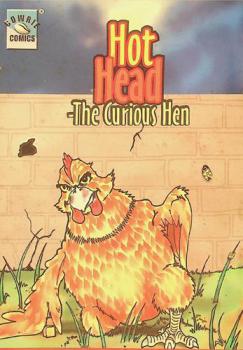


Margaret Hillert's Not I, not I
\"An easy format retelling of the classic fairytale Little Red Hen who looks for help with her crop. Original edition revised with new illustrations. Includes reading activities and a word list\"-- Provided by publisher.
Book

Assessment of fluralaner as a treatment in controlling Dermanyssus gallinae infestation on commercial layer farms and the potential for resulting benefits of improved bird welfare and productivity
Background
Poultry red mite (PRM) (
Dermanyssus gallinae
) infestations are a cause of anaemia, impaired productivity and stress-related behaviours linked to reduced hen welfare. A study investigated the potential health, welfare and productivity benefits following fluralaner treatment to eliminate PRM from infested hens.
Methods
A PRM-infested layer house was selected on a free-range farm (5400 hens) and an aviary farm (42,400 hens). Fluralaner (Exzolt
®
; 0.5 mg/kg body weight) was administered twice, 7 days apart (Weeks 0 and 1), via drinking water. Mite populations were monitored by traps. Cameras recorded nighttime hen behaviours weekly, pre- and post-treatment. On the free-range farm, daytime behaviours were also recorded weekly. For pre- and post-treatment corticosterone assessments, eggs were randomly collected on both farms, and blood samples were collected from 50 randomly selected aviary farm hens. Production parameters were assessed using farm records.
Results
Throughout the post-treatment period, fluralaner efficacy against PRM was > 99% on both farms. On the aviary and free-range farms, treatment was followed by significant nighttime increases in the proportion of resting hens (
P
< 0.0001;
P
= 0.0175, respectively). Significant post-treatment versus pre-treatment nighttime reductions were observed in head shaking (aviary,
P
< 0.0001; free-range
P
= 0.0233) and preening (
P
= 0.0032;
P
= 0.0018) and on the aviary farm in bouts of body shaking (
P
= 0.0108), vertical wing shaking (
P
= 0.0002), head scratching (
P
= 0.0335), and gentle feather pecking (
P
< 0.0001). On the free-range farm there were significant daytime reductions in head scratching (
P
< 0.0001), head shaking (
P
= 0.0492) and preening (
P
= 0.0012). Relative to standard production parameters, no differences were detected on the aviary farm, but on the free-range farm the laying rate decline with increasing age was less than expected and the increase in egg weight greater than expected. Post-treatment increases in egg and plasma corticosterone were suggestive of stress factors in addition to mite infestation. Red blood cell counts and haematocrit increased following treatment.
Conclusion
Fluralaner treatment eliminated mite challenge, leading to improved hen welfare and health, based on reductions in stress-related behaviours and restoration of the anaemia-inducing effects of mite blood feeding.
Graphical Abstract
Journal Article

Predation in Organic and Free-Range Egg Production
On organic and free-range poultry farms, a free-range is provided for animal welfare reasons. However, farmers report sightings of birds of prey and sometimes foxes or other predators within the free-range areas. In addition to seeing actual attacks, they also find chicken carcasses in the free-range, the deaths of which they attribute to predators. In addition, and in contrast to indoor poultry farmers, organic/free-range farmers report hundreds of chickens missing, per flock, when comparing the slaughterhouse arrival numbers with farm mortality records. The farmers assume these missing animals are hens that vanished from the free-range area and that predation is the major cause for their disappearance. If so, predation may impact farm yields. This study investigated whether birds of prey kill chickens on organic/free-range egg production farms and the impact, in terms of numbers of chickens and yield losses. This study was to provide qualitative and quantitative information in support of chicken mortality caused by birds of prey. Data were collected through field observations on organic/free-range farms (n = 11) and an online survey among organic/free-range farmers. Seventy-nine field observations on 11 farms resulted in 141 sightings of birds of prey, mostly common buzzards (Buteo buteo) and northern goshawks (Accipiter gentilis). Forty-four dead hens were found, 36 of them were very likely killed by either birds of prey or foxes. Sixteen attacks on hens by goshawk or buzzard were seen. There were no reasons to assume the attacked hens were in a poor condition prior to the attack. From responses to the online survey (n = 27 farms experiencing predation), it was estimated that on average 3.7% of hens of organic/free-range flocks were killed by predators, while total mortality was 12.2%. After calculating missed yield per killed hen, it was roughly estimated that per flock, predation caused yield losses of EUR 5700 on an average organic farm (size 12,700 hens) and EUR 6700 on an average free-range farm (size 25,000 hens).
Journal Article

The little green hen
A timely retelling plays off \"The Little Red Hen\" with an environmental slant. On top of a hill, inside an old and very fruitful apple tree, lives Little Green Hen. She prunes the tree's branches, rids it of pests, and sows its seeds so that more trees will grow. But soon the work proves too much, and Little Green Hen seeks some help. Dog (who loves sticks), Sparrow (who loves bugs), and Squirrel (who loves burying things) are glad to pitch in. But Peacock, Fox, and Cat have far more important things to do -- until the storms roll in, the rain comes down, and the waters rise. . . . With contemporary flair, Alison Murray offers another engaging adaptation of a traditional children's tale.
Book

Enriching Eggs with Bioactive Compounds through the Inclusion of Grape Pomace in Laying Hens Diet: Effect on Internal and External Egg Quality Parameters
(1) Background: Grapes and their associated by-products (such as grape pomace, GP) stand out for their polyphenol content, which makes them a source of bioactive compounds with antioxidant capacity. The aim of this research was to determine if the inclusion of 50 g/kg of GP in the diet of hens could enrich eggs with antioxidants and to study its effect on internal and external egg quality parameters. (2) Methods: A trial was conducted with two genetic lines of hens, which were fed either a control diet or a diet containing 50 g/kg of GP. Performance, internal and external egg quality, and egg yolk content of vitamins E and A and gallic acid were determined. (3) Results: In eggs laid by hens fed a GP diet, Haugh units and yolk color scores were enhanced, and eggshells became thinner, but without affecting the breaking strength. No dietary effect was observed on the vitamin contents of the yolk. A higher gallic acid content was observed in the yolks of eggs laid by hens fed the GP diet, suggesting that some dietary phenolic compounds could be transferred to the eggs. Hen genetics influenced egg weight, albumen Haugh units, shell thickness, and α- and γ-tocopherol concentration in yolks. (4) Conclusions: Dietary inclusion of GP improved the internal quality of eggs, enriching yolks with a phenolic compound but reducing shell thickness.
Journal Article