
Catalogue Search | MBRL


Are you sure you want to remove the book from the shelf?

{{itemTitle}}
10,880
result(s) for
"herbaria"
Sort by:
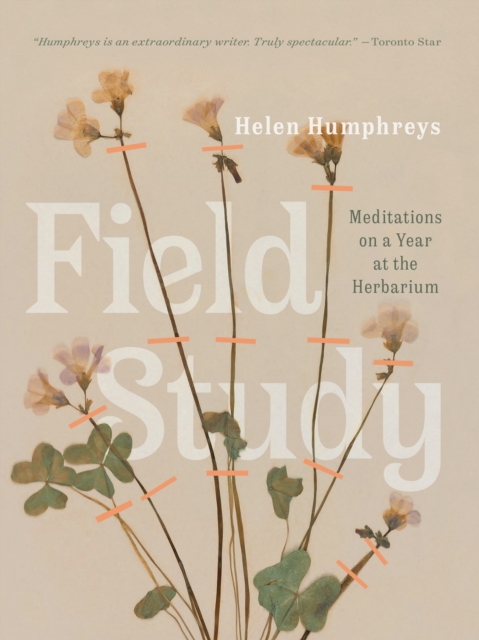
Field study
'Award-winning and beloved author Helen Humphreys discovers her local herbarium and realizes we need to look for beauty in whatever nature we have left no matter how diminished Award-winning poet and novelist Helen Humphreys returns to her series of nature meditations in this gorgeously written and illustrated book that takes a deep look at the forgotten world of herbariums and the people who amassed collections of plant specimens in the 19th and 20th centuries. From Emily Dickinson s and Henry David Thoreau s collections to the amateur naturalists whose names are forgotten but whose collections still grace our world, herbariums are the records of the often-humble plants that are still with us and those that are lost. Over the course of a year, Humphreys considers life and loss and the importance of finding solace in nature. Illustrated throughout with images of herbarium specimens, Humphreys s own botanical drawings, and archival photographs, this will be
eBook

RESTAURACIÓN DEASTRAGALUS TRIFOLIATUS(FABACEAE)
This contribution intends to clarify the current name of a species ofAstragalusfrom Chile, originally described asA. trifoliatusby Philippi and later considered by Spegazzini asA. valparadisiensis. We con¬cluded that the latter name is a superfluous one, and that the current name of this endemic and restricted species should beA. trifoliatus.
Journal Article


Carex hartmanii Cajander (Cyperaceae) in Armenia
Carex hartmanii (Cyperaceae) was collected for the first time in Armenia in 1957 and identified in 1961 by Egorova. In the Flora of Armenia this species is not mentioned. However, two recent collections confirm the existence of C. hartmanii in Armenia; its distribution is discussed.
Journal Article

Ex situ collections and their potential for the restoration of extinct plants
The alarming current and predicted species extinction rates have galvanized conservationists in their efforts to avoid future biodiversity losses, but for species extinct in the wild, few options exist. We posed the questions, can these species be restored, and, if so, what role can ex situ plant collections (i.e., botanic gardens, germplasm banks, herbaria) play in the recovery of plant genetic diversity? We reviewed the relevant literature to assess the feasibility of recovering lost plant genetic diversity with using ex situ material and the probability of survival of subsequent translocations. Thirteen attempts to recover species extinct in the wild were found, most of which used material preserved in botanic gardens (12) and seed banks (2). One case of a locally extirpated population was recovered from herbarium material. Eight (60%) of these cases were successful or partially successful translocations of the focal species or population; the other 5 failed or it was too early to determine the outcome. Limiting factors of the use of ex situ source material for the restoration of plant genetic diversity in the wild include the scarcity of source material, low viability and reduced longevity of the material, low genetic variation, lack of evolution (especially for material stored in germplasm banks and herbaria), and socioeconomic factors. However, modern collecting practices present opportunities for plant conservation, such as improved collecting protocols and improved cultivation and storage conditions. Our findings suggest that all types of ex situ collections may contribute effectively to plant species conservation if their use is informed by a thorough understanding of the aforementioned problems. We conclude that the recovery of plant species currently classified as extinct in the wild is not 100% successful, and the possibility of successful reintroduction should not be used to justify insufficient in situ conservation.
Las alarmantes tasas de extinción actuales y pronosticadas han incitado a los conservacionistas a esforzarse paraevitar las futuras pérdidas de biodiversidad, pero para las especies que ya se encuentran extintas en vida silvestre existen pocas opciones. Nos preguntamos si estas especies pueden ser restauradas, y de ser así, qué papel pueden desempeñar las colecciones ex situ de plantas (es decir, jardines botánicos, bancos de germoplasma, herbarios) en la recuperación de la diversidad genética de las plantas. Revisamos la literatura relevante para evaluar la factibilidad de la recuperación de la diversidad genética perdida y la probabilidad de supervivencia subsecuente de las reubicaciones. Encontramos 13 intentos por recuperar especies extintas en vida silvestre, la mayoría de los cuales usó material preservado en jardines botánicos (12) y en bancos de semillas (2). También hubo un caso de una población eliminada localmente que fue recuperada con material de un herbario. Ocho (60%) de estos casos fueron reubicaciones exitosas o parcialmente exitosas de la especie o población focal; los otros cinco fallaron o era demasiado pronto para poder determinar el resultado. Los factores que limitan el uso de material proveniente de colecciones ex situ para la restauración de la diversidad genética de las plantas en vida silvestre incluyen la escasez de material original, la baja viabilidad y la longevidad reducida del material, la baja variación genética, la falta de evolución (especialmente para el material almacenado en herbarios y bancos de germoplasma) y los factores socioeconómicos. A pesarde esto, las prácticas modernas de colección representanuna oportunidad para la conservación de las plantas, como los protocolos mejorados de recolección y las condiciones acrecentadas de cultivo y almacenamiento. Nuestros hallazgos sugieren que todos los tipos de colecciones ex situ pueden contribuir efectivamente a la conservación de especies de plantas si su uso está respaldado por un entendimiento a fondo de los problemas antes mencionados. Concluimos que la recuperación de especies de plantas que actualmente están clasificadas como extintas en vida silvestre no es 100% exitosa y que la posibilidad de una reintroducción exitosa no debería utilizarse para justificar una conservación in situ insuficiente.
Journal Article

Field study : meditations on a year at the herbarium / Helen Humphreys
\"Award-winning and beloved author Helen Humphreys discovers her local herbarium and realizes we need to look for beauty in whatever nature we have left -- no matter how diminished. Award-winning poet and novelist Helen Humphreys returns to her series of nature meditations in this gorgeously written and illustrated book that takes a deep look at the forgotten world of herbariums and the people who amassed collections of plant specimens in the 19th and 20th centuries. From Emily Dickinson's and Henry David Thoreau's collections to the amateur naturalists whose names are forgotten but whose collections still grace our world, herbariums are the records of the often-humble plants that are still with us and those that are lost. Over the course of a year, Humphreys considers life and loss and the importance of finding solace in nature. Illustrated throughout with images of herbarium specimens, Humphreys's own botanical drawings, and archival photographs, this will be the perfect gift for Humphreys's many fans, nature enthusiasts, and for all who loved Birds Art Life.\"--
eBook

Digitization and the Future of Natural History Collections
Natural history collections (NHCs) are the foundation of historical baselines for assessing anthropogenic impacts on biodiversity. Along these lines, the online mobilization of specimens via digitization—the conversion of specimen data into accessible digital content—has greatly expanded the use of NHC collections across a diversity of disciplines. We broaden the current vision of digitization (Digitization 1.0)—whereby specimens are digitized within NHCs—to include new approaches that rely on digitized products rather than the physical specimen (Digitization 2.0). Digitization 2.0 builds on the data, workflows, and infrastructure produced by Digitization 1.0 to create digital-only workflows that facilitate digitization, curation, and data links, thus returning value to physical specimens by creating new layers of annotation, empowering a global community, and developing automated approaches to advance biodiversity discovery and conservation. These efforts will transform large-scale biodiversity assessments to address fundamental questions including those pertaining to critical issues of global change.
Journal Article


Where is positional uncertainty a problem for species distribution modelling?
Species data held in museum and herbaria, survey data and opportunistically observed data are a substantial information resource. A key challenge in using these data is the uncertainty about where an observation is located. This is important when the data are used for species distribution modelling (SDM), because the coordinates are used to extract the environmental variables and thus, positional error may lead to inaccurate estimation of the species–environment relationship. The magnitude of this effect is related to the level of spatial autocorrelation in the environmental variables. Using local spatial association can be relevant because it can lead to the identification of the specific occurrence records that cause the largest drop in SDM accuracy. Therefore, in this study, we tested whether the SDM predictions are more affected by positional uncertainty originating from locations that have lower local spatial association in their predictors. We performed this experiment for Spain and the Netherlands, using simulated datasets derived from well known species distribution models (SDMs). We used the K statistic to quantify the local spatial association in the predictors at each species occurrence location. A probabilistic approach using Monte Carlo simulations was employed to introduce the error in the species locations. The results revealed that positional uncertainty in species occurrence data at locations with low local spatial association in predictors reduced the prediction accuracy of the SDMs. We propose that local spatial association is a way to identify the species occurrence records that require treatment for positional uncertainty. We also developed and present a tool in the R environment to target observations that are likely to create error in the output from SDMs as a result of positional uncertainty.
Journal Article

Origin and domestication of Cucurbitaceae crops
Some of the World’s most valuable crops, including watermelon, honey melon, cucumber, squash, zucchini and pumpkin, belong to the family Cucurbitaceae. We review insights on their domestication from new phylogenies, archaeology and genomic studies. Ancestral state estimation on the most complete Cucurbitaceae phylogeny to date suggests that an annual life cycle may have contributed to domestication. Domestication started c. 11 000 years ago in the New World and Asia, and apparently more recently in Africa. Some cucurbit crops were domesticated only once, others multiple times (e.g. melon from different Asian and African populations). Most wild cucurbit fruits are bitter and nonpalatable to humans, and nonbitterness of the pulp apparently was a trait favoured early during domestication, with genomic data showing how bitterness loss was achieved convergently. The genetic pathways underlying lycopene accumulation, red or orange pulp colour, and fruit size and shape are only just beginning to be understood. The study of cucurbit domestication in recent years has benefitted from the increasing integration of archaeological and genomic data with insights from herbarium collections, the most efficient way to understand species’ natural geographic ranges and climate adaptations.
Journal Article